

Autos & Vehicles

Before You Sign Anything: A Pre-Purchase Checklist for Used Cars

Share
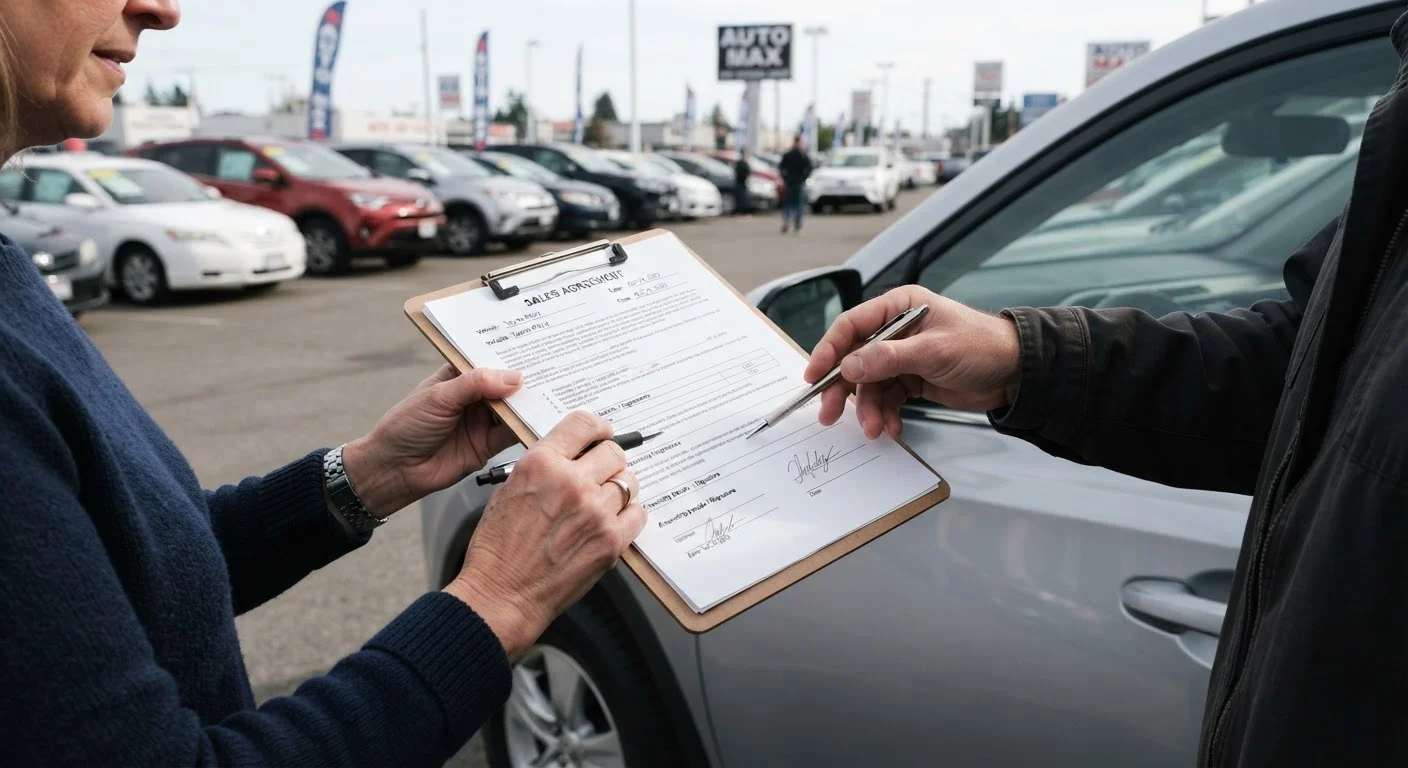
Person reviewing paperwork on a clipboard next to a used car at a dealership lot

Key Takeaways

Always obtain a vehicle history report before agreeing to any price or terms.
A pre-purchase inspection by an independent mechanic can reveal hidden mechanical issues.
Review the title, odometer disclosure, and any as-is language carefully before signing.
Financing terms and add-on products at signing deserve the same scrutiny as the vehicle itself.
Both dealership and private sales carry distinct risks — this checklist applies to both.
45–90 min

Summary

22 items · 45–90 minutes

Why a Structured Checklist Matters

Buying a used car involves more moving parts than most purchases. The excitement of finding the right vehicle can make it easy to overlook red flags or rush through paperwork. A structured checklist removes emotion from the equation and gives you a repeatable process — whether you're buying at a franchise dealership, an independent lot, or through a private seller.

Many common mistakes aren't obvious in the moment. Common car-buying myths can catch even experienced shoppers off guard — the same holds true for skipping due diligence steps that seem minor but carry real consequences. Use this checklist as your standard operating procedure every time.

Required

Vehicle History Report Service

Retrieve accident, title, odometer, and ownership history using the car's VIN before committing to a purchase.

Required

NHTSA Recall Database (nhtsa.gov)

Check whether the specific vehicle has any open safety recalls that the seller is responsible for disclosing.

Required

Independent ASE-Certified Mechanic

Perform a pre-purchase inspection to identify mechanical or structural issues not visible to the untrained eye.

Optional

Flashlight

Illuminate undercarriage areas, engine bay corners, and interior crevices during your own physical inspection.

Optional

OBD-II Scanner

Read any stored or pending diagnostic trouble codes from the vehicle's onboard computer that may not trigger a dashboard warning light.

The Full Pre-Purchase Checklist

Work through these items in order. Some steps — like obtaining a vehicle history report — should happen before you inspect the car in person. Others, like reviewing the final contract, happen at the very end. Don't skip ahead.

Before You Visit

Run a vehicle history report using the VIN (Vehicle Identification Number) to check for accidents, title issues, odometer rollbacks, and service records. Must
Verify the asking price against independent market valuation sources to understand whether the price is reasonable for the year, mileage, and condition. Must
Research the model's known reliability patterns, common mechanical issues, and recall history through the NHTSA database (nhtsa.gov). Should
Get pre-approved for financing through your bank or credit union before visiting a seller so you know your budget and have a rate to compare against. Should

Physical Inspection

Inspect the exterior in daylight for mismatched paint, uneven panel gaps, or rippling — signs of prior collision repair. Must
Check all four tires for tread depth, uneven wear patterns (which may indicate alignment or suspension issues), and matching brands. Must
Look underneath the vehicle for fluid leaks, rust on the frame or subframe, and damaged exhaust components. Must
Open every door, the hood, and the trunk to confirm hinges align properly and latches function — misalignment can indicate frame damage. Should
Test all interior electronics: windows, locks, climate controls, infotainment, backup camera, and any driver-assistance features. Should
Check for water intrusion signs in the trunk, under floor mats, and around door seals — musty smells or staining can indicate flood history. Should

Mechanical & Test Drive

Schedule a pre-purchase inspection with an independent, ASE-certified mechanic before agreeing to buy — this step alone can prevent costly surprises. Must
During the test drive, accelerate, brake, and turn at various speeds to feel for pulling, vibration, or sluggish response. Must
Listen for unusual noises under acceleration, deceleration, and at idle — knocking, grinding, or rattling all warrant further investigation. Must
Check that no warning lights illuminate on the dashboard during or after the test drive. Must
Test the brakes at moderate speed in a safe area to confirm they engage smoothly without pulsating or pulling to one side. Should

Title and Documentation

Confirm the seller's name on the title matches their government-issued ID — discrepancies may indicate a curbstoner (an unlicensed dealer posing as a private seller). Must
Verify the title is clear of liens; if a lien exists, ensure the loan payoff is handled before or as part of the transaction. Must
Review the odometer disclosure statement and confirm it matches the digits on the instrument cluster. Must
Understand any 'as-is' language in the contract — it typically means no recourse after the sale if problems emerge. Must

Final Signing Review

Read the full retail installment contract or bill of sale line by line; do not sign blank or incomplete documents. Must
Verify all verbal agreements — such as promised repairs or included accessories — are written into the contract before signing. Must
Review and decline any add-on products you did not request, and confirm the final contract totals reflect those removals. Should

Never Skip the Independent Inspection

A pre-purchase inspection by a mechanic you hire — not one recommended by the seller — is the single most important step in this checklist. Even vehicles with clean history reports can have significant mechanical problems that only a trained eye under the car will catch. Budget roughly $100–$200 for this inspection; it is far less expensive than discovering a failed transmission after the sale closes.

If the seller applies pressure to skip any of these steps or rushes you toward signing, treat that as a significant warning sign. A legitimate sale can withstand a few hours of due diligence.

Understanding the Paperwork Before You Sign

The contract stage is where many buyers lose ground. Dealerships in particular may present a stack of documents quickly. Slow down and read every page. Pay close attention to the annual percentage rate (APR) if you're financing, the total amount financed, and any add-on products such as extended service contracts, paint protection, or gap insurance.

None of these add-ons are required, even if presented as standard. Ask for each item to be itemized and priced separately. For vehicles marketed under manufacturer-backed programs, see our guide to what certified pre-owned labels actually guarantee — coverage varies significantly by brand.

Once you take ownership, ongoing car maintenance becomes your responsibility. Understanding the vehicle's service history now helps you anticipate what's due after purchase.

This checklist is for general informational and educational purposes only. It does not constitute legal, financial, or mechanical advice. For significant financial decisions, consult a qualified professional.

Autos & Vehicles Editorial Team is the collective byline for our editorial team and contributor network. Articles published under this byline or an editorial pen name are researched, written, and reviewed according to our editorial standards for clarity, consistency, and independence before publication.

View all articles by Autos & Vehicles Editorial Team →
Disclaimer: The content on this site is provided for informational purposes only and should not be considered a substitute for professional advice. While we strive to provide accurate and up-to-date information, we make no guarantees regarding its completeness or accuracy. Always consult a qualified professional for advice specific to your circumstances before making any decisions.