

Key Takeaways
Why Weather-Specific Habits Matter
Many drivers treat all bad weather the same - slow down a little, turn on the wipers, and carry on. But rain, fog, and snow each affect your vehicle and road environment in fundamentally different ways. Applying the right adjustments for the specific condition you're facing can mean the difference between a close call and a collision.
According to the Federal Highway Administration, weather-related crashes account for a significant portion of all traffic incidents in the United States each year, with wet pavement and rain being the most common contributing conditions. Snow, ice, and low-visibility fog carry their own distinct crash patterns. Understanding what each hazard does to road physics - and to your ability to perceive and react - is the foundation of safe all-weather driving.
If you want to build a broader safety habit, this article pairs well with our complete driver's education resource covering hazard awareness from the basics upward.
Practice Builds Confidence Over Time
Adverse weather driving improves with deliberate, low-stakes practice. If possible, spend time in an empty parking lot during light snow or rain to understand how your vehicle responds to braking and steering inputs. Controlled experience now prepares you for more demanding conditions later.
Driving in Rain
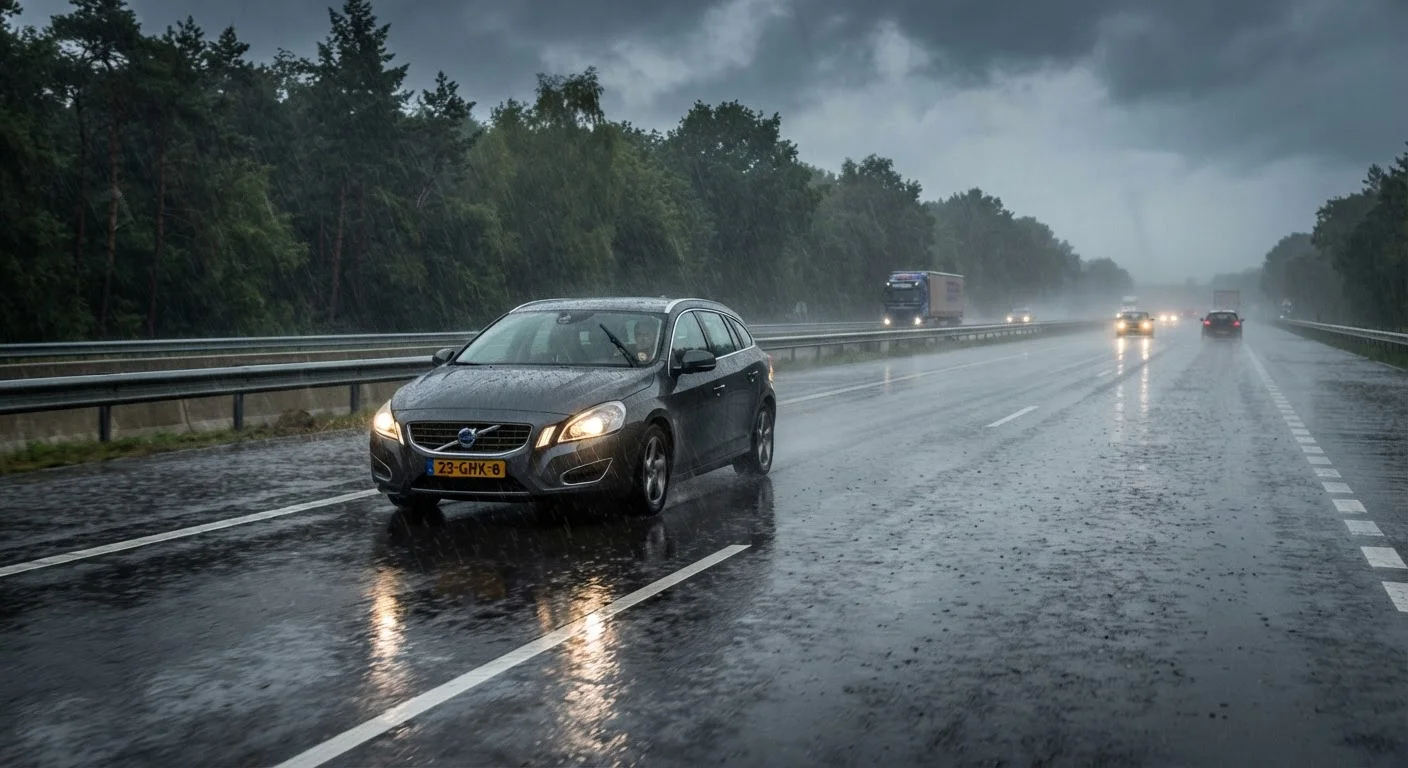
Rain is the most frequently encountered hazard, which makes it easy to underestimate. Water on the road reduces tire friction and can lead to hydroplaning - a condition where your tires ride on a thin film of water and lose contact with the pavement entirely. This can happen at speeds as low as 35 mph on heavily flooded surfaces.
Key adjustments for rain:
- Reduce speed below posted limits - especially in heavy downpours or on curves.
- Double your following distance - wet roads increase stopping distances significantly.
- Turn on headlights - most U.S. states require lights whenever wipers are in use; it helps other drivers see you.
- Avoid sudden braking or sharp steering - smooth, gradual inputs maintain traction.
- Steer through hydroplaning gently - if your vehicle begins to hydroplane, ease off the gas, keep the wheel straight, and avoid slamming the brakes.
Also be cautious in the first 10-15 minutes of rainfall - oil residue on road surfaces mixes with water to create especially slick conditions before it washes away.
Driving in Fog
Fog is uniquely dangerous because it creates a false sense of security. Roads feel quiet and still, but visibility can drop to near zero within seconds as fog density changes. High-beam headlights make this worse, not better - the light reflects off water droplets and creates glare that reduces your effective sight distance.
Key adjustments for fog:
- Use low-beam headlights or fog lights - never high beams in dense fog.
- Slow down substantially - drive at a speed that lets you stop within the distance you can actually see ahead.
- Increase following distance - tailgating in fog gives you no margin if the car ahead stops suddenly.
- Use the right edge of the road as a guide - it can help you stay in your lane without fixating on oncoming headlights.
- Avoid stopping on the road or shoulder - if you must pull over, get fully off the road and turn off your lights so you're not mistaken for a moving vehicle.
Fog and nighttime conditions share some similarities. For related guidance on low-visibility driving after dark, see our article on night driving habits that reduce risk.
Driving in Snow and Ice
Snow and ice demand a complete recalibration of how you accelerate, steer, and brake. Even all-wheel-drive vehicles - which improve traction for acceleration - do not significantly shorten stopping distances on ice. Overconfidence in drivetrain capability is a leading factor in winter weather crashes.
Key adjustments for snow and ice:
- Accelerate slowly - press the gas gently to avoid wheel spin, which causes loss of steering control.
- Brake early and lightly - begin slowing down well before intersections and curves; threshold braking or ABS activation on ice can still result in sliding.
- Steer smoothly and deliberately - sharp turns destabilize the vehicle on slippery surfaces.
- Know your braking system - modern vehicles with ABS (anti-lock braking system) require steady, firm brake pressure, not pumping.
- Clear your vehicle completely before driving - snow on your roof can slide onto your windshield or into the path of other drivers.
Vehicle readiness before winter arrives is just as critical as in-the-moment technique. See our guide to seasonal car maintenance for what to inspect and replace as conditions change.
This article provides general driving safety information and education. Always follow local traffic laws and consult official guidance from your state's department of motor vehicles for region-specific requirements.