

Key Takeaways
Our Verdict
Envelope budgeting excels for people who overspend when using cards and need a physical, tactile brake on impulse purchases. Digital trackers suit those who prefer automation, rarely use cash, and want data-rich insight into spending patterns over time. The right choice depends on how your brain responds to spending cues - not on which method looks more sophisticated.
| Best for | Recommended |
|---|---|
| Those who struggle with impulsive card spending | Envelope Budgeting |
| Readers who prefer automation and spend digitally | Digital Spending Trackers |
| Households managing shared finances with a partner | Digital Spending Trackers |
| Anyone starting fresh with no prior budgeting habit | Envelope Budgeting |
How Envelope Budgeting Works
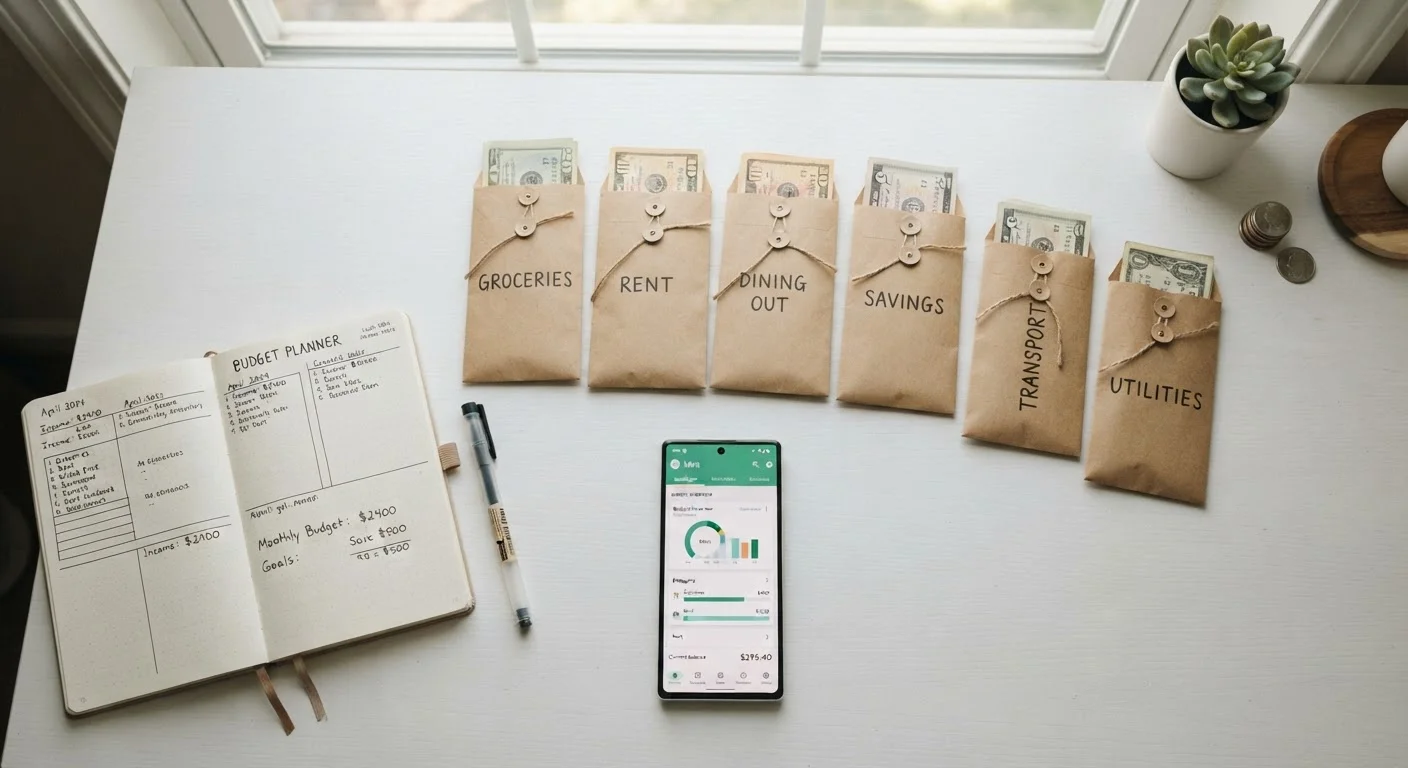
Envelope budgeting is a cash-based system rooted in a simple idea: once the money in an envelope is gone, spending in that category stops. At the start of each pay period, you withdraw cash and physically divide it into labeled envelopes - groceries, gas, dining out, entertainment, and so on. Each envelope represents a hard ceiling.
The psychological power here is real. Handing over cash feels more concrete than swiping a card, and watching an envelope thin out creates a visceral awareness of remaining funds. Research in behavioral economics consistently finds that people tend to spend less when paying with cash compared to cards, largely because the pain of payment is more immediate.
The main friction points are practical: carrying cash is inconvenient, online purchases require workarounds, and lost envelopes mean lost money. Envelopes also don't automatically sync across a household - a genuine challenge for couples. If shared finances are a concern, see our guide to budgeting as a household for strategies that work for two.
How Digital Spending Trackers Work
Digital spending trackers - available as apps or through bank dashboards - connect to your checking, savings, and credit card accounts to automatically log and categorize every transaction. Many platforms let you set category budgets and send alerts when you're approaching a limit.
The core advantage is automation and visibility. You get a full picture of your spending without manually logging receipts, and historical data can reveal patterns that aren't obvious month to month. If you want to understand where your money actually goes before committing to a budget framework, tracking every dollar over a full month is a useful first step that digital tools make significantly easier.
The trade-off: because digital trackers record spending after it happens, they function more as a mirror than a gate. Seeing that you overspent on dining out last month is informative, but it doesn't prevent the overspend the way an empty envelope does. Discipline must come from the user, not the system.
| Envelope Budgeting | Digital Spending Trackers | |
|---|---|---|
| Core mechanism | Physical cash divided by category | Automated transaction logging via app |
| Spending prevention | Hard stop when envelope is empty | Alert-based; relies on user discipline |
| Setup effort | Withdraw and sort cash each pay period | One-time account connection; minimal upkeep |
| Works with online purchases | Requires workarounds | Fully compatible |
| Household sharing | Difficult to sync across users | Shared dashboards available on many platforms |
| Historical data & reporting | None built in | Detailed charts and trend data |
| Best psychological fit | Visual, tactile learners; impulse spenders | Data-driven; digitally comfortable users |
Matching the Method to Your Spending Behavior
The most effective budgeting method is the one you'll actually maintain. A few key questions can point you in the right direction.
- Do you overspend more with cards than cash? If yes, envelope budgeting introduces friction that can reduce impulse purchases directly.
- Is most of your spending digital - subscriptions, online shopping, bill pay? Envelopes become cumbersome; a digital tracker fits your actual transaction flow.
- Do you have irregular income? Digital tools that let you adjust category budgets month to month may be easier to manage. Budgeting on an irregular income explores frameworks designed for variable pay.
- Do you want detailed category breakdowns? Both methods support categories, but the tradeoffs differ - worth reviewing the advantages and drawbacks of strict budget categories before building your structure.
Some people find a hybrid works best: use envelopes for the two or three categories where they historically overspend (restaurants, personal spending money), while relying on a digital tracker for fixed expenses, bills, and online purchases.
Getting Started With Either Approach
Whichever method you choose, the starting point is the same: understand your current spending before you budget. Without accurate baseline data, any category limits you set are guesses. Both envelope and digital systems benefit from a month of honest observation first.
From there, align your budget to your actual income - not an idealized version of it. Whether you're allocating cash to envelopes or configuring category limits in an app, building a budget that holds over time requires regular review and willingness to adjust. No budgeting system is set-and-forget.
If debt repayment or savings are priorities alongside your day-to-day spending, your budgeting method should support those goals explicitly - whether that means a dedicated envelope labeled "debt payment" or an automatic transfer configured before your tracker even records disposable spending. Explore practical guidance on saving and debt for approaches that pair well with either budgeting method.
This article is for general informational purposes only and does not constitute personalized financial advice. For guidance tailored to your individual circumstances, consider consulting a qualified financial professional.