

Key Takeaways
Why Budget Eating Often Gets a Bad Reputation
The idea that eating healthy costs more money is widely repeated - and partly grounded in reality. Certain fresh produce, lean meats, and specialty health foods do carry higher price tags. But the claim that nutritious eating is inherently expensive doesn't hold up when you look at the full grocery store picture.
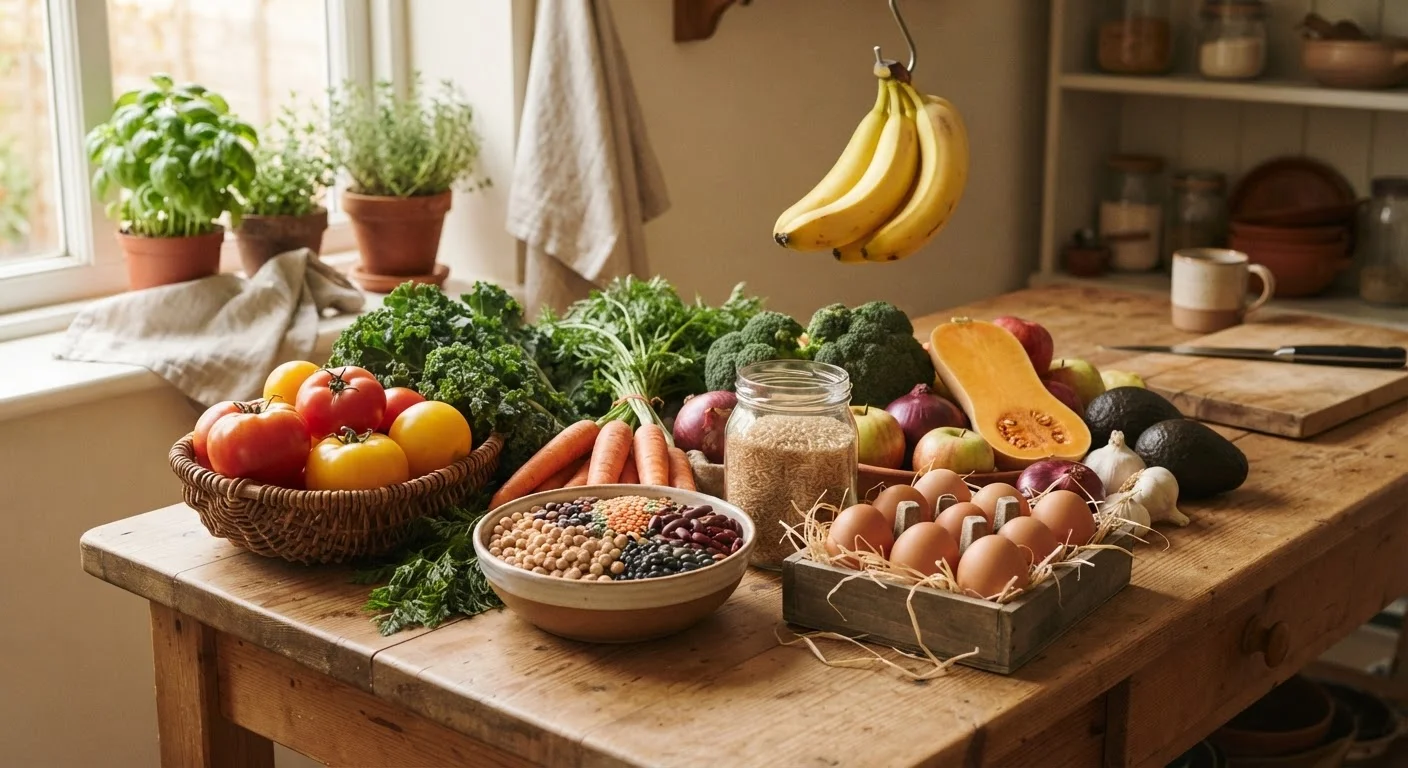
Much of the confusion comes from comparing whole diets rather than individual ingredients. A bag of dried lentils, a carton of eggs, a bunch of bananas, or a container of plain oats - all of these are inexpensive, nutrient-dense, and widely available. The challenge isn't cost so much as knowing which foods to prioritize and how to build meals around them.
It's also worth separating budget eating from restrictive eating. Cutting calories or skipping meals is not a nutrition strategy - and this guide doesn't take that approach. The goal here is helping you get more nutritional value from every dollar spent. For a broader look at managing household finances, see our guide to building your first budget.
The Most Nutritious Low-Cost Staples
Certain foods consistently deliver strong nutritional value at low cost. Understanding these staples is the foundation of budget-friendly nutrition.
- Legumes (beans, lentils, chickpeas): High in protein, fiber, iron, and folate. Dried varieties are particularly affordable; canned options trade a small cost premium for convenience.
- Eggs: One of the most complete protein sources available, with a favorable micronutrient profile including choline and B vitamins.
- Whole grains (oats, brown rice, barley): Provide sustained energy, fiber, and essential minerals at a very low per-serving cost.
- Frozen vegetables: Typically frozen at peak ripeness, which preserves most nutrients. Often less expensive than fresh equivalents, especially out of season.
- Canned fish (tuna, sardines, salmon): Rich in protein and omega-3 fatty acids, with a long shelf life and a much lower price point than fresh fish.
- Seasonal produce: In-season fruits and vegetables are less expensive and more flavorful. Root vegetables, cabbage, carrots, and bananas tend to stay affordable year-round.
- Plain dairy or fortified alternatives: Milk, plain yogurt, and cottage cheese offer protein and calcium. Store-brand versions carry no nutritional difference from name brands.
When buying canned beans, opt for low-sodium or no-salt-added varieties and rinse them before use - this simple step can reduce sodium content by roughly 40% while keeping all the fiber and protein intact.
Many people avoid canned goods due to sodium concerns, but rinsing is a well-documented way to address this without giving up the convenience and cost savings canned legumes offer.
Keep a short 'base ingredients' list - oats, rice, dried lentils, eggs, and frozen spinach - and treat everything else as a rotating addition. This prevents the common trap of buying variety without a plan and wasting food.
Food waste is one of the leading drivers of household grocery overspending. A stable base reduces decision fatigue and ensures core nutrients are always available at low cost.
For guidance on building balanced meals from these staples without following a trendy diet plan, a companion article walks through the basics.
Smart Substitutions That Don't Sacrifice Nutrition
Many expensive ingredients have nutritionally comparable - sometimes superior - alternatives at a fraction of the price.
| Pricier Option | Budget Substitute | What You Retain |
|---|---|---|
| Fresh salmon | Canned salmon or sardines | Omega-3s, protein, B12 |
| Chicken breast | Chicken thighs or canned tuna | Comparable protein content |
| Quinoa | Brown rice or barley | Whole grain fiber, minerals |
| Fresh berries | Frozen berries | Antioxidants, vitamin C |
| Greek yogurt (name brand) | Plain store-brand yogurt, strained | Protein, probiotics, calcium |
| Bagged salad greens | Whole cabbage or spinach | Fiber, vitamins K and C |
These swaps aren't about settling - they're about understanding which characteristics of a food actually matter nutritionally. A frozen pea has essentially the same fiber and vitamin content as a fresh one.
Strategies to Stretch Your Grocery Budget
What you buy matters, but how you shop is equally important. These evidence-informed habits help reduce spending without compromising nutrition.
Plan meals before you shop
Deciding what you'll eat for the week before going to the store is one of the most effective ways to reduce food waste and impulse purchases. Even a rough plan - breakfasts, lunches, and three to four dinners - makes a difference. See shopping habits that support healthier eating for a deeper look at this practice.
Buy in bulk for shelf-stable items
Dried beans, rice, oats, and pasta have long shelf lives and are substantially cheaper per serving when purchased in larger quantities. If storage space is limited, even mid-sized packages (rather than single-use bags) represent meaningful savings over time.
Use unit price, not package price
Grocery store shelf tags often include a unit price (cost per ounce, per pound, etc.). Comparing this - rather than the sticker price - reveals which size or brand actually costs less per serving.
Reduce meat as a centerpiece
Meat tends to be the most expensive item per serving on a plate. Using it as a flavoring or side rather than the main event - and centering meals on beans, lentils, or eggs instead - can significantly lower weekly costs without reducing protein intake.
Cook larger batches
Cooking once and eating multiple times reduces both time and the temptation to spend on convenience food. A pot of bean soup, a grain salad, or a tray of roasted vegetables can anchor several meals through the week.
Putting It All Together
Eating well on a limited budget isn't about finding a perfect system - it's about building a small set of reliable habits and ingredient choices that work together over time. Start with two or three affordable staples you already enjoy, build simple meals around them, and add variety as your confidence grows.
The core principles here are durable: prioritize whole, minimally processed foods; lean on legumes and eggs for protein; choose frozen or seasonal produce; and plan before you shop. None of these strategies require a specialty store or a nutrition degree.
If your grocery spending is part of a broader financial challenge, our budgeting basics hub covers simple frameworks for tracking and managing household expenses.
Nutrition is a long-term practice, not a single decision. Small, consistent improvements in what you eat tend to compound meaningfully over months and years - and they don't require spending more to get started.
This article provides general nutrition information for educational purposes only and is not a substitute for advice from a qualified healthcare professional or registered dietitian. Individual nutritional needs vary. Please consult a professional before making significant changes to your diet.