

Key Takeaways
Summary
22 items · 2-4 hours spread across a weekend
Why Winter Prep Is Worth the Weekend
Every fall, homeowners across the country face the same choice: spend a few hours and modest money preparing for cold weather, or risk far costlier repairs when frozen pipes burst, heating systems fail, or ice dams tear off gutters. Winter damage is one of the leading causes of homeowner insurance claims, and the majority of it is preventable with routine seasonal maintenance.
This checklist walks you through the essential tasks organized by area of the home. It's designed for a homeowner with basic DIY skills - most items require no special training. For anything involving electrical panels, gas lines, or structural roofing, always consult a licensed professional and check whether your local municipality requires permits or inspections.
If you want to stay on top of upkeep all year long, see Your Year-Round Home Maintenance Calendar for a month-by-month breakdown. And if your vehicle also needs seasonal attention, seasonal car maintenance guidance covers what to inspect before cold weather sets in.
Heating System
Insulation and Air Sealing
Roof, Gutters, and Exterior
Plumbing and Water Systems
Safety Devices and Emergency Readiness
Chimney and Fireplace
Tools and Supplies You'll Need
Before you start working through the checklist, gather the supplies below. Having everything on hand prevents mid-task interruptions and helps you complete the preparation in a single focused effort rather than spread across multiple trips to the hardware store.
Caulk gun and exterior-grade caulk
Seals gaps around window frames, door frames, and exterior penetrations to stop air infiltration.
Weatherstripping
Replaces worn seals on exterior doors to eliminate drafts at edges and thresholds.
Furnace filter (correct size for your unit)
Replaces the dirty filter in your forced-air heating system to restore airflow and efficiency.
Foam pipe insulation sleeves
Wraps exposed pipes in unheated areas to reduce the risk of freezing.
Ladder (6-foot or extension)
Needed to safely access gutters for cleaning and to inspect downspout connections.
Gutter scoop or garden trowel
Removes compacted leaf debris from gutters more efficiently than by hand.
Smoke and CO detector test button / replacement batteries
Tests and restores safety devices before the heating season begins.
Expanding spray foam
Fills larger gaps at rim joists, around pipes, and at other irregular penetrations that caulk cannot bridge.
Gutter Cleaning Falls Carry Real Risks
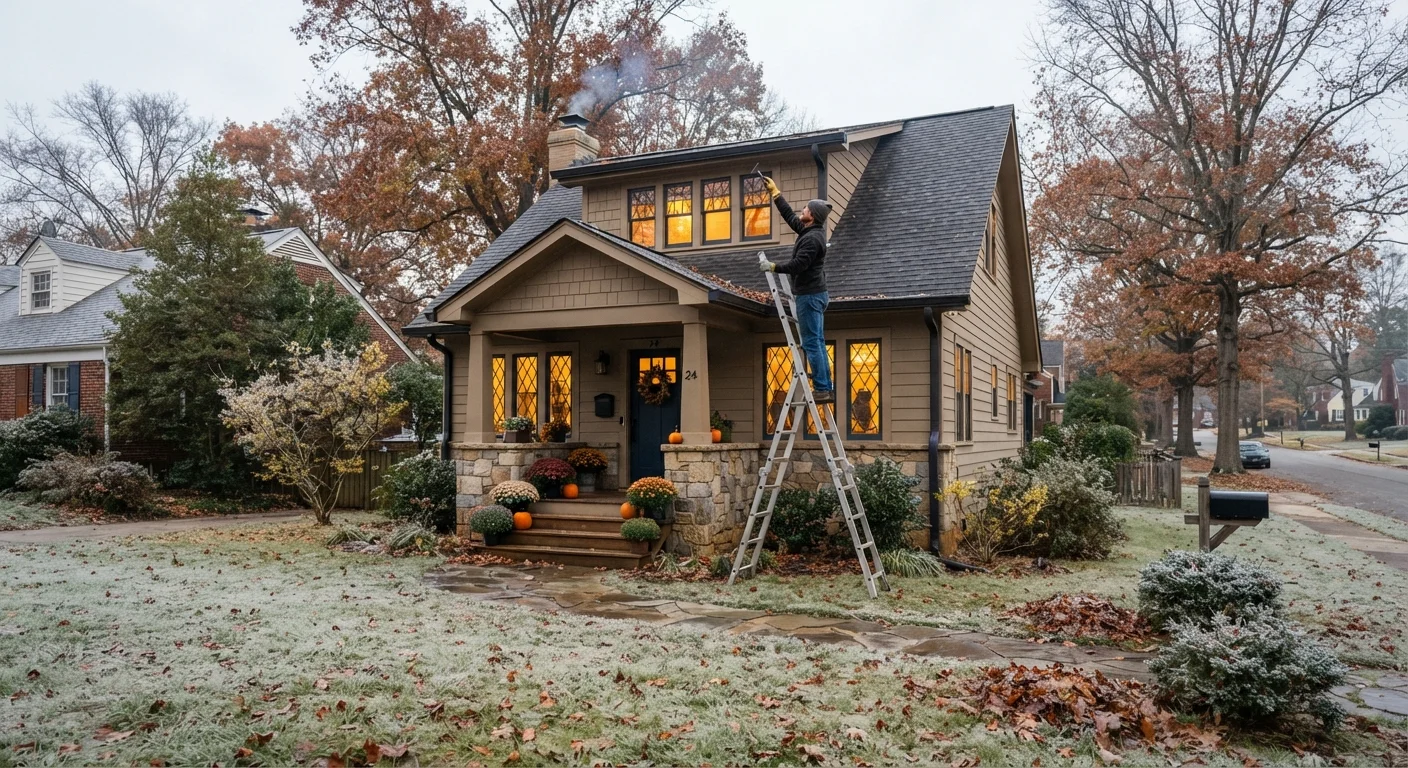
Each year, ladder-related falls send tens of thousands of Americans to emergency rooms. Always set your ladder on firm, level ground, have a second person steady it, and never overreach to the side. If your gutters are high or steeply pitched, hiring a professional gutter cleaning service is a reasonable and worthwhile safety choice.
Generators Must Never Be Run Indoors
Portable generators emit carbon monoxide - an odorless, colorless gas that can be lethal within minutes in an enclosed space. Never operate a generator inside a garage, basement, or anywhere connected to the living space, even with a window open. Keep the unit at least 20 feet from any door, window, or vent.
Special Considerations by Home Type and Climate
Not every item on this checklist will apply equally to every home. Homeowners in the upper Midwest or Northeast - where temperatures routinely drop below 0°F - face more acute freeze risks than those in milder climates like the Pacific Northwest or mid-Atlantic. Similarly, a slab-foundation home has different vulnerability points than one with a crawl space or full basement.
Older homes built before modern energy codes were adopted often have significantly less insulation and more air infiltration than newer construction, making weatherization tasks especially impactful. If your home was built before 1980, consider having an energy audit performed by a certified professional - many utility companies offer them at low or no cost.
Renters should note that landlords are generally responsible for structural weatherization and heating system maintenance under most state habitability laws, though you may still want to address window draft and interior humidity on your own.
For a broader look at home improvements that pay dividends year-round, visit the Home Improvement hub for practical renovation and upkeep guidance.
Gas and Electrical Work Requires a Licensed Pro
Several winter-prep tasks - including furnace repairs, gas line inspection, and any electrical work on your heating system - must be performed by a licensed contractor in most jurisdictions. Attempting these without proper training and permits can void your homeowner's insurance, create serious safety hazards, and violate local building codes. When in doubt, call a professional.