

Key Takeaways
Why Food Spending Derails Travel Budgets
Food is one of the most unpredictable line items in any travel budget - and one of the most frequently underestimated. Unlike flights and hotels, which are booked in advance at fixed prices, food costs accumulate in real time through dozens of small decisions made when you're tired, hungry, or disoriented. The result is often a pattern of reactive spending: airport sandwiches, overpriced hotel breakfasts, and restaurant meals chosen out of convenience rather than value.
According to the US Travel Association, dining and beverages consistently rank among the top three expense categories for American leisure travelers. For a two-week international trip, food costs can easily rival or exceed what was spent on accommodation - yet most travelers spend far more time researching hotels than they do thinking about where and how they'll eat.
The good news: food is also one of the most controllable travel expenses. Unlike transportation or lodging, which are largely locked in at booking, eating decisions happen every day. A few consistent habits - established before you leave and reinforced on the ground - can dramatically reduce daily food costs without reducing the quality or enjoyment of what you eat. For a broader look at overlooked travel costs, see what most travelers forget to budget for.
Core Practices for Eating Well on Less
The practices below aren't about deprivation - they're about redirecting spending toward food that's actually worth it. Applied consistently, they give you more control over one of travel's most variable costs.
Set a realistic daily food budget before you arrive
Without a spending target, food costs expand to fill whatever's available. A concrete daily figure - even a rough one - gives you a decision framework at every meal. It also helps you identify where you have flexibility and where you need to pull back.
Make lunch your main meal, not dinner
Many restaurants, especially in Europe and Latin America, offer fixed-price lunch menus - often called a 'prix fixe' or 'menu del día' - that include multiple courses at a fraction of dinner prices. Eating your largest meal at midday captures that value while dinner can be kept light and inexpensive.
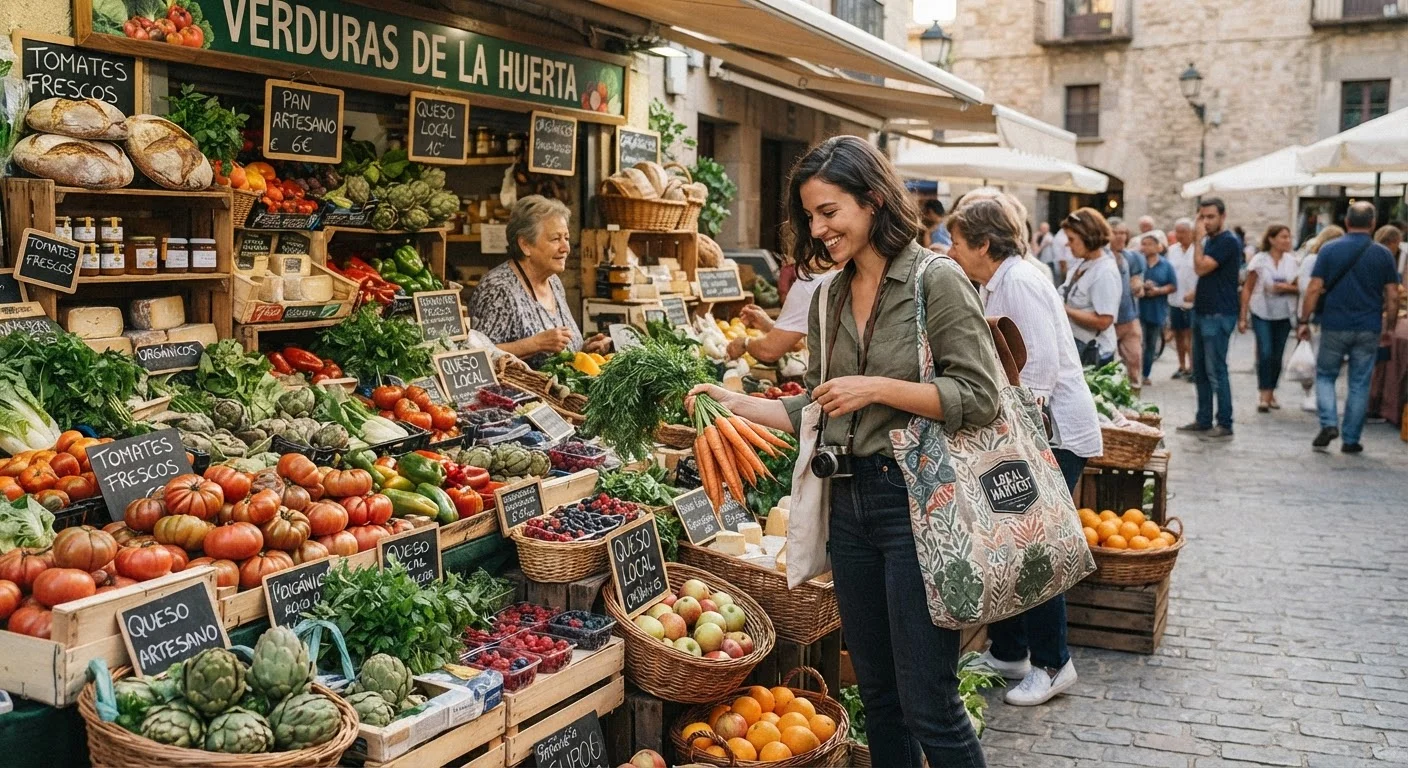
Shop at local markets and grocery stores for at least one meal per day
Supermarkets and fresh-produce markets offer prepared foods, local staples, and snacks at a fraction of restaurant prices. Even one market-sourced meal per day - breakfast from a bakery, lunch from a deli counter - meaningfully reduces total spending without sacrificing variety or quality.
Eat where locals eat, not where tourists gather
Restaurants near major attractions and in highly trafficked tourist zones charge premiums that reflect location, not food quality. Walking a few blocks away from the main square or asking hotel staff for neighborhood recommendations almost always yields better food at lower prices.
Carry snacks and a refillable water bottle to avoid expensive impulse purchases
Hunger and thirst between meals lead to the most expensive, least satisfying food decisions - airport kiosks, museum cafés, vending machines. Packing portable snacks and filling a water bottle at hotels or public fountains (where safe) eliminates this category of spending entirely.
Use food as a cultural experience, not just fuel
Framing one or two meals per trip as intentional, worth-it splurges - a local specialty, a beloved neighborhood institution - keeps the overall budget sustainable while ensuring the trip feels rich and memorable. This is the opposite of spending randomly at mediocre tourist restaurants.
Food Costs Vary Widely by Destination
What counts as affordable eating depends entirely on where you are. A sit-down lunch in Southeast Asia may cost less than a fast-food combo meal in a US airport. Before setting a daily food budget, research typical meal costs for your specific destination using travel forums, recent blog posts, or destination guides. This helps you calibrate expectations rather than applying a one-size-fits-all number that may be unrealistically low or unnecessarily cautious.
Building Your Travel Food Strategy
The most effective food strategies are built before departure, not improvised at mealtimes. A few minutes of pre-trip research pays off every day on the road.
Start by identifying the food infrastructure near your accommodation: is there a grocery store within walking distance? A morning market? A bakery? Knowing this in advance makes it easy to establish low-cost breakfast and snack routines without hunting for options while hungry. If you're traveling with a partner or family, aligning on food expectations before the trip also prevents the costly disagreements that send groups to the nearest convenient (and expensive) option - a dynamic explored in more depth in budgeting as a household.
It's also worth remembering that food costs are destination-dependent. Some locations offer extraordinary value for American travelers - a concept covered in detail in how currency and cost of living work in your favor. Building your food budget around destination-specific research, rather than a generic figure, produces a much more accurate plan.
Finally, treat your food budget the same way you'd treat any other spending category. If you're newer to tracking daily expenses, the principles in budgeting basics translate directly to travel spending - the category just changes.