

Key Takeaways
Why Most Travelers Overpack (And Keep Doing It)
Overpacking is rarely about greed - it's almost always about anxiety. Travelers fear being caught without the right outfit, the right adapter, or enough options for weather they can't predict. The result is a bag stuffed with items that never leave the hotel room and a back that aches by day two.
The fix isn't willpower. It's a repeatable system that removes decision fatigue from the equation. Whether you're heading out for a long weekend or a two-week international trip, the same core principles apply: plan deliberately, pack functionally, and build in flexibility instead of volume.
See our pre-trip preparation checklist for a broader look at everything that needs to happen before you leave home - packing is just one piece of that puzzle.
Best Practices for Packing Light Without Sacrificing Comfort
These strategies are drawn from seasoned travelers and tested across a wide range of trip types. Apply the ones that match your travel style and build from there.
Build a master packing list organized by trip type, not by individual destination.
Generic lists lead to generic packing - too much for some trips, too little for others. A list segmented by trip type (beach getaway, city break, outdoor adventure) lets you start from a relevant baseline and edit down, rather than building from scratch under pressure.
Apply a clothing ratio: plan one outfit per two days, not one per day.
Most travelers wear far less than they pack, especially when outfits are chosen for versatility rather than novelty. A 2:1 ratio forces intentional selection and still leaves room for variety with layering and accessories.
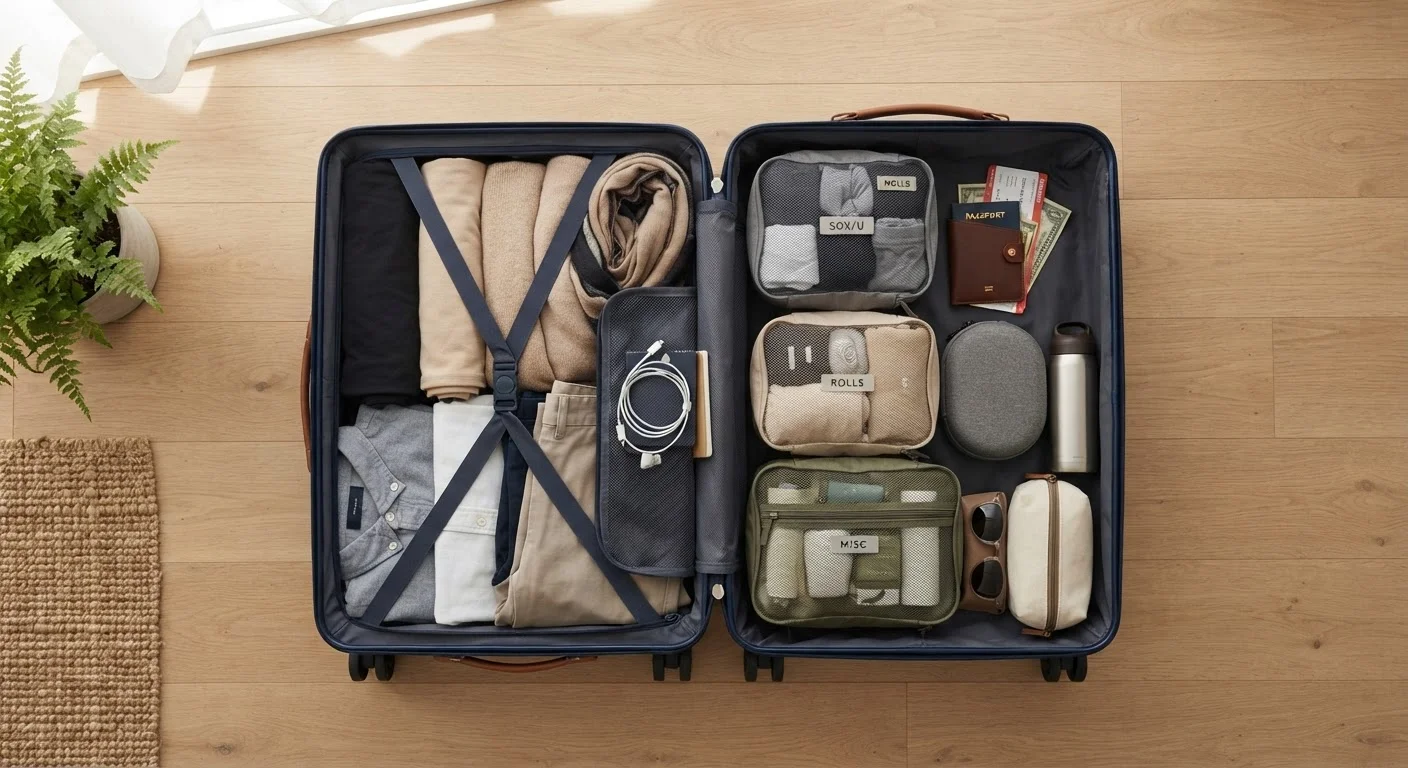
Use packing cubes to compress and categorize clothing before placing it in your bag.
Packing cubes create visible structure inside a bag, prevent clothes from shifting and wrinkling, and make it easier to spot when you're approaching capacity. They also make unpacking and repacking at multiple destinations significantly faster.
Apply the 'one bag out, one bag in' rule when adding items at the last minute.
Last-minute additions are where most packing discipline breaks down. This rule creates a direct trade-off that keeps the overall volume stable and forces you to evaluate whether the new item is truly more useful than what it replaces.
Shift toiletries to solid or travel-size formats and pack them in a single, accessible pouch.
Full-size toiletries are among the heaviest and most space-consuming items travelers pack. Solids (shampoo bars, solid sunscreen) eliminate liquid restrictions and reduce weight; a dedicated pouch speeds up security screening and prevents leaks from spreading.
Budget-conscious travelers will find that packing light also reduces costs - no checked bag fees, faster airport navigation, and fewer lost luggage risks. For more on keeping travel costs down from the start, explore planning a trip on a tight budget.
Quick Wins You Can Apply Before Your Next Trip
You don't need to overhaul your entire approach at once. Start with one or two changes and build the habit over several trips. Here's where to begin:
Pairing a smart packing approach with a well-structured itinerary makes both work better. A realistic schedule means you pack for what you'll actually do - not a fantasy version of the trip. Our guide on building a well-structured travel itinerary can help you align your plans before you ever open a suitcase.
Refining Your System After Every Trip
The most effective packing systems are living documents. After each trip, spend five minutes reviewing what you packed versus what you used. Items that stayed in your bag more than once are candidates for removal from your master list. Items you wished you had get added.
Keeping a simple notes document or a photo of your packed bag gives you a reference point the next time you're staring at an empty suitcase wondering where to start. Over time, this feedback loop turns scattered guesswork into a personal packing framework that works across every trip type.
Packing smart also connects directly to travel safety - a lighter, more organized bag is easier to keep track of and harder for opportunistic theft to exploit. Explore general strategies at our travel safety hub for awareness tips that complement good preparation habits.
The goal isn't to pack as little as possible for its own sake. It's to pack exactly what serves the trip - nothing more, and nothing less.