

Key Takeaways
Why Health Planning Deserves Its Own Checklist
Most travelers focus their preparation on logistics - flights, accommodations, and activities. For travelers managing health conditions, dietary restrictions, or regular medications, there's an equally important layer of planning that deserves dedicated attention. Overlooking it can turn manageable situations into genuine emergencies far from home.
Health-informed trip planning isn't about limiting where you go or what you do. It's about anticipating needs, reducing avoidable friction, and giving yourself the information and resources to handle the unexpected. A thorough pre-trip checklist already covers many general bases - but travelers with specific health considerations need to go a step further.
This article provides general travel planning information and is not a substitute for personalized medical advice. Always consult a qualified healthcare professional before making decisions about your health while traveling.
Core Practices for Health-Conscious Trip Planning
The following practices address the most common and consequential health-related planning gaps travelers face. Implementing even a few of them meaningfully reduces risk.
Schedule a pre-travel medical consultation at least 4-6 weeks before departure.
Some health adjustments, vaccinations, or prescription changes take time to arrange or take effect. A consultation gives your provider enough lead time to address potential issues before they become travel emergencies. It also ensures your health records are current if you need care abroad.
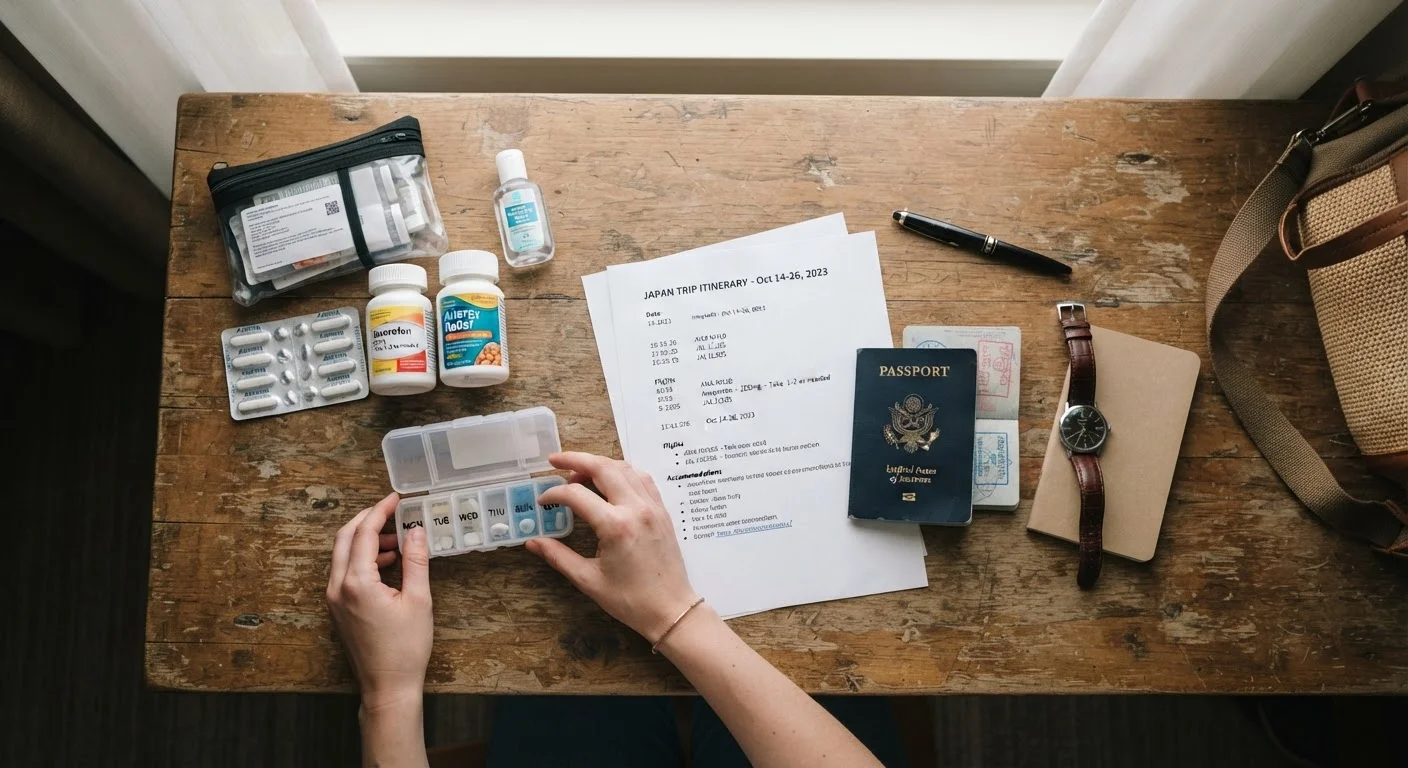
Carry medications in their original labeled containers and bring more than you think you'll need.
Customs officials may require proof that medications are legally prescribed to you. Generic drug names aren't universally recognized, and some medications available in the US are controlled or restricted in other countries. Running out abroad can be difficult and costly to resolve.
Research healthcare access at your destination before you travel.
Knowing in advance where the nearest hospital, clinic, or pharmacy is - and what language the staff speaks - removes critical friction during a stressful moment. Emergency situations are not the time to start searching. Verify with official local or government sources, as conditions change.
Review your travel insurance policy specifically for pre-existing condition coverage.
Many standard travel insurance policies exclude pre-existing conditions or require additional riders. A policy that covers emergency evacuation and medical treatment abroad can be the difference between a manageable event and a financially devastating one. This is general information - review specific policy terms carefully.
Prepare a health summary document and keep a copy accessible offline.
If you're unable to communicate clearly - due to a medical emergency, language barrier, or disorientation - a concise written summary of your conditions, medications, allergies, and emergency contacts can be lifesaving. Digital copies can become inaccessible if your device is lost or uncharged.
Quick Steps You Can Take Right Now
You don't have to address every item at once. Start with the actions that take the least time but deliver the most protection.
Structuring Your Itinerary Around Your Health Reality
One of the most overlooked aspects of health-conscious travel is how the itinerary itself can either support or undermine your wellbeing. Overpacked schedules with back-to-back activities, minimal downtime, and aggressive time-zone crossings can strain anyone - but the impact is amplified for travelers managing chronic illness, mobility challenges, or conditions that are sensitive to stress and fatigue.
When building your plan, treat rest blocks as non-negotiable rather than optional. Build in a buffer day after long-haul flights, schedule lighter activity following intensive excursions, and avoid placing medical appointments or complex travel days adjacent to each other. A well-structured travel itinerary accounts for the reality that energy and health aren't constant - and that flexibility is a feature, not a weakness.
For travelers joining group trips, communicating health needs early makes a significant difference. Coordinating with others around dietary requirements, pacing preferences, or medical stops is much easier done upfront than on the road. See group trip planning guidance for strategies on keeping everyone's needs aligned without derailing the experience.
For related safety planning considerations - including knowing when thorough preparation genuinely matters - this honest look at over-preparation vs. spontaneity is worth reading alongside your health checklist.