

| Common worksheet name | Buyer's Order or Purchase Agreement |
| Where it's presented | F&I (Finance & Insurance) office |
| Government fees negotiable? | No - set by state and local law |
| Add-on products required? | Generally optional unless lender-mandated |
| Documentation fee regulation | Capped by law in many U.S. states |
| Key number to verify first | Vehicle sale price - must match negotiated figure |
Why the Finance Worksheet Deserves a Slow Read
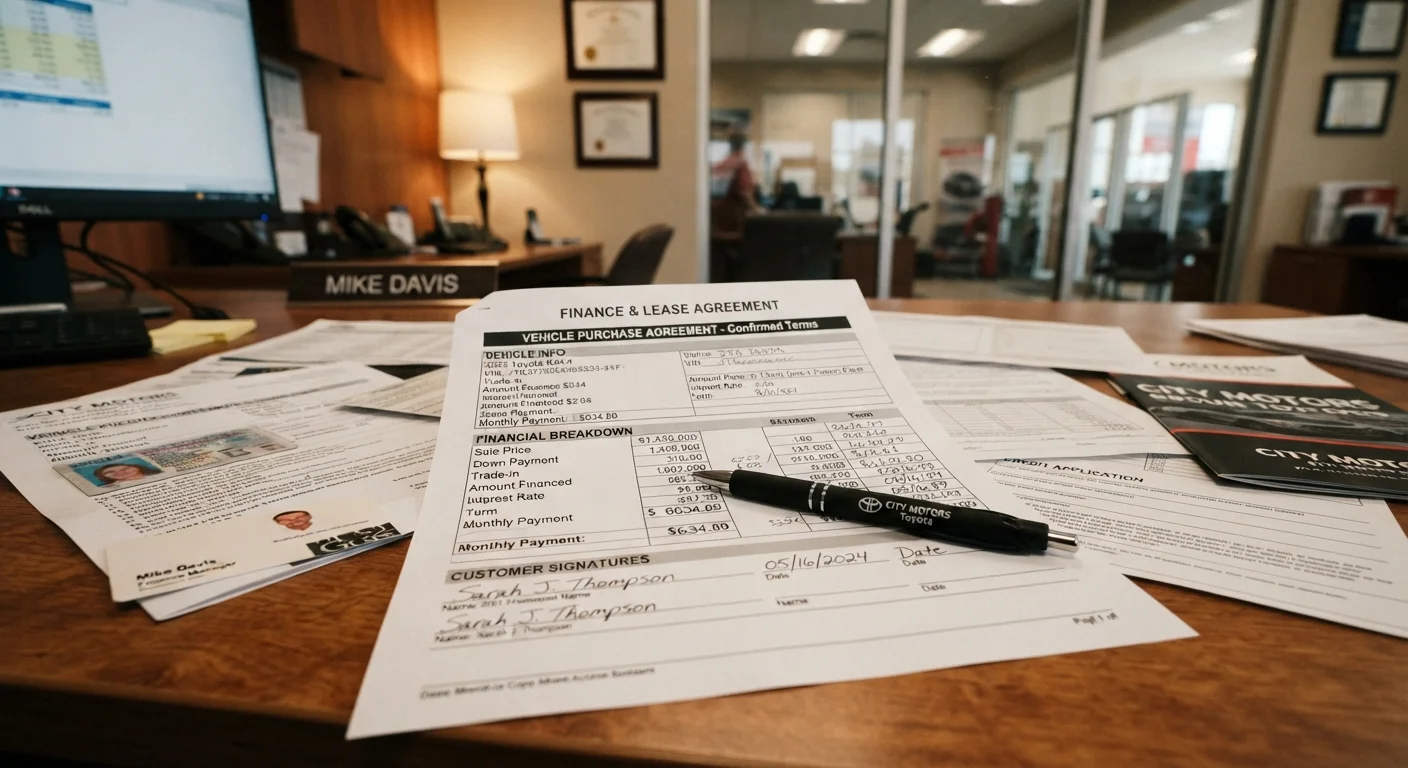
Most car buyers spend hours researching vehicles but just minutes reviewing the finance paperwork. The dealer's finance worksheet - sometimes called a buyer's order or purchase agreement - is where the actual cost of your purchase is assembled, line by line. Understanding each entry before you sign is the single most effective way to avoid paying more than you intended.
The worksheet is typically presented in the Finance and Insurance (F&I) office after you've agreed on a vehicle price. At that point, some buyers feel momentum pressure to move quickly. Resist it. You have every right to read each line carefully and ask for clarification on anything unfamiliar.
For a broader look at who controls your financing options at this stage, see how dealer financing compares to your own bank or credit union.
Amount Financed
The total dollar amount you are borrowing, calculated after subtracting your down payment and trade-in credit from the vehicle price plus applicable fees and add-ons. This is the figure interest is calculated on.
APR (Annual Percentage Rate)
The yearly cost of borrowing expressed as a percentage, including the interest rate and any lender fees. A lower APR means less paid in interest over the life of the loan.
Negative Equity
The difference when you owe more on a trade-in vehicle than its current value. This shortfall is typically added to the new loan balance, increasing the amount you finance.
GAP Insurance
Guaranteed Asset Protection insurance covers the gap between what your auto insurance pays out and what you still owe on your loan if the vehicle is totaled or stolen. It is optional and available outside the dealership.
Documentation Fee
A fee charged by the dealer for preparing and processing the paperwork associated with your vehicle purchase. Amounts vary by dealership and are regulated or capped in some states.
F&I Office
Short for Finance and Insurance office - the department at a dealership where buyers complete financing paperwork and are presented with optional add-on products and services.
Line-by-Line: What Each Section Means
Finance worksheets vary by dealership, but most contain the same core categories. Here's what to look for in each one.
| Common worksheet name | Buyer's Order or Purchase Agreement |
| Where it's presented | F&I (Finance & Insurance) office |
| Government fees negotiable? | No - set by state and local law |
| Add-on products required? | Generally optional unless lender-mandated |
| Documentation fee regulation | Capped by law in many U.S. states |
| Key number to verify first | Vehicle sale price - must match negotiated figure |
Vehicle Sale Price
This is the agreed-upon price of the car itself - sometimes called the capitalized cost on a lease, or simply the selling price on a purchase. Confirm this matches exactly what you negotiated on the showroom floor before anything else is reviewed.
Trade-In Allowance and Payoff
If you're trading in a vehicle, the worksheet will show the trade-in value the dealer is crediting you, along with any outstanding loan balance (called the payoff amount) on that vehicle. If you owe more than the trade-in value, the difference - called negative equity - is typically rolled into your new loan, increasing what you finance.
Down Payment
This is the cash you're contributing upfront. A larger down payment reduces your amount financed and therefore the total interest you'll pay over the loan term. Some worksheets separate a cash down payment from any dealer incentive or manufacturer rebate being applied.
Dealer Fees
This section often contains multiple line items, including a documentation fee (for processing paperwork), dealer prep fees, and sometimes advertising fees. Documentation fees are largely standard but vary by state - some states cap them by law. Dealer prep and advertising fees are generally negotiable or can be questioned.
Government Fees and Taxes
These include sales tax, title fees, and registration fees. Unlike dealer fees, these are set by your state and local government and are non-negotiable. The amounts should match what your state publishes.
Add-On Products (F&I Products)
This is often the most variable section of the worksheet. Items like extended service contracts, GAP insurance, paint and fabric protection, and tire and wheel coverage are offered here. Each is optional unless required by the lender. For a balanced look at what these products actually cover, see our guide to dealer add-ons and extended warranties.
Amount Financed
This is the total you're borrowing: vehicle price, plus fees and add-ons, minus your down payment and trade-in credit. This number - not the vehicle sticker price - is what your loan interest is calculated on.
APR and Loan Term
The Annual Percentage Rate (APR) reflects the true cost of borrowing, including the interest rate and any lender fees expressed as a yearly percentage. The loan term is the repayment period in months. A longer term lowers your monthly payment but increases total interest paid. For a full breakdown of questions to ask before locking in these numbers, see questions worth asking before agreeing to any car loan terms.
Monthly Payment and Total Cost
The monthly payment is the figure many buyers focus on exclusively - but the total cost column (monthly payment × number of months) gives a more accurate picture of what the vehicle will actually cost you. Always review both.
Red Flags to Watch Before You Sign
A few patterns on finance worksheets warrant extra attention:
- Numbers that don't match your negotiation: If the selling price on the worksheet differs from the price you agreed to verbally, request a correction before proceeding.
- Add-ons buried in the total: F&I products are sometimes presented as if they're already included. Each line should be individually itemized so you can accept or decline them separately.
- A "packed" payment: This happens when optional products are folded into the monthly payment quote without being disclosed. Ask for a payment quote that reflects only the vehicle and required fees before any add-ons are discussed.
- Discrepancies in the trade-in payoff: If the payoff amount listed differs from your lender's current payoff quote, ask the dealer to reconcile it before signing.
Being familiar with common misconceptions at the dealership can also help. Car-buying myths that trip up even experienced shoppers covers several assumptions that can cost buyers money in the F&I office.
This article is for general informational and educational purposes only and does not constitute financial or legal advice. Consult a qualified financial professional for guidance specific to your situation.