

Key Takeaways
What Uneven Brake Wear Actually Tells You
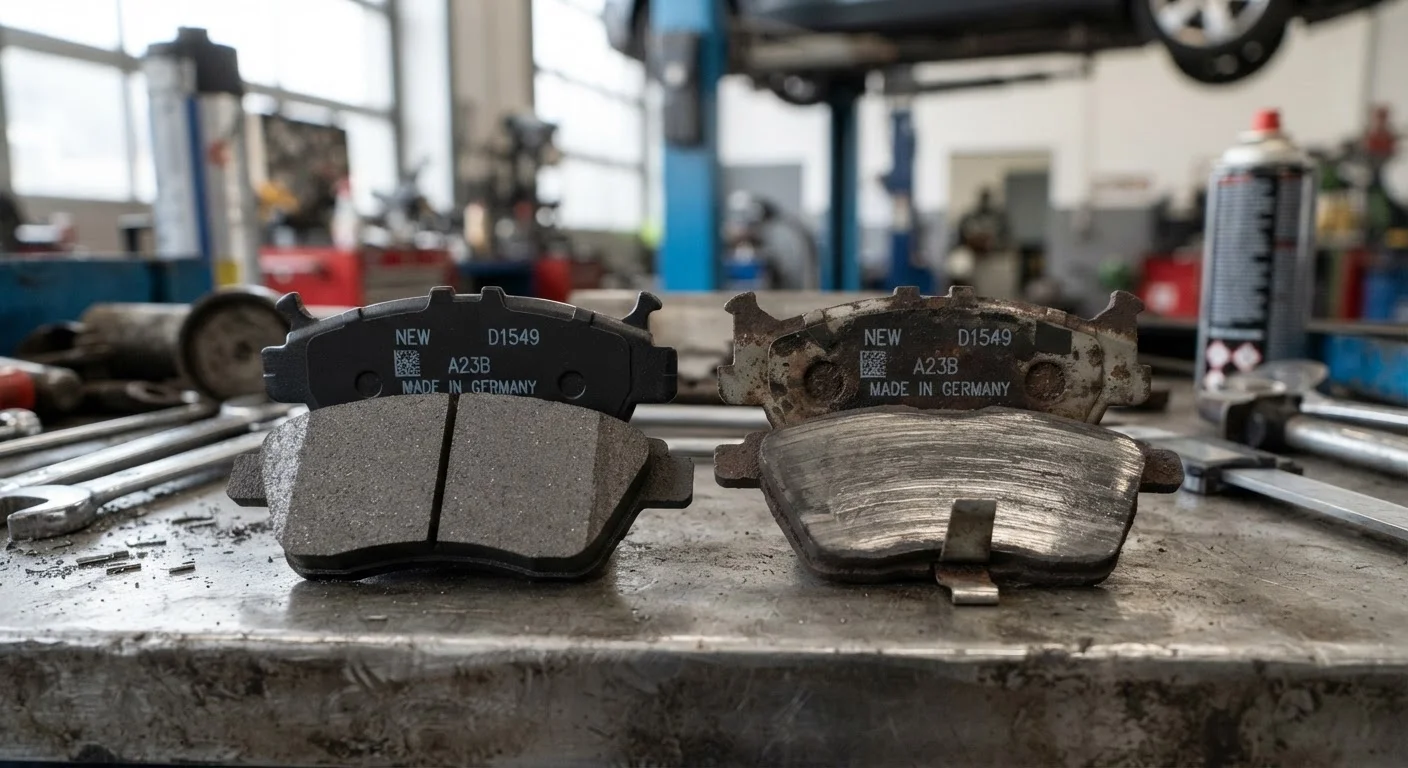
Brake pads are designed to wear down gradually and relatively evenly across all four wheels. When one pad wears significantly faster than another - or when the inner pad is thinner than the outer on the same caliper - it's a clear signal that something in the braking system isn't functioning as intended.
Uneven wear comes in a few forms: side-to-side differences (front-left versus front-right), inner-to-outer differences on a single wheel, or axle-to-axle differences (front versus rear). Each pattern points to a different set of potential causes. Understanding what you're looking at helps you communicate clearly with a mechanic and avoid dismissing a real problem as routine wear.
Unlike tire wear patterns - which can sometimes be corrected with a simple rotation (see how rotation reveals uneven tire wear) - brake pad wear rarely self-corrects. It tends to worsen over time, eventually damaging the rotors and increasing stopping distances.
Ignoring a sticking brake caliper and replacing only the pads.
Why it happens: Sticking calipers often cause no obvious symptoms beyond uneven wear, so drivers assume the pads simply ran out. Replacing pads without addressing the caliper means the new pads will wear just as unevenly.
Neglecting to lubricate or replace caliper slide pins during a pad change.
Why it happens: Slide pins allow the caliper to move slightly and apply even pressure across both pad surfaces. When they're dry or corroded, the caliper binds and the inner or outer pad takes on more braking load than the other.
Skipping the replacement of worn brake hardware and shims.
Why it happens: Anti-rattle clips, shims, and pad retaining hardware are often reused during pad changes to save time or money. Worn hardware allows pads to shift position slightly, creating uneven contact with the rotor.
Riding the brake pedal during highway driving or descents.
Why it happens: Some drivers habitually rest a foot on the brake pedal or apply light, continuous pressure on long downhill stretches. This generates sustained heat and friction on specific contact points, accelerating wear unevenly.
Assuming front-to-rear wear differences are always normal.
Why it happens: Front brakes do handle a larger share of stopping force on most vehicles, so some front-to-rear difference is expected. Drivers sometimes use this as a reason to dismiss rear pad wear that is actually far too low, suggesting a rear brake balance or proportioning valve issue.
When to Act and What to Expect
Many drivers wait until they hear squealing or grinding before investigating their brakes. By that point, the pads may already be worn into the rotors, turning what would have been a pad replacement into a costlier rotor replacement as well.
Don't Wait for Noise Before Inspecting
Brake squeal is a wear indicator - it means pads are already at or near their minimum thickness. At the grinding stage, metal-on-metal contact is damaging your rotors with every stop. Visual inspection during routine maintenance is a far better strategy than waiting for audible warnings, which may not always occur depending on driving conditions.
A better approach is to include a visual brake inspection during every tire rotation or oil change. Most brake pads have a wear indicator slot that, when it disappears, signals it's time to replace them. If pads on one wheel are at the wear line while others still have significant material remaining, you have uneven wear - and something needs to be diagnosed.
A qualified mechanic can compress the caliper pistons, check slide pins, measure pad thickness with calipers, and evaluate rotor condition. This inspection is typically straightforward and catches most causes of uneven wear before they escalate. Do not attempt to adjust or disassemble brake calipers without proper training and tools - brake system integrity directly affects vehicle safety.
Once the root cause is addressed, new pads should wear evenly going forward. If uneven wear returns after a fresh set of pads, the underlying issue wasn't fully resolved and requires further diagnosis.