

Key Takeaways
Tire Rotation
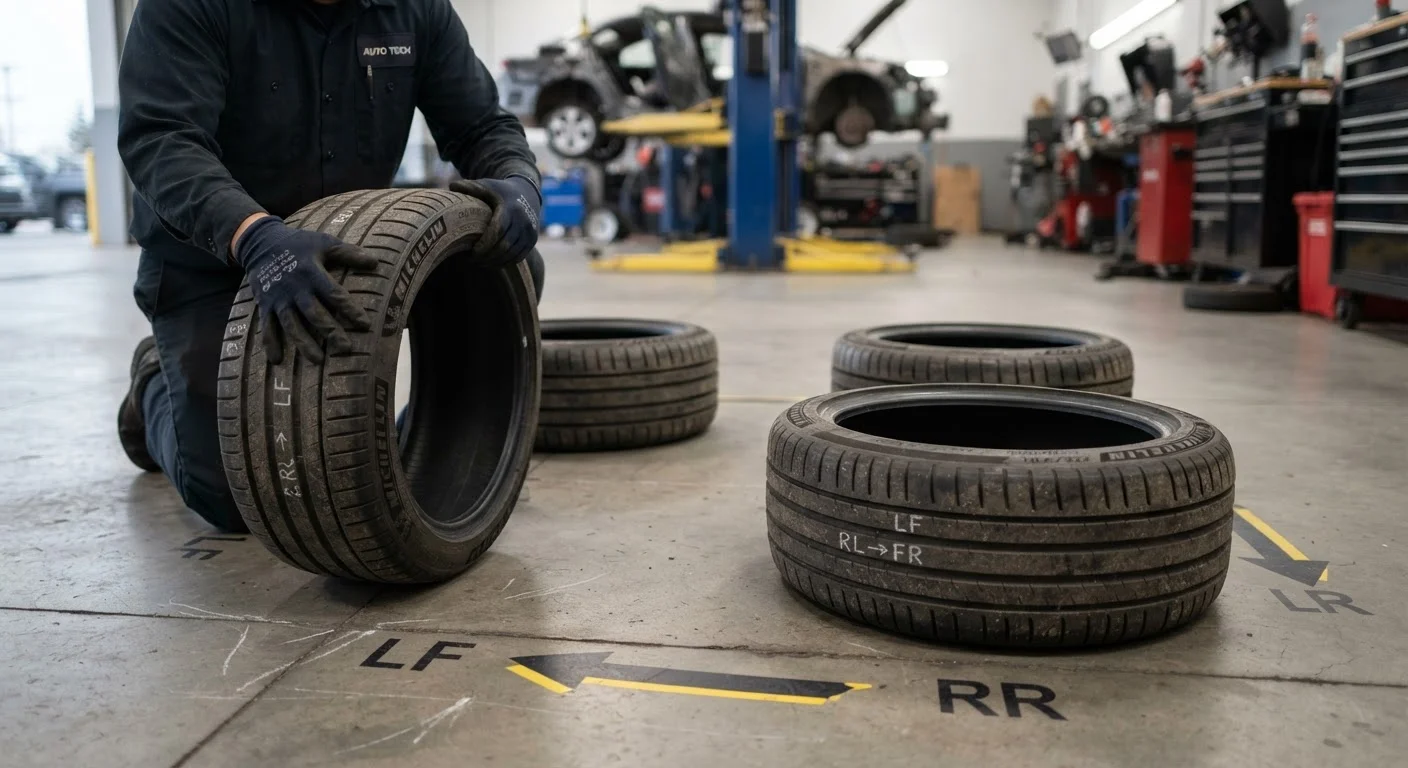
Tire rotation is the practice of moving each tire to a different position on your vehicle at regular intervals. Because tires wear differently depending on where they're mounted - front tires on front-wheel-drive cars, for example, carry extra steering and braking stress - rotating them evens out that wear over time. This extends the usable life of your full set of tires and helps maintain consistent handling.
Rotation patterns (such as forward cross, X-pattern, or rearward cross) vary by drivetrain type and whether tires are directional or non-directional. Always follow the pattern recommended in your vehicle's owner's manual.
Why Tire Rotation Gets Skipped - And Why That's a Problem
Tire rotation rarely feels urgent. Tires don't make a sudden noise when they need rotating, and there's no dashboard warning light to prompt the service. For most drivers, it quietly falls off the maintenance radar until uneven wear becomes obvious - or until a tire fails early.
The reality is straightforward: tires don't wear evenly on their own. On a front-wheel-drive vehicle, the front tires handle acceleration, steering, and a significant portion of braking. They can wear up to twice as fast as the rears. Rear-wheel-drive vehicles shift that burden to the back. All-wheel-drive systems spread load more evenly, but tread differences between axles can still strain the drivetrain over time.
Regular rotation corrects this imbalance by cycling each tire through different positions, ensuring wear spreads evenly across all four. The result: the full set of tires reaches the end of its useful life together rather than one or two wearing out prematurely. See The Complete Guide to Car Maintenance Schedules for how rotation fits into your broader service timeline.
Pair Rotation with a Tire Pressure Check
Every rotation appointment is a good opportunity to verify tire pressure on all four tires - including the spare if you carry one. Correct inflation supports even wear, improves handling, and helps maintain fuel efficiency. Your vehicle's recommended tire pressure is listed on a sticker inside the driver's door jamb, not on the tire itself.
The Right Rotation Interval
The general industry guideline is to rotate tires every 5,000 to 7,500 miles. Many drivers find it convenient to rotate with every oil change, though modern synthetic oil intervals have stretched to 7,500 or even 10,000 miles on some vehicles - meaning you may need to schedule tire rotation separately.
Your owner's manual is the authoritative source for your specific vehicle. AWD models in particular may call for more frequent rotation. If you drive in demanding conditions - frequent highway miles, heavy loads, or mountainous terrain - lean toward the shorter end of the interval range.
5,000-7,500 mi
Recommended tire rotation interval
Industry standard guidance from major tire manufacturers and most vehicle owner's manuals.
2x faster
Front tire wear rate on FWD vehicles
Front tires on front-wheel-drive vehicles handle steering, acceleration, and braking, causing them to wear significantly faster than the rear tires.
Up to 20%
Potential tire life extension from rotation
Regular rotation distributes wear evenly across all four tires, which can meaningfully extend the usable mileage of a full set.
What Uneven Wear Tells You
When a rotation is overdue, the tread itself starts providing clues. Different wear patterns point to different underlying issues:
- Center wear: The center of the tread is worn more than the edges - typically a sign of chronic overinflation.
- Edge wear: Both outer edges worn while the center is relatively intact - usually caused by chronic underinflation.
- One-sided wear: One shoulder worn significantly more than the other - often a wheel alignment problem.
- Cupping or scalloping: Irregular dips and high spots around the tread - commonly linked to worn shocks or struts.
Catching these patterns early can save money on tires and alert you to a suspension or inflation issue before it worsens. To understand the markings and specifications stamped into your tire sidewall, see How to Read a Tire Sidewall.
Rotation appointments are also a natural checkpoint: a technician can inspect tread depth, check inflation, and flag any concerning wear before it advances. For a broader look at maintenance items drivers often let slide, see The Car Maintenance Tasks Most Drivers Overlook.
Rotation Patterns and Special Cases
Not all rotation patterns are the same. The correct pattern depends on your drivetrain, whether your tires are directional (designed to roll in one direction only), and whether your vehicle uses a full-size spare that can be included in the rotation.
- Forward cross: Common for front-wheel-drive vehicles. Front tires move straight back; rear tires cross to the opposite front corners.
- Rearward cross: Typically used for rear- or all-wheel-drive. Rear tires move straight forward; front tires cross to opposite rear positions.
- X-pattern: All four tires cross diagonally. Suitable for some front-wheel-drive vehicles with light or uneven wear.
Directional tires - identifiable by a one-way arrow on the sidewall - can only be rotated front-to-back on the same side of the vehicle, unless they're dismounted and remounted. If you're unsure of your tire type or the correct pattern, defer to a qualified tire technician.
High-mileage vehicles also deserve particular attention here. As suspension components age, they can accelerate uneven wear, making consistent rotation even more valuable. For more on maintaining older vehicles, see Keeping a High-Mileage Car on the Road Reliably.
Staggered Fitments Cannot Be Rotated Conventionally
Some performance vehicles use wider tires on the rear axle than the front - a setup called a staggered fitment. These tires typically cannot be rotated in the traditional sense because the sizes aren't interchangeable between axles. If your vehicle has a staggered setup, consult your owner's manual or a tire professional for specific guidance on maximizing tire life.