

Key Takeaways
The Maintenance Items Hiding in Plain Sight
Most drivers stay current with oil changes and tire pressure - the maintenance basics that reminder stickers and dashboard lights reinforce. But vehicles have a longer list of service needs, and several items routinely fall through the cracks. Some are invisible until they fail; others are simply unfamiliar. The result is the same: avoidable breakdowns and repair bills that could have been a fraction of the cost with timely attention.
Your owner's manual is the authoritative source for your specific vehicle's service intervals. The items below appear across many makes and models and are among those most commonly skipped. Think of this as a checklist to cross-reference with your manual - and to discuss with a qualified mechanic at your next service visit. For a broader look at what your car needs and when, the complete guide to car maintenance schedules walks through mileage milestones in detail.
Cabin Air Filter
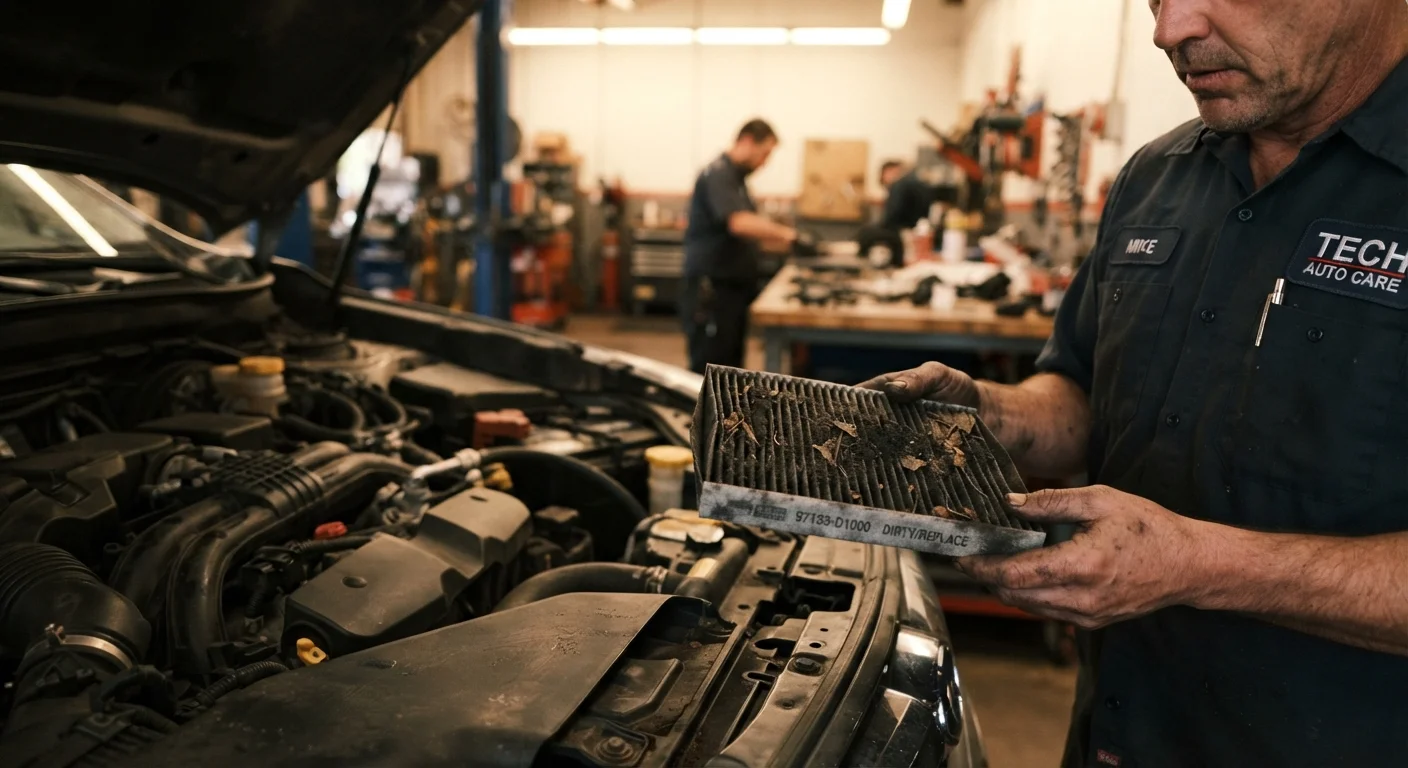
The cabin air filter cleans the air flowing through your heating and air conditioning system before it reaches the passenger compartment. Over time it collects dust, pollen, mold spores, and road debris. A heavily clogged filter reduces airflow noticeably and can worsen air quality inside the vehicle - relevant for anyone with allergies or respiratory sensitivities.
Most manufacturers recommend replacement every 15,000 to 25,000 miles, though driving in dusty or high-pollution environments shortens that interval. It's a separate component from the engine air filter - the two protect entirely different systems. Cabin air filters vs. engine air filters explains how each works and why both matter.
A clogged cabin air filter reduces airflow and degrades air quality inside the vehicle.
Transmission Fluid
Transmission fluid lubricates the complex moving parts inside your vehicle's transmission, reduces heat, and - in automatic transmissions - serves as hydraulic fluid that enables gear changes. As it ages, it breaks down and becomes contaminated with metal particles, losing its ability to protect components effectively.
Neglecting transmission fluid is one of the more expensive oversights a driver can make. Transmission repairs and replacements rank among the costliest automotive jobs. Checking your owner's manual for the recommended change interval (which varies widely by manufacturer and driving conditions) is the starting point. If the fluid appears very dark or has a burnt smell, have it inspected by a mechanic promptly. See fluid levels every driver should know how to check for a broader overview.
Degraded transmission fluid is a leading, preventable cause of expensive drivetrain repairs.
Serpentine Belt
The serpentine belt is a single continuous belt that drives multiple engine accessories simultaneously - typically the alternator, power steering pump, air conditioning compressor, and water pump. Because it does so much work, its condition is critical. Most drivers never think about it until it snaps.
A failed serpentine belt can strand you immediately: without it, the alternator stops charging the battery, the cooling system may lose function, and power steering can disappear. Visual signs of wear include cracking, fraying, glazing, or visible rib damage on the underside. Most manufacturers recommend inspection every 60,000 to 100,000 miles, but a mechanic can assess its condition visually during routine service.
A snapped serpentine belt can disable the alternator, cooling, and power steering simultaneously.
Brake Fluid
Brake fluid is hygroscopic, meaning it absorbs moisture from the surrounding air over time. As water content increases, the fluid's boiling point drops. Under hard or sustained braking, degraded fluid can boil inside the brake lines - creating vapor bubbles that compress instead of transmitting pressure. The result is a spongy pedal and reduced stopping ability, even when brake pads still have material remaining.
Many drivers assume their brakes are fine because the pads look acceptable. Fluid condition is a separate consideration. A mechanic can test brake fluid moisture content quickly with an inexpensive tester. Most manufacturers recommend a flush every two to three years, though intervals vary by vehicle and climate.
Brake fluid absorbs moisture over time, quietly reducing stopping power regardless of pad condition.
Coolant Flush
Engine coolant (also called antifreeze) regulates your engine's operating temperature and prevents freezing in winter. Over time, coolant degrades chemically - its corrosion inhibitors break down, and it can become acidic enough to damage metal components like the radiator and water pump from the inside.
A coolant flush removes degraded fluid and replenishes corrosion protection. Intervals vary - some modern vehicles use extended-life coolant rated for 100,000 miles or more, while older formulations may require more frequent changes. Check your manual rather than assuming. Seasonal car maintenance covers coolant checks as part of cold-weather preparation.
Degraded coolant becomes acidic and can corrode your radiator and water pump from the inside.
Battery Terminal Cleaning
Corrosion on battery terminals - the white or blue-green crusty buildup that forms around the cable connections - increases electrical resistance and interferes with the battery's ability to deliver current reliably. It's a common reason for slow starts and parasitic electrical issues that are often misdiagnosed as a failing battery.
Terminal cleaning is straightforward and can be done at home with basic tools, though working around a car battery requires appropriate caution (protective gloves and eye protection are advised, and the negative cable should be disconnected first). A mechanic will typically check terminals during a battery inspection. For a fuller picture of what affects battery health, car battery life and what drains it covers the topic in depth.
Corroded battery terminals increase resistance and can cause starting problems even with a healthy battery.
Staying Ahead of Costly Surprises
None of the items on this list are difficult to understand, and most are inexpensive to address when caught on schedule. The pattern that makes them expensive is delay - a worn serpentine belt that fails and disables the alternator, or neglected transmission fluid that leads to a full rebuild. Deferred maintenance compounds quietly, much the way deferred home maintenance creates cascading damage over time.
If you're unsure which of these items applies to your vehicle or when service is due, a trusted mechanic can review your maintenance history and flag what's overdue. For drivers weighing what they can handle at home versus what requires professional hands, DIY car maintenance vs. taking it to a shop outlines the real trade-offs clearly.
Use Your Owner's Manual as Your Guide
Every vehicle has a manufacturer-specified maintenance schedule printed in the owner's manual - and it's the most reliable reference for your specific car. Intervals for items like transmission fluid, coolant, and belts vary significantly across makes and model years. If you've lost your manual, most automakers make digital versions available through their official websites. When in doubt, ask a qualified mechanic to review your vehicle's service history and flag what may be overdue.