

Key Takeaways
Reduces labor costs on routine maintenance tasks
Labor often makes up 50-70% of a shop bill. Handling simple jobs yourself can trim that expense considerably over the life of a vehicle.
Builds practical knowledge of your own vehicle
Working on your car firsthand helps you recognize early warning signs, understand what mechanics tell you, and avoid unnecessary upsells.
Flexible scheduling on your own timeline
You're not waiting for an appointment or a shop's turnaround time - basic tasks can be done whenever it's convenient for you.
Simple tasks carry manageable risk when done carefully
Jobs like replacing air filters or wiper blades have low stakes, clear instructions, and are easy to verify once completed.
Errors on safety systems can have serious consequences
Brake, steering, and suspension work must be performed precisely. A mistake in these areas can compromise vehicle control and put lives at risk.
Upfront tool costs can offset savings
A proper DIY setup - jack stands, torque wrench, specialty sockets - requires investment that only pays off over repeated use.
May void manufacturer or extended warranties
Some warranties require service to be performed by a certified technician. DIY work without proper documentation could leave you without coverage.
No professional diagnostic equipment at home
Modern vehicles rely on OBD-II scanners and manufacturer-specific tools to accurately diagnose faults. Consumer-grade readers offer limited insight by comparison.
Full liability falls on the driver
Unlike a licensed shop, there's no professional accountability if a DIY repair causes further damage or contributes to a safety incident.
Our Verdict
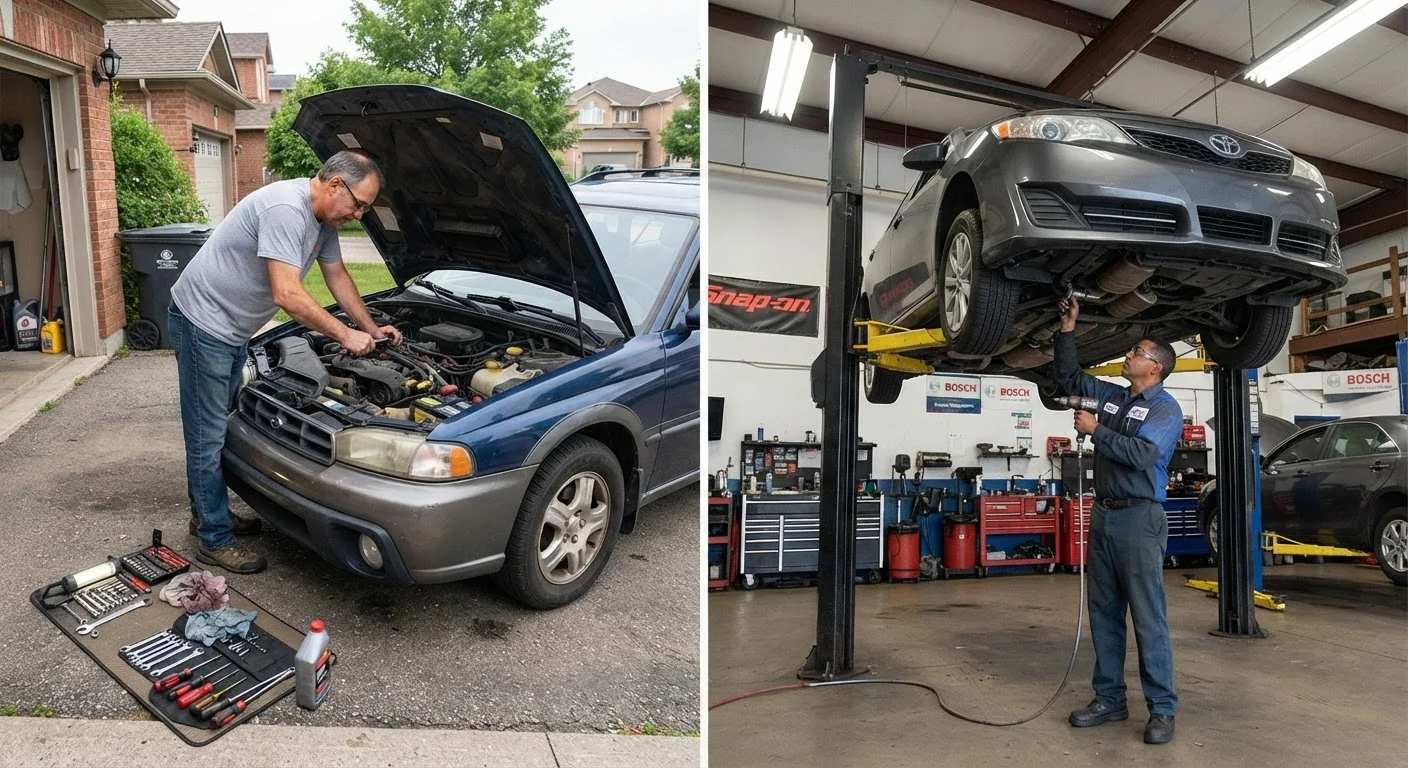
DIY car maintenance is a practical, cost-effective option for straightforward tasks - but it has clear limits. For anything that affects vehicle safety, emissions compliance, or complex systems, a qualified mechanic is the right call. A balanced approach - doing simple jobs yourself while leaving complex work to professionals - tends to serve most drivers well.
Drivers who are comfortable with basic mechanical tasks, have the right tools, and want to stay engaged in their vehicle's upkeep without taking on work beyond their skill level.
What You Can Realistically Do at Home
A number of routine maintenance tasks fall well within the capability of an average driver with basic tools and a little patience. Changing engine oil and the oil filter, replacing cabin and engine air filters, swapping out wiper blades, checking and topping off fluids, and replacing a dead battery are all tasks that require minimal mechanical knowledge and carry relatively low risk if done carefully.
These jobs are well-documented, the parts are widely available, and the consequences of a minor mistake are usually easy to detect and correct. If you're newer to car ownership, building good maintenance habits early makes tackling these tasks feel much more manageable over time.
That said, even simple DIY work demands attention to detail. Using the wrong oil viscosity, over-tightening a drain plug, or improperly seating an air filter can cause real problems. Always consult your owner's manual - not just generic advice online - before starting any task.
Reduces labor costs on routine maintenance tasks
Labor often makes up 50-70% of a shop bill. Handling simple jobs yourself can trim that expense considerably over the life of a vehicle.
Builds practical knowledge of your own vehicle
Working on your car firsthand helps you recognize early warning signs, understand what mechanics tell you, and avoid unnecessary upsells.
Flexible scheduling on your own timeline
You're not waiting for an appointment or a shop's turnaround time - basic tasks can be done whenever it's convenient for you.
Simple tasks carry manageable risk when done carefully
Jobs like replacing air filters or wiper blades have low stakes, clear instructions, and are easy to verify once completed.
Where DIY Crosses Into Risky Territory
As maintenance tasks grow in complexity, the risk of an error with serious consequences increases significantly. Brake system work - including pad replacement, rotor resurfacing, and caliper servicing - directly affects your ability to stop safely. While some experienced home mechanics do tackle brakes, any mistake can have life-threatening outcomes, and the work must be done precisely and completely.
Suspension components, steering linkages, timing belts, and anything related to the emissions or fuel systems are additional areas where professional oversight is strongly advisable. These systems often require specialized tools, torque specs, and calibration that are impractical for a home setup. It's also worth noting that improper repairs to safety-critical systems could affect your liability in the event of an accident.
Electrical diagnosis is another common stumbling block. Modern vehicles rely on complex networks of sensors and control modules. Without proper diagnostic scanning equipment, guessing at electrical faults can lead to unnecessary parts purchases and unresolved problems. Many common car care myths actually push drivers toward unnecessary DIY fixes - knowing the facts helps you avoid costly mistakes.
Errors on safety systems can have serious consequences
Brake, steering, and suspension work must be performed precisely. A mistake in these areas can compromise vehicle control and put lives at risk.
Upfront tool costs can offset savings
A proper DIY setup - jack stands, torque wrench, specialty sockets - requires investment that only pays off over repeated use.
May void manufacturer or extended warranties
Some warranties require service to be performed by a certified technician. DIY work without proper documentation could leave you without coverage.
No professional diagnostic equipment at home
Modern vehicles rely on OBD-II scanners and manufacturer-specific tools to accurately diagnose faults. Consumer-grade readers offer limited insight by comparison.
Full liability falls on the driver
Unlike a licensed shop, there's no professional accountability if a DIY repair causes further damage or contributes to a safety incident.
The Real Costs on Both Sides
DIY maintenance can meaningfully reduce what you spend on labor, which typically accounts for a large portion of a shop bill. For a straightforward oil change, doing it yourself may cost half or less of what a shop charges. Over several years, those savings can add up - but only if the work is done correctly.
50-70%
Portion of repair bills attributed to labor
Industry estimates consistently show labor is the dominant cost in most automotive service work, making it the primary area where DIY savings are realized.
~$35-$75
Typical DIY oil change cost vs. $70-$150 at a shop
Cost varies by vehicle type and oil grade; synthetic oil and specialty filters increase both DIY and professional pricing.
On the other hand, a DIY repair gone wrong can cost significantly more to fix than the original professional service would have. There's also the question of tools: a quality torque wrench, jack stands, and specialty sockets represent upfront investment that only makes sense if you'll use them regularly. Always factor in the full cost of setup, not just the parts.
Shops also offer accountability. A licensed mechanic who performs work that later fails is generally liable for that repair. When you do the work yourself, you assume full responsibility for the outcome - including any downstream damage. For drivers weighing the broader picture of ownership, understanding total cost of ownership is a useful frame for these decisions.
Making the Call: A Practical Framework
Before deciding whether to DIY or visit a shop, ask yourself three questions: Do I have the right tools? Do I have the knowledge or a reliable, vehicle-specific resource? And if I get this wrong, what's the worst-case outcome?
If the answer to any of those is uncertain - especially the last one - err on the side of professional service. The goal of DIY maintenance isn't to do everything yourself; it's to be an informed participant in your car's upkeep. Even if you never change your own oil, understanding what the service involves makes you a more capable consumer when talking to a mechanic.
Check Your Owner's Manual First
Before attempting any maintenance task, consult your vehicle's owner's manual - not just online forums or generic guides. Every vehicle has specific torque specs, fluid types, and service intervals that generic advice may not capture accurately. Following manufacturer guidelines also helps preserve any remaining warranty coverage on your vehicle.
A middle-ground approach works well for many drivers: handle the routine, low-risk tasks at home, and build a relationship with a trusted shop for everything else. That combination tends to offer the best of both worlds - modest savings, genuine engagement with your vehicle, and professional backup when it matters most.