

Key Takeaways
Start here
Why Maintenance Habits Matter from the Start
Next
The Weekly Walk-Around: Your First Line of Defense
Go deeper
Fluids: What They Do and When to Check Them
Apply it
Tires: Pressure, Tread, and Rotation
Plan ahead
Following a Maintenance Schedule
Why Maintenance Habits Matter from the Start
Getting your license is an achievement - but the real learning begins once you're responsible for a vehicle on your own. New drivers often underestimate how much a car relies on consistent, simple upkeep. Neglecting the basics doesn't just lead to repair bills; it can create genuine safety risks on the road.
The good news is that most foundational maintenance tasks require no tools and only a few minutes of attention. Building these habits early means they become second nature long before the stakes get higher. Think of it the same way you'd think about any new responsibility: small, regular actions prevent large, avoidable problems. For a broader view of how maintenance connects to safer driving, see our guide for new drivers on road safety habits.
PSI
Pounds per square inch - the unit used to measure tire air pressure. Your vehicle has a specific recommended PSI found on the door jamb sticker.
Dipstick
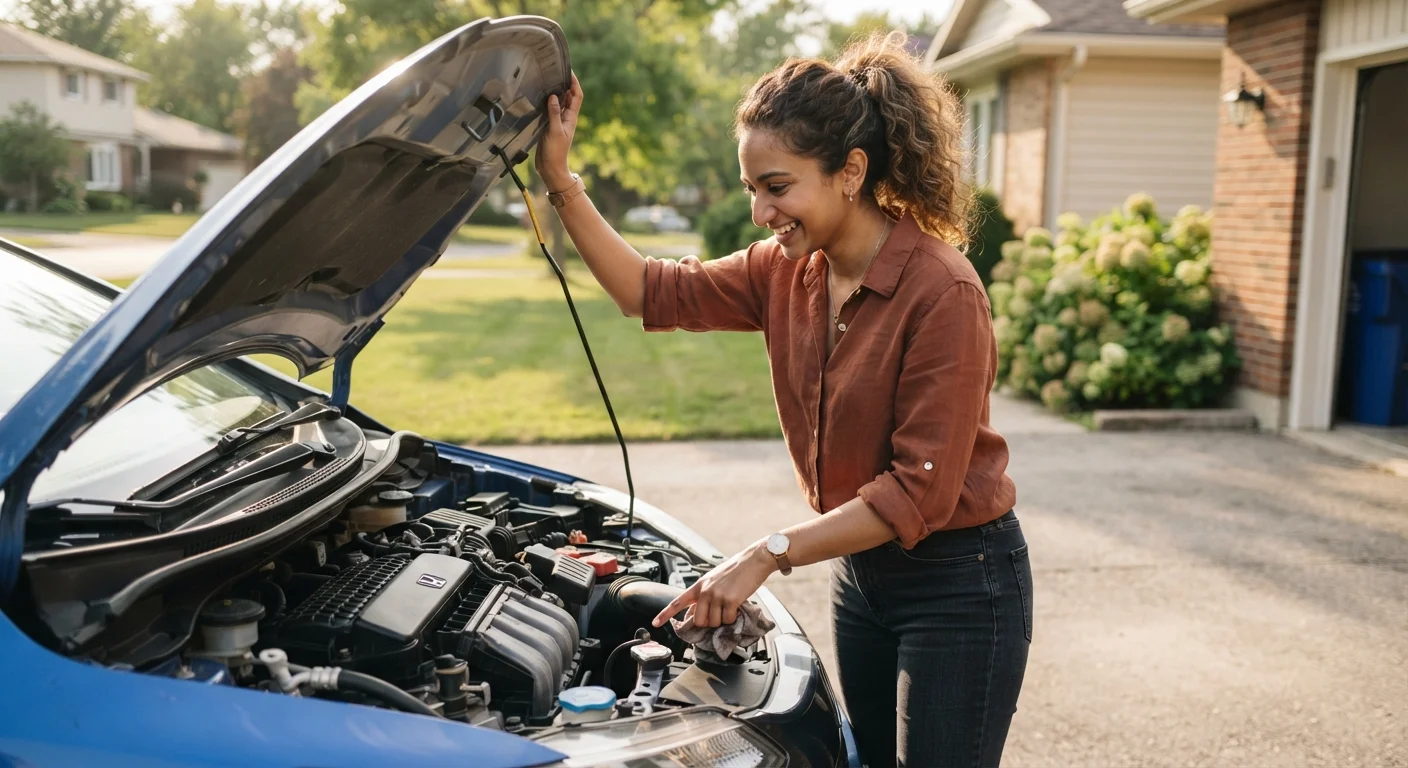
A long, thin metal rod inserted into the engine that lets you check the oil level without opening any pressurized components.
Tread depth
The measurement of how much rubber remains on your tire's surface grooves. Adequate tread helps your tires grip the road, especially in wet conditions.
Service interval
The recommended mileage or time period between specific maintenance tasks, as defined by your vehicle's manufacturer in the owner's manual.
Coolant
A liquid that circulates through the engine to regulate its temperature, preventing overheating in summer and freezing in winter. Also called antifreeze.
Check engine light (CEL)
A dashboard warning light triggered by your car's onboard computer when it detects a fault. It can signal anything from a loose gas cap to a serious mechanical issue.
The Weekly Walk-Around: Your First Line of Defense
Before you get into your car each week, take 60 seconds to walk around it. This simple habit catches problems that are invisible from the driver's seat - and that most drivers overlook entirely.
- Lights: Check that headlights, brake lights, and turn signals are functioning. A burned-out bulb is inexpensive to fix but can result in a traffic citation or, worse, a collision.
- Windshield and wipers: Look for cracks or chips in the glass. Inspect wiper blades for streaking or cracking - they should be replaced roughly every six to twelve months or when they leave smears.
- Body and undercarriage: Watch for new dents, scrapes, or anything hanging underneath the vehicle. Fluids pooling on the ground beneath your parked car are a red flag worth investigating promptly.
- Dashboard warning lights: Start the car and glance at the dashboard before driving. Any light that stays on after startup - especially the oil pressure, battery, or check engine light - warrants attention.
To learn about the maintenance items that even experienced drivers commonly miss, see the car maintenance tasks most drivers overlook.
Fluids: What They Do and When to Check Them
Your vehicle relies on several fluids to operate safely. Running any of them too low - or letting them degrade - can cause damage that far exceeds what routine upkeep would have cost.
- Engine oil
- Lubricates moving parts and reduces heat. Check monthly using the dipstick with a cold engine. Oil that looks black and gritty may need changing; consult your owner's manual for the recommended interval.
- Coolant (antifreeze)
- Regulates engine temperature in both hot and cold weather. Check the level in the translucent reservoir under the hood - never open the radiator cap on a hot engine, as pressurized coolant can cause serious burns.
- Brake fluid
- Transmits the force from your brake pedal to the brakes themselves. The reservoir is usually visible without removing anything. If the level is low or the fluid looks very dark, have a mechanic inspect the system.
- Windshield washer fluid
- The only fluid you can safely top off without any mechanical knowledge. Use a product rated for your climate - plain water can freeze in winter and damage the pump.
Make a monthly fluid check part of your routine
Pick one day a month - such as the first Sunday - to check all your fluid levels together. It takes under five minutes when the engine is cold and makes it easy to notice changes over time. Keeping a simple log in your phone or glove compartment helps you track when levels drop faster than expected, which can signal a developing problem.
Tires: Pressure, Tread, and Rotation
Tires are the only part of your car that contacts the road, which makes their condition directly tied to your safety. Under-inflated tires reduce fuel efficiency, wear unevenly, and increase the risk of a blowout. Over-inflated tires reduce grip and make the ride harsh.
Checking pressure: Use an inexpensive tire pressure gauge - available at any auto parts store - to check all four tires once a month and before long trips. The correct PSI (pounds per square inch) is printed on a sticker inside your driver's door jamb, not on the tire sidewall. Check pressure when tires are cold, as driving heats the air inside and temporarily raises the reading.
Tread depth: Use the penny test described in the FAQ below to gauge whether your tires still have safe tread. Bald or cracked tires should be replaced immediately - this is not a task to defer.
Rotation: Tires wear at different rates depending on their position. Having them rotated - typically every 5,000 to 7,500 miles, or as your owner's manual specifies - evens out wear and extends their life. This is a straightforward service a mechanic can perform during routine oil changes.
Following a Maintenance Schedule
The single most useful document for any new driver is the owner's manual that came with their vehicle. It contains manufacturer-specified service intervals - the exact mileage or time points at which your car needs oil changes, filter replacements, brake inspections, and more. These intervals are specific to your vehicle's engine and design, making them far more reliable than generic advice.
If your vehicle didn't come with a physical manual, most manufacturers make digital versions available through their websites. Many newer vehicles also include a built-in maintenance reminder system on the dashboard, though these should complement the manual, not replace it.
For a thorough walkthrough of what different service milestones involve, our complete guide to car maintenance schedules covers the full range from early checkups to high-mileage services. And if you're weighing which tasks are safe to handle yourself versus which need a professional, DIY car maintenance vs. taking it to a shop lays out the real trade-offs clearly.
Starting with these foundational habits gives you a solid base. As your confidence grows, so will your ability to spot and address problems early - keeping both you and your vehicle safer for the long road ahead.