

Key Takeaways
Drowsy Driving
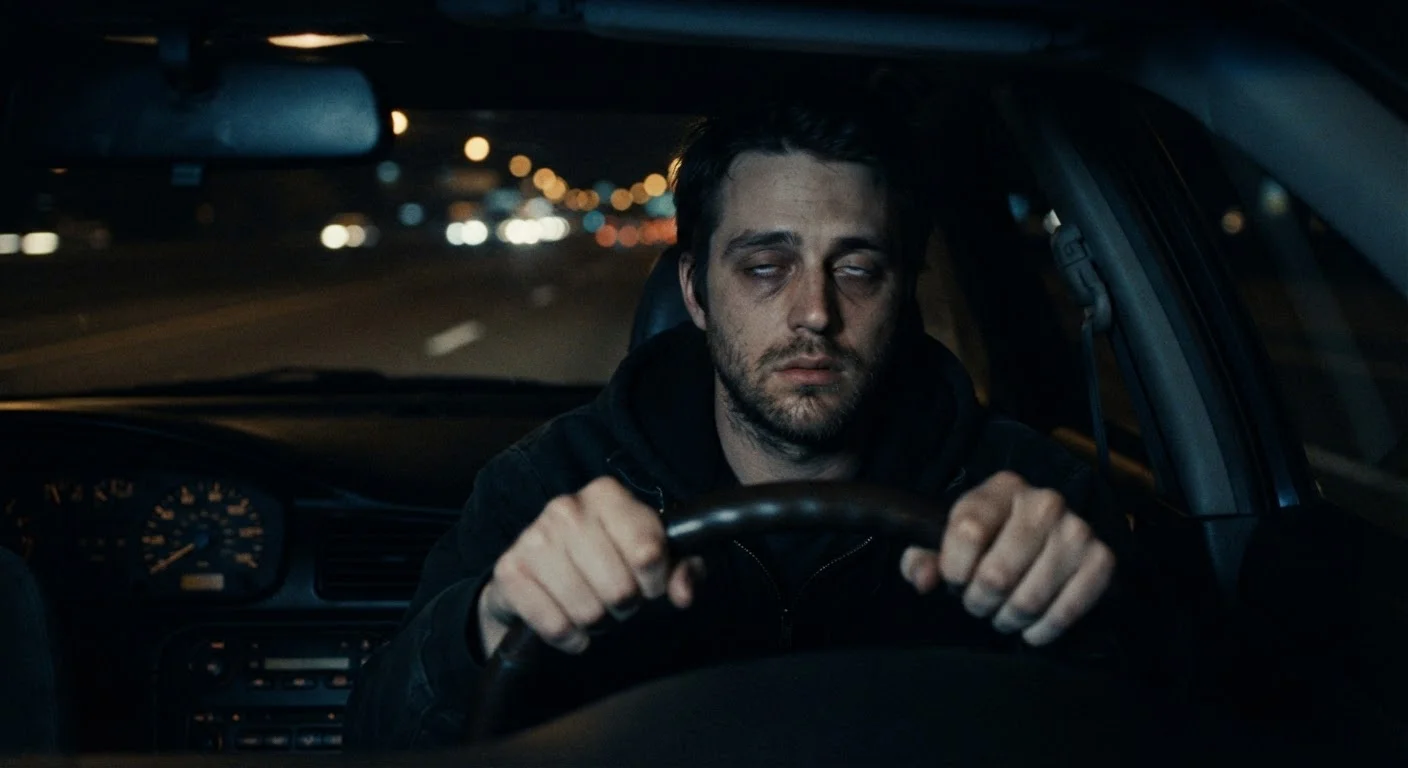
Drowsy driving refers to operating a vehicle while fatigued or sleep-deprived to the point where your alertness, reaction time, and judgment are meaningfully impaired. Unlike distraction, drowsiness often sneaks up gradually, making it difficult for drivers to recognize the danger in themselves. The critical problem is that severe sleepiness can cause brief, involuntary episodes of sleep - called microsleeps - that last only a few seconds but can result in complete loss of vehicle control.
Microsleeps typically last between one and thirty seconds and occur without the driver's awareness; at 60 mph, a five-second microsleep means traveling approximately 440 feet with no conscious control of the vehicle.
Why Drowsiness Is a Serious Crash Risk
Drowsy driving is consistently underreported and underestimated as a crash factor. The National Highway Traffic Safety Administration (NHTSA) has estimated that drowsy driving contributes to tens of thousands of crashes each year in the United States, with a significant share resulting in fatalities. Because drowsiness often leaves no physical evidence at a crash scene - no skid marks, no braking - actual numbers are likely higher than official figures reflect.
What makes drowsy driving especially dangerous is how it degrades the exact skills you need most behind the wheel. Fatigue slows reaction time, reduces peripheral awareness, impairs lane-keeping, and compromises the judgment needed to assess risk in real time. These are the same cognitive functions affected by alcohol impairment - which is why safety researchers often draw a direct comparison between the two.
Much like distracted driving, drowsiness operates partly below the driver's conscious awareness. You may believe you're managing fine when your brain has already shifted into a diminished capacity.
1 in 25
Adult drivers who report falling asleep at the wheel monthly
According to the Centers for Disease Control and Prevention (CDC), approximately 1 in 25 adult drivers report having fallen asleep while driving in the past 30 days.
~0.10%
Estimated BAC-equivalent impairment after 24 hours without sleep
Traffic safety and sleep researchers have estimated that 24 hours of wakefulness produces driving impairment roughly equivalent to a blood alcohol content of 0.10% - above the legal limit in all U.S. states.
440 feet
Distance covered in 5-second microsleep at 60 mph
At a highway speed of 60 mph, a five-second microsleep means traveling approximately 440 feet - the length of a football field plus end zones - with no conscious driver input.
How to Recognize Drowsiness in Yourself
One of the most dangerous aspects of fatigue is that people are unreliable judges of their own impairment. Studies consistently show that drivers overestimate their ability to push through tiredness. This means you cannot simply rely on how you feel - you need to watch for objective behavioral signals.
Warning Signs to Take Seriously
- Repeated yawning or eye rubbing - Your body is signaling the need for sleep, not fresh air.
- Drifting between lanes - Even brief lane departures indicate reduced motor control and attention.
- Missing your exit or a familiar turn - Autopilot driving is a hallmark of early microsleep episodes.
- Heavy eyelids or blurred vision - Your visual system is among the first to degrade under fatigue.
- Trouble recalling the last few miles - Memory gaps while driving indicate you may have experienced brief unconscious episodes.
- Restlessness or irritability - Emotional dysregulation is a cognitive fatigue symptom, not just a mood issue.
If you experience two or more of these signs simultaneously, treat it as a genuine safety emergency - not an inconvenience to manage through. This overlaps with the heightened risks described in our article on night driving safety, since fatigue and reduced visibility compound each other significantly after dark.
High-Risk Situations and Populations
Drowsy driving risk is not evenly distributed. Certain conditions and demographics face a substantially higher baseline level of danger.
Time of day matters enormously. The body's circadian rhythm creates two natural low-alertness windows: the early hours of the morning (roughly midnight to 6 a.m.) and early to mid-afternoon (around 1-3 p.m.). Driving during these windows - even if you haven't been awake an unusually long time - increases crash risk.
Sleep disorders amplify the problem. Obstructive sleep apnea, one of the most common undiagnosed sleep disorders among American adults, interrupts restorative sleep dozens or even hundreds of times per night. Many people with sleep apnea don't know they have it. If you regularly feel unrefreshed after a full night's sleep, it may be worth discussing with a healthcare provider.
Young and inexperienced drivers are disproportionately represented in drowsy driving crash statistics. New drivers often underestimate how quickly fatigue builds on longer trips and may be less likely to recognize or act on warning signs.
Long highway stretches also create a specific hazard: monotonous driving environments reduce stimulation and accelerate the onset of drowsiness, even in well-rested drivers. This is sometimes called highway hypnosis, and it can develop faster than most drivers expect - particularly in conditions where following distance risks are also elevated, as discussed in our guide on tailgating dangers.
What Actually Works - and What Doesn't
Drivers often rely on strategies that feel helpful but provide little real protection against fatigue-impaired driving.
Limited or Unreliable Countermeasures
- Turning up the radio or AC - May provide seconds of increased alertness but has no meaningful effect on impairment.
- Opening the window - Temporary sensory stimulation that does not address the underlying sleep deficit.
- Willpower or determination - Fatigue is a physiological state, not a motivation problem. You cannot choose your way out of it.
More Effective Approaches
- Pull over and nap - A 20-minute nap at a rest stop is the most effective short-term intervention for acute drowsiness.
- Caffeine before a nap - Consuming caffeine immediately before a short nap (sometimes called a "coffee nap") can improve alertness more than either alone, since caffeine takes roughly 20-30 minutes to absorb.
- Plan trips around your sleep schedule - If possible, avoid driving during your body's natural low-alertness windows or after a short night's sleep.
- Shared driving on long trips - Rotating drivers prevents any one person from accumulating dangerous fatigue levels.
Advanced driver assistance systems - including lane departure warnings and drowsiness detection alerts found in many newer vehicles - can serve as a useful early warning layer, but they are not a substitute for sound judgment and adequate rest before getting behind the wheel.
This article is for general informational and safety education purposes only. Always consult official traffic safety resources and, where applicable, a qualified healthcare provider regarding personal medical conditions that may affect your ability to drive safely.