

Key Takeaways
Personal Budget
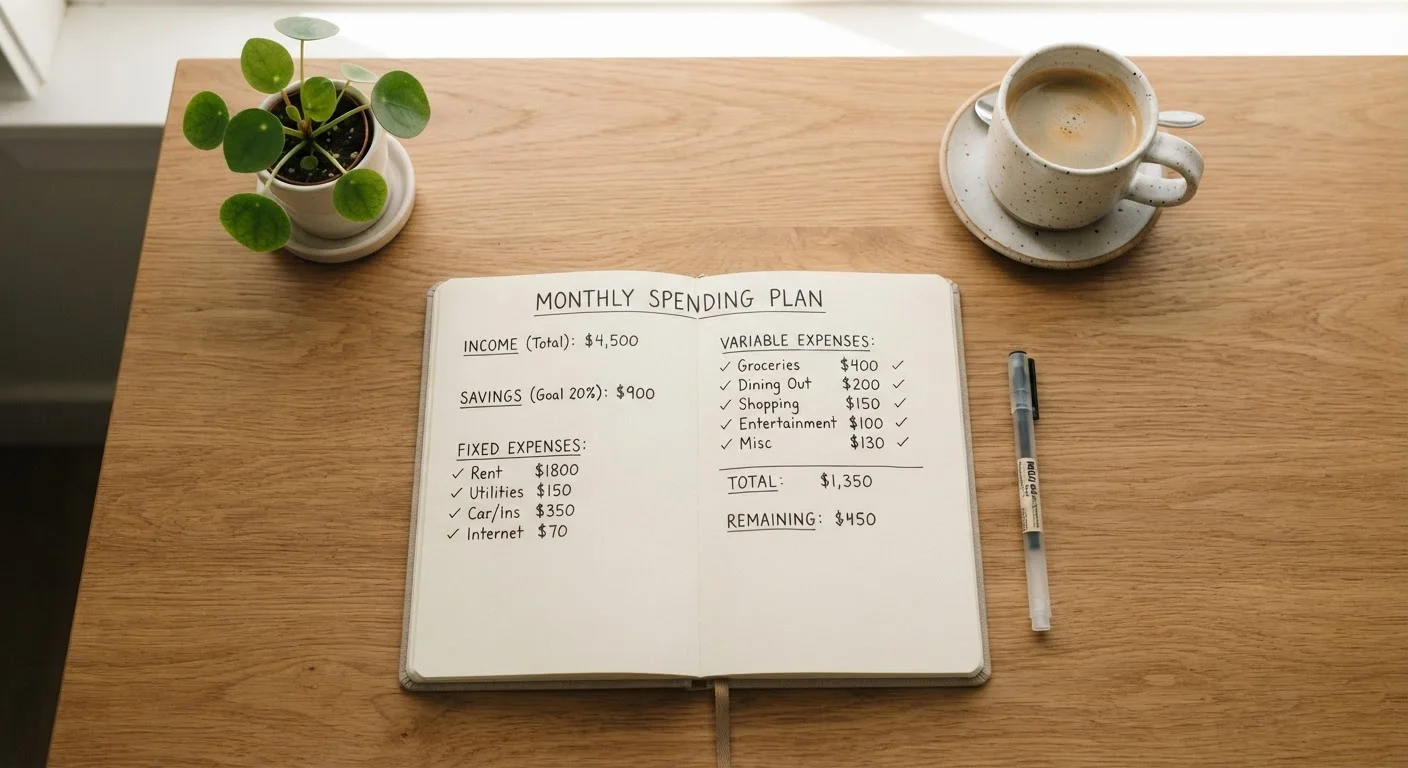
A personal budget is a written or digital plan that maps out how you expect to earn and spend money over a set period - usually one month. It lets you decide in advance where your money goes, rather than wondering afterward where it went. Think of it less as a restriction and more as a set of intentional instructions you give your own dollars.
In accounting, a budget is a formal financial forecast used to compare planned versus actual spending. Personal budgeting borrows this same logic but applies it to household income and expenses rather than organizational finances.
The Most Common Misunderstanding About Budgets
Ask most people what a budget is, and you'll hear words like "restriction," "sacrifice," or "spreadsheet." The image that comes to mind is often a joyless ledger that tells you all the things you can't do. That framing is not just inaccurate - it's one of the main reasons people avoid budgeting altogether.
A budget is simply a plan. It's a deliberate decision about how your money will be used before you spend it. That's the entire concept. Nothing in the definition requires deprivation, complicated software, or an accounting background. The misunderstanding runs so deep that it shapes behavior: people who would benefit most from a spending plan often dismiss the idea before they've ever tried it. For a closer look at how these misconceptions stack up, see common budgeting myths worth examining.
What a Budget Actually Does
A budget performs one core function: it gives every dollar you earn a job. When your income arrives, a budget tells some of it to cover rent, some to go toward groceries, some to sit in savings, and some - importantly - to be spent however you like. That last category is not an afterthought. Any realistic budget includes room for discretionary spending, because pretending you'll never spend money on enjoyment is a plan that collapses quickly.
The practical power of budgeting is awareness. Most people who have never tracked their spending are genuinely surprised by where their money goes. A budget forces that information into the open before spending happens, which gives you a real opportunity to make different choices. It also creates accountability without judgment - the numbers are just numbers, not a moral verdict.
~1 in 3
Americans who have a detailed household budget
Gallup polling has found that roughly one-third of U.S. adults report maintaining a detailed monthly budget, suggesting most households operate without a formal spending plan.
60%+
Adults who say money is a significant source of stress
The American Psychological Association's annual Stress in America surveys consistently find that finances rank among the top stressors for a majority of U.S. adults.
Importantly, a budget doesn't lock you in permanently. It's a living document. When your income goes up, your rent changes, or a new priority appears, you revise the plan. Rigidity is not the goal - intention is.
What a Budget Isn't
Understanding what a budget isn't matters just as much as knowing what it is. A budget is not a punishment for past financial decisions. It is not evidence that you earn too little or spend too much. It's also not a one-size-fits-all document - the right budget for a freelancer with uneven income looks nothing like the right budget for someone on a fixed salary.
A budget is not a guarantee of financial success. It's a tool, and like any tool, its value depends on how it's used. Someone who builds a thoughtful budget but never reviews it gets less benefit than someone with a simpler plan they actually check each week. Equally, a budget is not a reason to feel shame about your current financial picture. The point of building one is to move forward from wherever you are now.
If you're ready to move from concept to action, building your first monthly budget from scratch is a natural next step.
Why the Definition Matters for Getting Started
How you define something shapes whether you try it. If budgeting feels like a cage, you'll resist it. If it feels like a plan you're in control of, you're more likely to build one - and stick with it. That shift in framing is not a small thing. Research consistently finds that the people most likely to achieve financial goals are those who write them down and attach a concrete plan to them. A budget is that plan.
No specific income level, life stage, or financial situation is required before budgeting becomes relevant. A college student, a retiree, and a household managing a mortgage can all benefit from the same underlying practice: knowing what's coming in, deciding what it's for, and checking whether reality matches the plan.
For those who want a comprehensive approach to making a budget last through life's changes, designing a budget that holds over time offers a deeper dive into maintaining and adjusting your plan as circumstances shift.
This article is for general informational and educational purposes only and does not constitute personalized financial advice. For guidance specific to your financial situation, consider consulting a qualified financial professional.