

Key Takeaways
Revolving Credit Card Balance
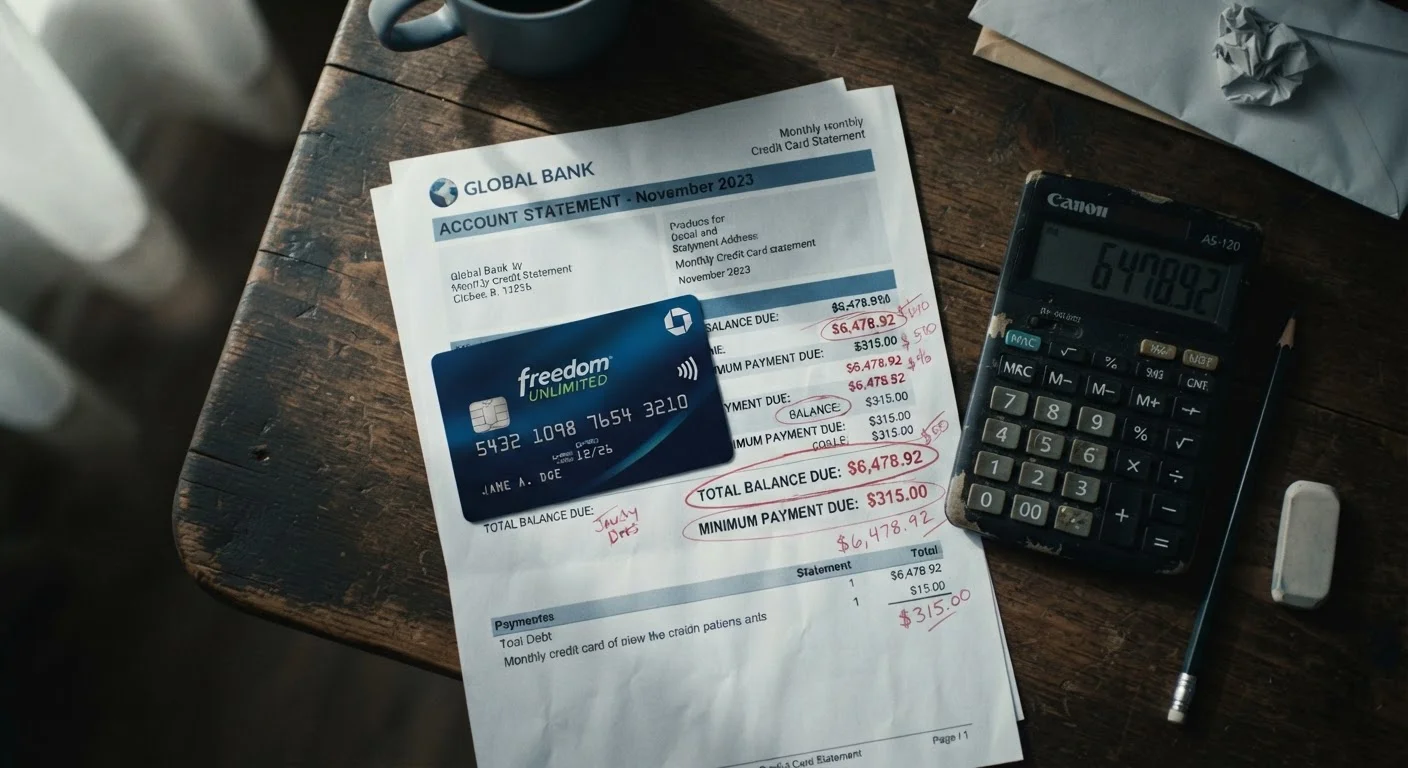
A revolving balance is any portion of your credit card charges that you don't pay in full by the statement due date. Instead of being cleared, this unpaid amount carries over - or 'revolves' - into the next billing cycle. From that point, the card issuer charges interest on what you owe, and if you again pay less than the full balance, interest accrues on the new total.
Most credit cards calculate interest using an Average Daily Balance method and a Daily Periodic Rate (your APR divided by 365), meaning interest compounds daily rather than monthly.
How Interest Accrues When You Don't Pay in Full
When you pay your credit card statement in full by the due date, you typically pay no interest at all - that's the grace period at work. The moment you carry any balance past that due date, however, the grace period disappears and interest begins accruing on your outstanding amount immediately.
Card issuers calculate this using a Daily Periodic Rate - your annual percentage rate (APR) divided by 365. At an APR of 22%, that's roughly 0.06% per day. Applied to a $2,000 balance, you're accruing about $1.20 in interest every single day - before you've made a single new purchase. Over a 30-day cycle, that's $36 added to what you owe.
Critically, this interest is then added to your balance. If you again fall short of full repayment, next month's interest is calculated on a slightly larger number. This is the compounding effect working against you. To understand the mechanics in greater depth, see our explainer on how compound interest works in debt and savings.
20%+
Average US credit card APR
According to Federal Reserve data, average credit card interest rates have consistently exceeded 20% in recent years, making revolving balances among the most expensive forms of consumer debt.
$6,000+
Average US credit card balance per holder
Industry research from sources such as TransUnion and Experian has placed average revolving balances per cardholder above $6,000, meaning the typical indebted cardholder faces substantial monthly interest charges.
15+ years
Time to repay $3,000 on minimum payments
At a 22% APR with only minimum payments made, a $3,000 balance can take well over a decade to eliminate - with total interest paid potentially exceeding the original balance.
The Minimum Payment Trap
Credit card issuers set minimum payments low - typically 1-2% of the balance or a small fixed dollar amount, whichever is greater. This feels manageable in the short term but is designed to keep you in debt longer.
Consider a $3,000 balance at 22% APR with a minimum payment starting around $75. Paying only the minimum each month, that balance can take over 15 years to eliminate - and the total interest paid could easily exceed the original balance. Your monthly payment shrinks as the balance slowly falls, but the interest portion of each payment remains disproportionately large for most of that period.
Even modest increases above the minimum payment - an extra $50 or $100 per month - can shorten the repayment timeline dramatically and reduce total interest paid by hundreds or thousands of dollars. The math strongly favors paying as much as you can afford above the minimum each cycle.
What Carrying a Balance Really Costs Your Financial Goals
Credit card interest doesn't just add to what you owe - it actively competes with your other financial priorities. Every dollar paid in interest is a dollar that isn't going toward an emergency fund, a retirement contribution, or a down payment.
Consider the opportunity cost: if you're paying $80 a month in interest on a lingering balance, that's nearly $1,000 a year that isn't building any financial foundation for you. Small spending habits can erode budgets quietly, and revolving interest works the same way - invisible, automatic, and cumulative.
This is why understanding your balance's true cost matters when you're trying to balance saving and debt repayment simultaneously. The two goals aren't mutually exclusive, but high-interest debt often warrants priority. Our article on paying off debt while saving at the same time offers a practical framework for managing both without abandoning either.
“The most dangerous thing about credit card debt isn't the rate itself - it's how invisible the daily cost feels until you add it up over months and years.”
— Finance Editorial Team, Editorial analysis based on Federal Reserve consumer credit data and standard amortization principles
Practical Steps to Reduce What You're Paying
Reducing the cost of a revolving balance involves two levers: lowering the interest rate and increasing the speed of repayment.
- Pay more than the minimum - even $25-$50 extra per month accelerates payoff and cuts total interest meaningfully.
- Avoid adding to the balance - new charges on a card that's already accruing interest compound the problem immediately.
- Track your actual interest charges - your statement itemizes interest paid each cycle; seeing that number concretely motivates change.
- Understand your options - balance transfers or personal loans at lower rates may reduce costs, though each comes with its own considerations. Review any offer carefully before acting.
If your debt situation feels unmanageable, it's worth speaking with a nonprofit credit counselor (look for agencies accredited by the National Foundation for Credit Counseling) or a licensed financial adviser who can evaluate your full picture. Also worth considering: why going all-in on debt payoff isn't always the right move - balance still matters.
This article is for general informational and educational purposes only and does not constitute personalized financial or legal advice. Consult a qualified financial professional for guidance suited to your individual circumstances.