

Key Takeaways
Start here
What Are Macronutrients?
Next
Carbohydrates: Your Body's Preferred Fuel
Then
Protein: The Builder and Repairer
Continue
Fats: Essential, Not the Enemy
Bring it together
Why Balance Beats Elimination
What Are Macronutrients?
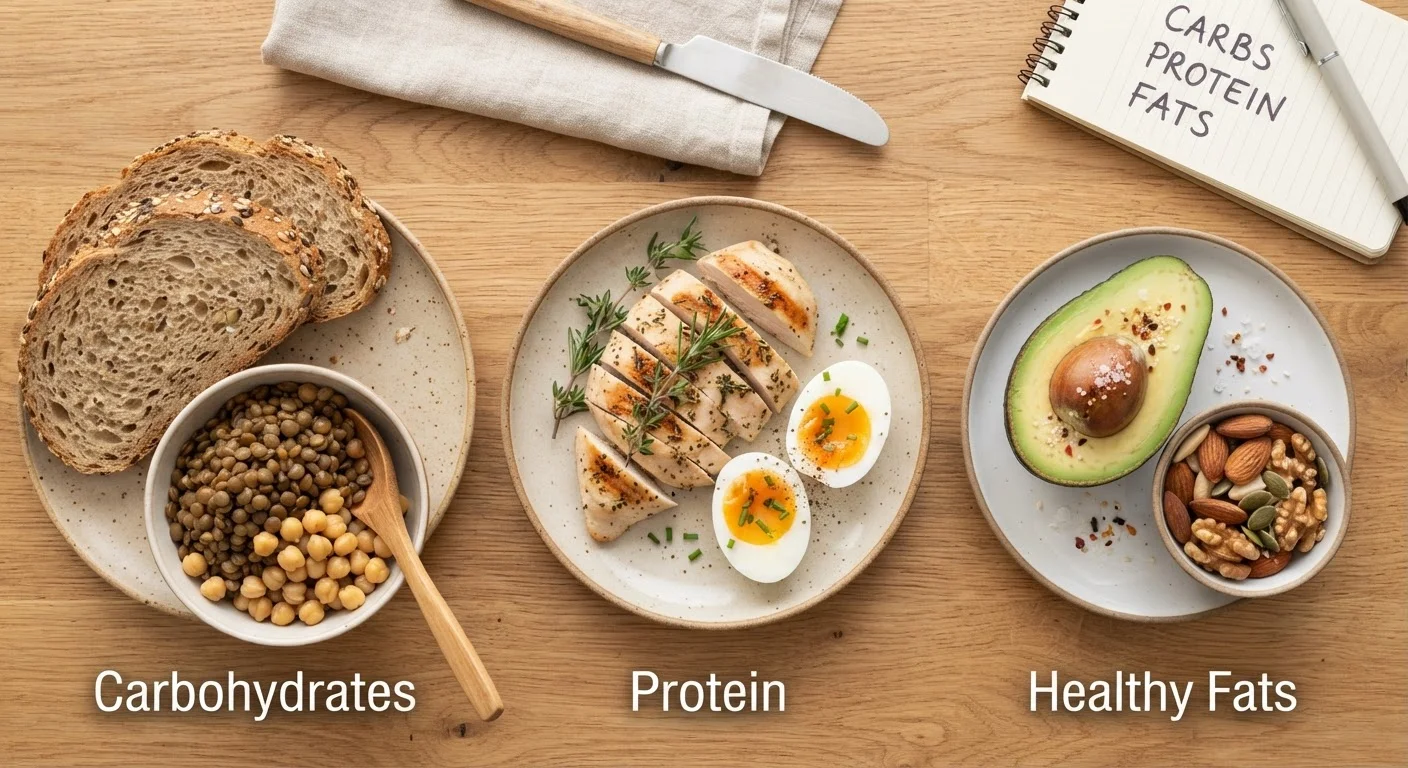
Macronutrients are the three major categories of nutrients that provide your body with energy and the raw materials it needs to function. The word macro simply means large - these are nutrients your body needs in relatively large quantities every day, unlike vitamins and minerals (called micronutrients), which are needed in much smaller amounts.
The three macronutrients are carbohydrates, proteins, and fats. Each contributes calories - the unit of energy your body runs on - but each also performs distinct jobs that the others cannot replace. That's why eliminating any one of them entirely can create gaps in how your body operates.
Macronutrient
A nutrient your body needs in large amounts every day to produce energy and support basic biological functions. The three macronutrients are carbohydrates, protein, and fat.
Glucose
A simple sugar that your body produces when it breaks down carbohydrates. It is the primary fuel source for your brain and muscles.
Amino acids
The building blocks that make up protein. Your body can make some, but nine 'essential' amino acids must come from the food you eat.
Complete protein
A protein source that contains all nine essential amino acids in adequate amounts. Animal foods are common examples, as are some plant foods like soy and quinoa.
Dietary fiber
A type of carbohydrate your body cannot digest. It supports digestive health, helps regulate blood sugar, and contributes to feelings of fullness after eating.
Unsaturated fat
A type of dietary fat found in plant oils, nuts, seeds, and fatty fish that is generally associated with heart health benefits when consumed as part of a balanced diet.
Understanding macronutrients is a foundational step in nutrition literacy. Once you recognize what each one does, you're better equipped to evaluate food choices without relying on fad-diet claims. You can also pair this knowledge with skills like reading a nutrition facts label to see exactly what you're getting from packaged foods.
Carbohydrates: Your Body's Preferred Fuel
Carbohydrates are your body's fastest and most readily used energy source. When you eat carbs, your digestive system breaks them down into glucose - a simple sugar that fuels your brain, muscles, and organs. Your brain alone relies heavily on glucose to function normally.
Not all carbohydrates behave the same way. Simple carbohydrates (like table sugar or white bread) digest quickly, causing faster rises in blood sugar. Complex carbohydrates - found in whole grains, legumes, vegetables, and fruit - digest more slowly, providing more sustained energy and typically more fiber, vitamins, and minerals.
Fiber, a type of carbohydrate your body cannot fully digest, is especially important. It supports digestive health, helps regulate blood sugar, and contributes to feelings of fullness. Most Americans consume less fiber than public health guidelines recommend.
Cutting carbohydrates entirely is not necessary for most people and may make it harder to meet fiber and nutrient needs. The quality of carbohydrates - whole versus highly refined - tends to matter more than the quantity alone.
Protein: The Builder and Repairer
Protein is the structural backbone of nearly every tissue in your body. It builds and repairs muscle, produces enzymes and hormones, supports immune function, and helps transport nutrients through the bloodstream. Protein is made up of smaller units called amino acids. Your body can produce some amino acids on its own, but nine - known as essential amino acids - must come from food.
Animal-based foods such as meat, poultry, fish, eggs, and dairy contain all nine essential amino acids and are called complete proteins. Many plant sources - including beans, lentils, tofu, tempeh, and quinoa - also provide substantial protein, and a varied plant-based diet can meet protein needs. There's a lot of misinformation in this space, and our article on common protein myths separates the evidence from widely repeated claims.
Getting Protein From a Variety of Sources
You don't need to rely on any single food to meet your protein needs. Mixing animal and plant sources - or building a varied plant-based diet - helps you cover all essential amino acids while also getting fiber, healthy fats, and micronutrients. Variety across the whole diet consistently outperforms any single 'superfood' strategy.
Protein needs vary by age, body size, activity level, and health status. A registered dietitian can help you determine an appropriate intake for your individual situation.
Fats: Essential, Not the Enemy
Dietary fat has a complicated reputation, but the science is clear: fat is essential for human health. It enables the absorption of fat-soluble vitamins (A, D, E, and K), insulates organs, supports brain and nerve function, and plays a role in hormone production and cell membrane structure.
Fat types matter significantly. Unsaturated fats - found in olive oil, avocados, nuts, seeds, and fatty fish - are associated with cardiovascular and metabolic benefits in research. Saturated fats, found in red meat and full-fat dairy, are linked to increased LDL cholesterol when consumed in excess, according to mainstream dietary guidance. Trans fats, largely eliminated from the U.S. food supply through regulatory action, were associated with serious cardiovascular harm.
Fat is calorie-dense (9 calories per gram versus 4 for carbs or protein), so portion awareness is reasonable - but avoidance is not warranted. A diet that includes healthy fat sources supports overall nutritional completeness.
Why Balance Beats Elimination
Popular diets often target a single macronutrient - low-fat in one era, low-carb in another. But the body is not designed to thrive on extremes. Carbohydrates, proteins, and fats each fill roles the others cannot. Cutting one entirely typically means compensating with more of another, which can create its own imbalances.
Evidence-based dietary patterns - such as the Mediterranean and DASH approaches - emphasize variety and food quality across all three macronutrients rather than eliminating any group. These patterns are associated with favorable long-term health outcomes in large bodies of research.
Macronutrients are just one layer of nutritional understanding. Beyond these three, vitamins and minerals play complementary roles that no single macronutrient can replace. Building a complete picture means looking at your overall dietary pattern - not a single nutrient in isolation.
This article is for general informational and educational purposes only and is not a substitute for professional medical or nutritional advice. Consult a qualified healthcare provider or registered dietitian for guidance specific to your health needs.