

Key Takeaways
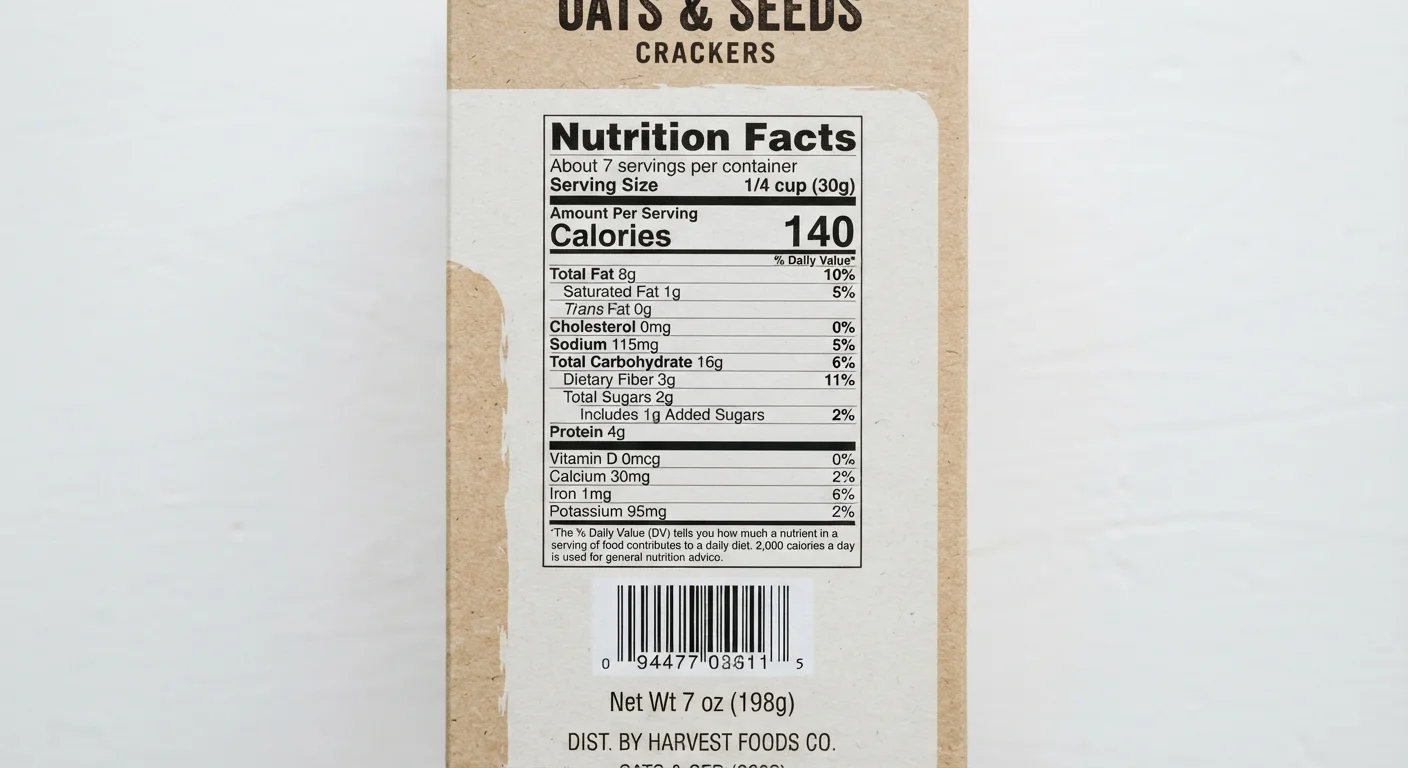
Nutrition Facts Label
The Nutrition Facts label is the standardized black-and-white panel required by the U.S. Food and Drug Administration (FDA) on most packaged foods and beverages. It tells you how much of certain nutrients - like calories, fat, sodium, and vitamins - are in a given amount of that food. The label is designed to help consumers compare foods and make more informed choices about what they eat.
The FDA updated the label format in 2020, requiring manufacturers to list added sugars separately from total sugars and to update serving sizes to reflect amounts people realistically consume today.
Start Here: Serving Size and Calories
Before any other number on the label makes sense, you need to understand the serving size. The FDA requires manufacturers to list a reference amount - how much of the food is typically consumed in one sitting - and every nutrient value below it is calculated for exactly that amount.
This is where many readers stumble. A single container may hold two, three, or even four servings. If you drink the whole bottle, multiply every number on the label accordingly. Serving sizes were updated in 2020 to better reflect realistic eating habits - so a standard serving of ice cream, for example, is now listed as two-thirds of a cup rather than half a cup.
Directly below serving size, you'll find calories - the total energy provided by one serving. Calories alone don't tell you whether a food is nutritious, but they're a useful anchor when comparing similar products. A food can be high in calories and still offer substantial nutritional value, or it can be low in calories and nearly empty of useful nutrients.
Understanding % Daily Value
The right-hand column of the label lists % Daily Value (%DV) for most nutrients. This number tells you what fraction of a recommended daily intake one serving provides, based on a standard 2,000-calorie diet. Think of it as a quick scorecard.
5% or less
%DV considered low for any nutrient
Per FDA guidance, this threshold helps consumers quickly identify foods low in a specific nutrient.
20% or more
%DV considered high for any nutrient
The FDA uses this benchmark to indicate that a food is a significant source of a particular nutrient.
3,400 mg
Average daily sodium intake for Americans
According to the FDA, Americans consume well above the recommended 2,300mg daily limit on average.
The FDA's general guidance: 5% DV or less means a food is low in that nutrient; 20% DV or more means it's high. Use this rule of thumb when you want to limit something - like sodium - or when you're looking to boost intake of something - like fiber or calcium.
Keep in mind: %DV is a comparison tool, not a rigid prescription. Your actual needs may differ from the 2,000-calorie reference, and the right balance of nutrients looks different for everyone. Consult a registered dietitian for guidance tailored to your health situation.
The Nutrients Worth Paying Attention To
The label is organized into two broad groups: nutrients most Americans consume in excess (and may benefit from limiting) and those many Americans fall short on.
Limit These
- Saturated fat: Associated with cardiovascular health concerns when consumed in high amounts. Found heavily in red meat, butter, and many processed snacks.
- Sodium: Most Americans consume well above recommended levels. High sodium intake is linked to elevated blood pressure in some populations.
- Added sugars: Listed separately since 2020, added sugars reveal how much sweetener was put into a food during processing - distinct from naturally occurring sugars in fruit or dairy.
Get Enough Of These
- Dietary fiber: Supports digestive health and is associated with reduced risk of several chronic conditions. Many Americans fall short of recommended intakes.
- Vitamin D, calcium, iron, and potassium: These four are highlighted because deficiencies are common in the U.S. population.
For a broader look at how label reading fits into your overall shopping routine, see evidence-informed grocery shopping strategies that make nutritious choices easier week to week.
Label Claims vs. Label Facts
The Nutrition Facts panel itself is regulated and standardized - but the marketing language splashed across the front of a package is a different story. Terms like "natural," "multigrain," or "light" are governed by separate rules, and some carry little regulatory weight at all.
A product can be labeled "low fat" and still be high in added sugars. "Made with whole grains" doesn't mean whole grains are the primary ingredient. Always cross-reference front-of-package claims with the actual Nutrition Facts panel and the ingredient list. A closer look at regulated and unregulated food label terms can help you interpret these claims accurately.
The ingredient list - just below or beside the Nutrition Facts panel - lists ingredients in descending order by weight. If added sugar appears among the first three ingredients, or shows up under multiple names (corn syrup, dextrose, maltose), the product likely contains significant added sugar even if the front of the package suggests otherwise.
This article is for general informational and educational purposes only and is not a substitute for personalized nutrition advice. Consult a registered dietitian or qualified healthcare professional for guidance specific to your health needs.