

| Primary regulatory bodies | FDA (most packaged foods) and USDA (meat, poultry, eggs) |
| 'Low-fat' definition | 3 grams or less of total fat per serving (FDA nutrient content claim regulations) |
| 'Reduced' threshold | At least 25% less of the specified nutrient vs. the reference food (FDA) |
| 'Sugar-free' definition | Less than 0.5 grams of sugar per serving (FDA nutrient content claim regulations) |
| '100% Organic' requirement | All agricultural ingredients must meet USDA organic standards (USDA National Organic Program) |
| 'Natural' - regulated? | No formal FDA definition; informally applied (FDA) |
Why Front-of-Package Claims Can Be Confusing
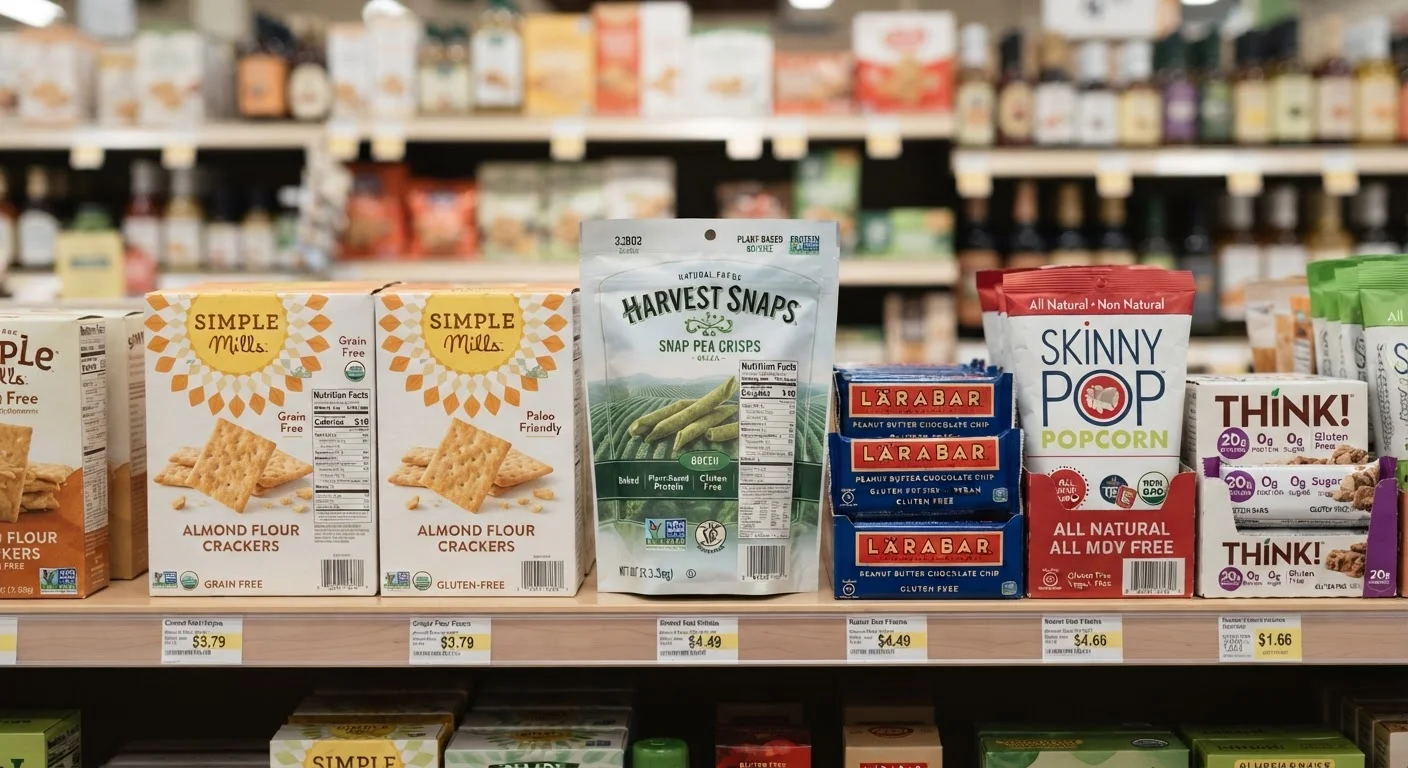
Walk down any grocery aisle and the packaging competes loudly for your attention: natural, light, multigrain, made with whole grain, no added sugar. These phrases are designed to signal healthfulness - but they don't all mean the same thing, and some don't have a legal definition at all.
In the United States, the Food and Drug Administration (FDA) regulates most packaged food labels, while the USDA oversees meat, poultry, and egg products. Both agencies have established specific definitions for certain nutrient claims. The problem is that manufacturers also use plenty of terms that fall outside regulated definitions, leaving shoppers to interpret them without a standard benchmark.
Understanding which terms are regulated - and what those regulations actually require - is one of the most practical tools for navigating a grocery store. For a deeper look at decoding the Nutrition Facts panel itself, see what the Nutrition Facts label is actually telling you.
Regulated vs. Unregulated Claims
Not every word on a food package carries the same legal weight. Claims like 'low-fat,' 'sugar-free,' and 'organic' are regulated by federal agencies - primarily the FDA and USDA - with specific definitions and requirements. Terms like 'natural,' 'wholesome,' and 'simple' currently have no standardized legal definition and can be used at a manufacturer's discretion. When in doubt, skip the front-of-package language and go straight to the Nutrition Facts panel and ingredient list.
A Glossary of Common Food Label Claims
The definitions below reflect federal regulatory standards where they exist, and clarify the lack of a standard where they don't. Use this as a quick reference when evaluating packaged foods.
Natural
The FDA has not established a formal regulatory definition for 'natural' on food labels. The agency's informal policy allows the term when no artificial or synthetic ingredients have been added, but it does not address production methods, pesticide use, or nutritional quality.
Low-Fat
A regulated claim meaning a food contains 3 grams or less of total fat per serving. This does not mean the food is low in calories, sodium, or added sugar.
Multigrain
Indicates a product contains more than one type of grain. It does not mean those grains are whole grains - most or all of them may be refined, stripping away fiber and nutrients.
Made with Whole Grain
Means whole grain is present as an ingredient, but gives no indication of how much. The first ingredient listed could still be refined flour, with whole grain appearing in a minor amount.
Reduced Sodium
A regulated claim meaning the product contains at least 25% less sodium than the standard version of that food. The absolute sodium level can still be quite high.
Light or Lite
Regulated to mean the product has at least 33% fewer calories or 50% less fat than the regular version. When used for sodium, it means at least 50% less. Always compare to the original product - 'light' is relative.
Free-Range
For poultry, the USDA requires that animals have access to the outdoors - but 'access' is loosely defined and does not specify how much time or space is provided.
Sugar-Free
Regulated to mean less than 0.5 grams of sugar per serving. The product may still contain sugar alcohols or other sweeteners, and its calorie count may still be significant.
Organic
USDA Organic is a regulated certification meaning products meet specific standards for farming practices, including restrictions on synthetic pesticides and fertilizers. '100% Organic' means all ingredients qualify; 'Organic' means at least 95%.
Healthy
The FDA has defined criteria for this claim, including limits on total fat, saturated fat, sodium, and cholesterol, along with minimum nutrient requirements. The definition has been updated in recent years and continues to evolve.
Fortified or Enriched
Fortified means nutrients have been added that were not originally in the food. Enriched specifically means nutrients lost during processing (typically B vitamins and iron in refined grains) have been added back.
No Added Sugar
Means no sugars were added during processing or packaging. The food may still contain naturally occurring sugars - such as lactose in dairy or fructose in fruit - which can be substantial.
For a closer look at how whole grain claims specifically work - and how to spot the genuine article - see our article on whole grains vs. refined grains. And to understand why added sugar gets its own line on the label, why added sugar is counted separately breaks down what that distinction actually means.
Putting It Into Practice
Knowing the definitions helps, but the most reliable way to evaluate a packaged food is to move past the front of the package entirely. The ingredient list and Nutrition Facts panel are where the actual story lives.
| Primary regulatory bodies | FDA (most packaged foods) and USDA (meat, poultry, eggs) |
| 'Low-fat' definition | 3 grams or less of total fat per serving (FDA nutrient content claim regulations) |
| 'Reduced' threshold | At least 25% less of the specified nutrient vs. the reference food (FDA) |
| 'Sugar-free' definition | Less than 0.5 grams of sugar per serving (FDA nutrient content claim regulations) |
| '100% Organic' requirement | All agricultural ingredients must meet USDA organic standards (USDA National Organic Program) |
| 'Natural' - regulated? | No formal FDA definition; informally applied (FDA) |
A few practical habits make a real difference. Check whether a whole grain is listed as the first ingredient, not just present somewhere in the list. Compare the sodium or calorie content of a 'reduced' or 'light' product against your daily intake - not just against the original version. And remember that 'sugar-free' or 'fat-free' doesn't automatically make a food nutritious; those nutrients are sometimes replaced with other additives.
For more evidence-informed strategies on making these judgment calls week to week, grocery shopping habits that support healthier eating offers practical approaches grounded in nutrition science.
This article provides general nutrition education and is not a substitute for personalized advice from a registered dietitian or qualified healthcare provider.