

Key Takeaways
Option A
Whole Grains
The nutritionally complete, minimally processed option.
Best for: People looking to maximize fiber, vitamins, and minerals from grain-based foods.
Option B
Refined Grains
The widely available, longer-shelf-life alternative.
Best for: Situations where texture, palatability, or convenience take priority over nutrient density.
If you want to maximize nutrient density in everyday meals
Whole Grains
Whole grains deliver more fiber, B vitamins, minerals, and beneficial plant compounds in every serving - without adding extra calories.
If you're managing a specific digestive condition that requires low-fiber intake
Refined Grains
Some medical conditions call for reduced fiber temporarily; in those cases, refined grains may be appropriate. Always consult a healthcare professional before adjusting your diet for a health condition.
If you're reading labels and trying to avoid marketing confusion
Whole Grains
Look for 'whole grain' as the first ingredient on the label. Products listing enriched flour first are primarily refined grain, regardless of other claims on the package.
If you're gradually shifting toward a more balanced eating pattern
Whole Grains
Swapping in whole-grain versions of foods you already eat - bread, pasta, rice - is one of the lowest-effort ways to meaningfully improve daily nutrient intake.
What Actually Happens During Grain Processing
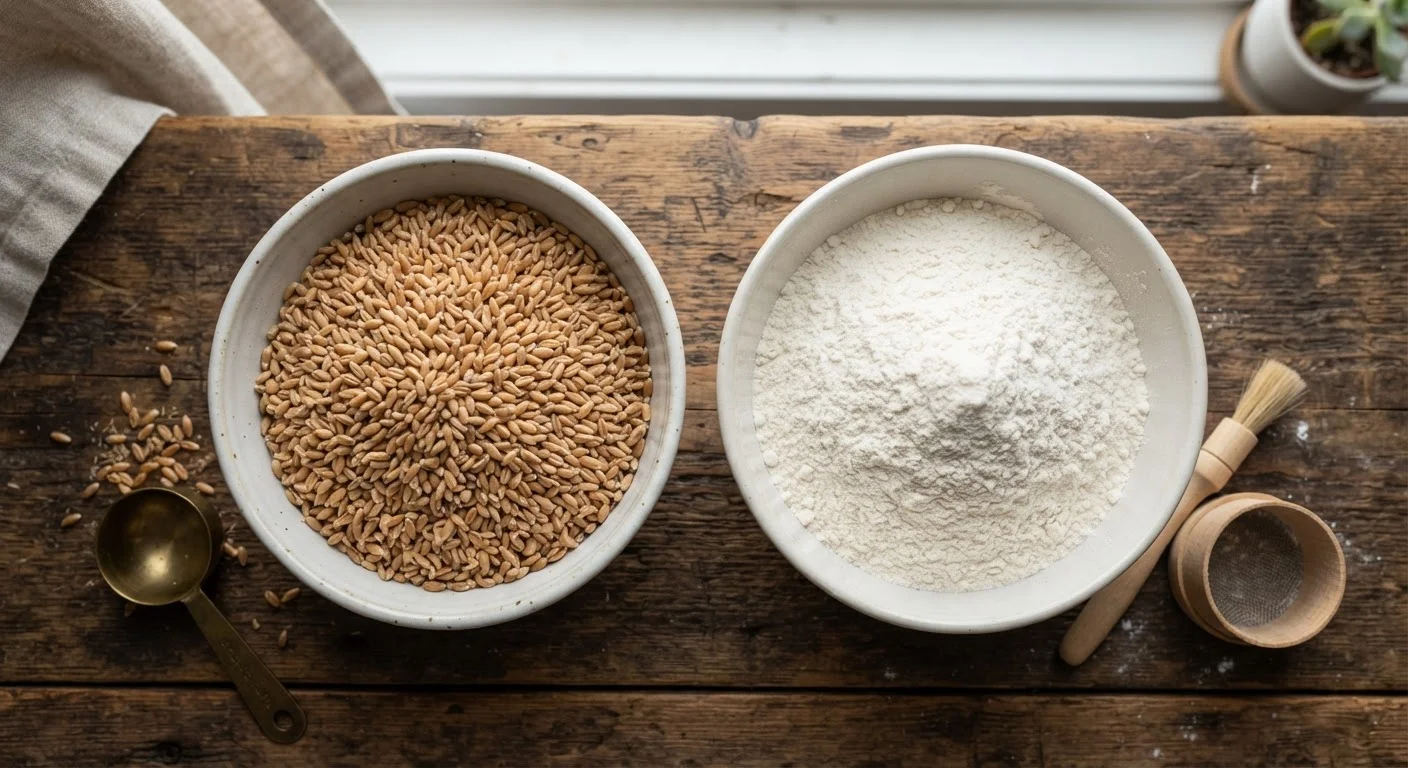
A grain kernel has three distinct layers, each with a nutritional role. The bran is the fibrous outer shell, rich in dietary fiber, B vitamins, and minerals such as iron and magnesium. The germ is the inner embryo of the grain and contains healthy fats, additional B vitamins, and antioxidants. The endosperm is the starchy middle layer - the largest part of the kernel - and is primarily carbohydrate with some protein but relatively few micronutrients.
When grains are refined, milling strips away the bran and germ, leaving only the endosperm. This produces a smoother flour or grain product with a longer shelf life and a softer texture - qualities that drove the widespread adoption of refined grains in commercial food production. The tradeoff is substantial: most of the fiber, much of the B vitamins (thiamin, riboflavin, niacin, folate), iron, and the majority of beneficial plant compounds found in the bran and germ are lost in the process.
To partially compensate, the U.S. requires that refined grain products labeled as "enriched" have certain B vitamins and iron added back. However, enrichment doesn't restore fiber or the full spectrum of phytochemicals originally present. It's an improvement over unenriched refined grain - but it's not nutritional equivalence.
| Criterion | Whole Grains | Refined Grains |
|---|---|---|
| Kernel parts retained | Bran, germ, and endosperm | Endosperm only |
| Dietary fiber | High | Low |
| B vitamins (natural) | Broad range present | Most removed; some added back if enriched |
| Minerals (iron, magnesium, zinc) | Naturally higher | Largely removed; iron partially restored if enriched |
| Glycemic impact | Generally lower | Generally higher |
| Shelf life | Shorter (oils in germ can go rancid) | Longer |
| Texture and taste | Denser, nuttier | Softer, milder |
| Phytochemicals and antioxidants | Naturally present | Significantly reduced |
Nutritional Differences That Matter Day-to-Day
The most practically significant difference between whole and refined grains for most people is dietary fiber. Fiber slows digestion, supports healthy blood sugar regulation, promotes satiety, and feeds beneficial gut bacteria. The average American gets well under the recommended daily amount of fiber, making grain choices an important lever for closing that gap.
~5%
Americans meeting daily fiber recommendations
Research published in the American Journal of Lifestyle Medicine found that only around 5% of Americans meet recommended fiber intake levels.
25-28g
Daily fiber recommended for adult women
According to the Dietary Guidelines for Americans, women need roughly 25-28 grams of fiber daily depending on age; men need 31-34 grams.
At least ½
Of daily grain servings should be whole grain
The Dietary Guidelines for Americans recommend that at least half of all grains consumed each day come from whole-grain sources.
Beyond fiber, whole grains provide meaningful amounts of magnesium, zinc, and B vitamins that support energy metabolism and immune function. Their lower glycemic impact - meaning they cause a more gradual rise in blood glucose compared to refined grain equivalents - is one reason dietary research consistently associates whole grain consumption with reduced risk of type 2 diabetes and cardiovascular disease. These are associations from population-level research, not guarantees of individual outcomes.
If you're thinking about broader dietary patterns, see our comparison of plant-based and traditional American eating patterns for context on how grain choices fit into the bigger picture.
How to Spot a Genuine Whole-Grain Product
Food packaging can be genuinely confusing. Terms like multigrain, stone-ground, 100% wheat, or made with whole grain do not mean a product is primarily whole grain. Under FDA labeling rules, a product can carry some of these descriptions while still being made mostly from refined flour.
The most reliable indicator is the ingredient list. If the first ingredient is "whole wheat flour," "whole oats," "whole grain corn," or another grain preceded by the word whole, the product is predominantly whole grain. If "enriched flour" or "bleached flour" appears first, refined grain dominates the formulation - regardless of what the front of the package says.
Color alone is not a reliable guide either. Some whole-grain breads are light in color, and some refined products are darkened with molasses or caramel coloring. Our guide to food packaging terms explains which label claims are regulated and which are largely marketing language. For practical shopping strategies, evidence-informed grocery habits can make label-reading a consistent part of your routine.
If you're considering a broader dietary shift, it helps to take stock of where you are first. Our self-assessment checklist for dietary changes is a useful starting point before overhauling your eating habits.
This article is for general informational and educational purposes only and is not a substitute for personalized medical or dietary advice. Consult a qualified healthcare professional before making significant changes to your diet, especially if you have a health condition.