

Key Takeaways
Our Verdict
Both eating patterns vary widely in quality depending on individual food choices. Research consistently associates well-planned plant-based diets with several favorable health markers, while the typical American diet - heavily reliant on ultra-processed foods - carries well-documented nutritional shortfalls. The most evidence-supported path for most people involves increasing whole plant foods without necessarily eliminating all animal products.
| Best for | Recommended |
|---|---|
| Those prioritizing fiber intake and cardiovascular health markers | Plant-Based Diet |
| Those who want flexibility without strict food elimination | Modified Traditional Diet (with more whole foods) |
| Those with specific nutrient concerns (B12, iron, omega-3s) | Consult a registered dietitian for a personalized plan |
| Those seeking practical, gradual dietary improvement | Hybrid approach adding more plant foods over time |
Defining the Two Eating Patterns
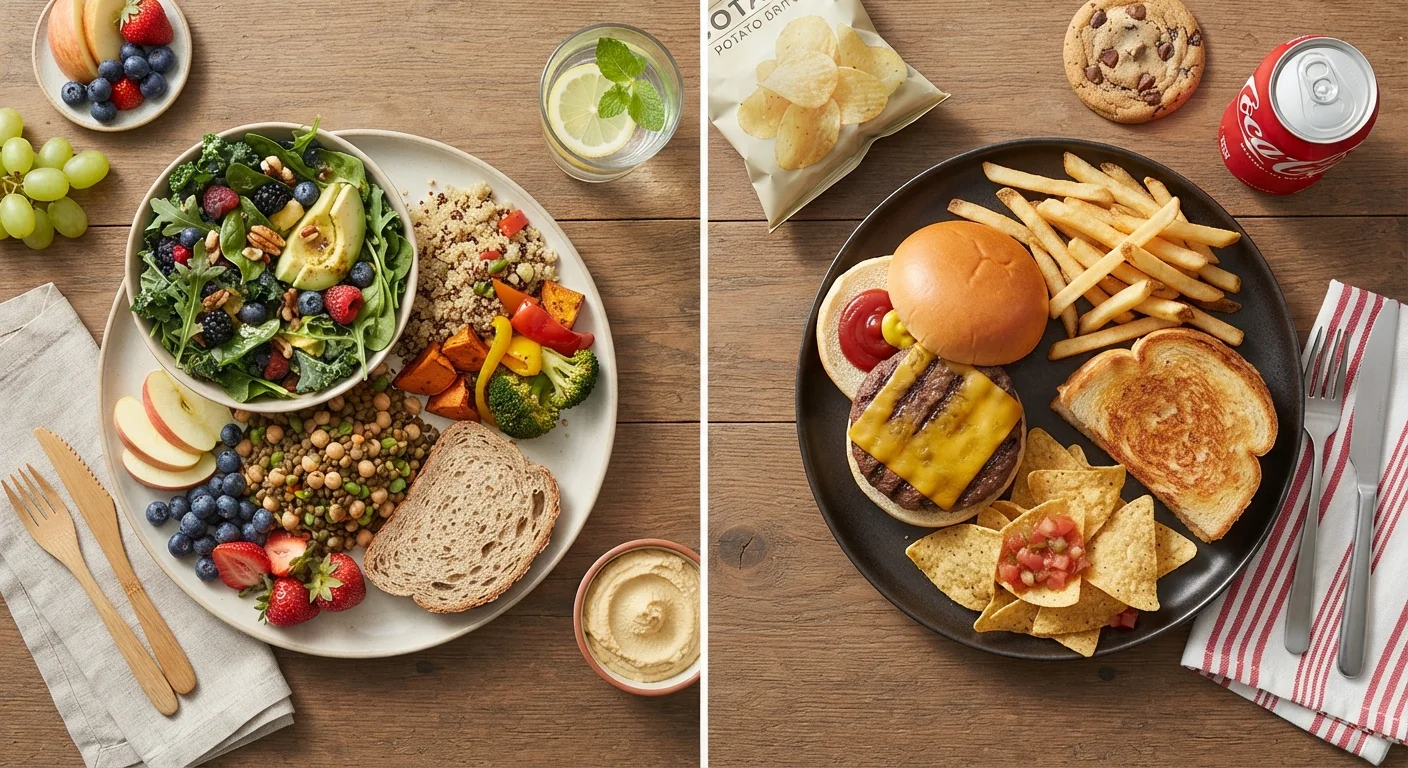
A plant-based diet centers on vegetables, fruits, legumes, whole grains, nuts, and seeds. It exists on a spectrum - some people exclude all animal products (vegan), while others simply make plant foods the primary focus and include modest amounts of meat, dairy, or eggs. What defines the pattern is emphasis, not rigid elimination.
The traditional American diet - sometimes called the Standard American Diet - is characterized by high intakes of red and processed meats, refined grains, added sugars, sodium, and saturated fats, with relatively low consumption of vegetables, legumes, and whole grains. National dietary surveys have consistently documented this profile for decades.
Neither label describes a single fixed menu. A plant-based eater who relies heavily on white rice and fried tofu has a very different nutritional intake from one who prioritizes lentils, leafy greens, and berries. Similarly, a traditional American eater who chooses lean proteins and vegetables alongside processed staples differs from one whose diet is anchored in fast food. Quality within each pattern matters as much as the pattern itself. Before overhauling any dietary approach, see our self-assessment checklist to evaluate readiness and goals.
Key Nutritional Differences at a Glance
The clearest differences between the two patterns emerge when you look at specific nutrients:
| Nutrient / Factor | Plant-Based Diet | Traditional American Diet | |
|---|---|---|---|
| Dietary Fiber | Typically high | Typically low | |
| Saturated Fat | Generally low | Often high | |
| Sodium | Lower in whole-food versions | Frequently high from processed foods | |
| Added Sugars | Variable; lower in whole-food versions | Often high | |
| Vitamin B12 | Potential gap without supplementation | Readily available from animal foods | |
| Iron | Present; lower bioavailability | Includes highly bioavailable heme iron | |
| Antioxidants & Phytonutrients | Generally abundant | Lower unless diet includes ample produce | |
| Ultra-Processed Food Exposure | Lower in whole-food versions | Frequently high |
Fiber is one of the starkest contrasts. Most Americans consume well under the recommended daily fiber intake, while well-planned plant-based diets routinely meet or exceed it. Our guide to dietary fiber explains why this gap matters and which foods help close it.
Sodium is another major divergence. Processed and packaged foods - dietary staples in the traditional American pattern - are the primary sodium sources in the U.S. diet, not the salt shaker. Plant-based diets built around whole foods are naturally lower in sodium. For more context, see where sodium is really coming from.
Nutrients That Require Extra Attention on a Plant-Based Diet
A plant-based diet's nutritional strengths are real, but so are its potential gaps. These are the nutrients that require deliberate planning:
- Vitamin B12: Found almost exclusively in animal products. Those avoiding all animal foods need a reliable B12 source - typically fortified foods or a supplement. This is one area where professional guidance is especially important.
- Iron: Plant foods contain non-heme iron, which is absorbed less efficiently than the heme iron in meat. Pairing iron-rich plants (lentils, tofu, fortified cereals) with vitamin C-rich foods improves absorption.
- Calcium: Dairy is a concentrated source; plant-based alternatives include fortified plant milks, calcium-set tofu, kale, and white beans.
- Omega-3 fatty acids: The ALA form is found in flaxseeds, chia seeds, and walnuts, but conversion to the EPA and DHA forms the body prefers is limited. Algae-based omega-3 supplements are one option worth discussing with a healthcare provider.
- Protein: Plant proteins are absolutely adequate for most people when the diet is varied. The common idea that plant proteins are nutritionally inferior is largely outdated - our article on protein myths unpacks the evidence in detail.
Make Nutrient Planning Part of the Shift
If you're moving toward a more plant-based pattern, tracking key nutrients like B12, calcium, and iron during the transition can reveal gaps before they become problems. A registered dietitian can help you build a food-first plan and identify where targeted supplementation makes sense. Our grocery shopping guide also offers practical strategies for stocking a more nutrient-dense kitchen week to week.
Health Associations: What the Research Suggests
Large observational studies and dietary reviews have found associations between plant-forward eating patterns and lower rates of cardiovascular disease, type 2 diabetes, and certain cancers. These are associations, not guarantees - diet is one factor among many that influence health outcomes.
The traditional American diet has been linked in research to elevated LDL cholesterol, higher blood pressure, and increased markers of systemic inflammation - outcomes tied in large part to its high saturated fat, sodium, and added sugar content. The shift from refined to whole grains alone has measurable nutritional consequences.
It's worth noting that the healthiest populations studied often eat diets that are predominantly - but not exclusively - plant-based, with modest amounts of animal foods and very little ultra-processing. This suggests that a moderate, flexible approach may be both practical and health-supportive for many Americans.
This article is for general informational and educational purposes only and does not constitute medical or dietary advice. Consult a qualified healthcare professional or registered dietitian before making significant changes to your diet.