

Key Takeaways
Dietary Sodium
Sodium is a mineral the body needs in small amounts to regulate fluid balance, support nerve function, and help muscles contract. In the diet, it arrives primarily as sodium chloride - table salt - though it appears in many forms across processed and packaged foods. Most Americans consume significantly more sodium each day than current public health guidelines recommend.
Sodium and salt are not the same thing by weight: one teaspoon of table salt contains roughly 2,300 milligrams of sodium, which is the amount the Dietary Guidelines for Americans identify as the general daily upper limit for adults.
Where Dietary Sodium Actually Comes From
A common assumption is that sodium intake is mostly a matter of how aggressively someone uses the salt shaker. In reality, the American diet gets roughly 70% of its sodium from processed, packaged, and restaurant foods before any salt is added at the table or during home cooking.
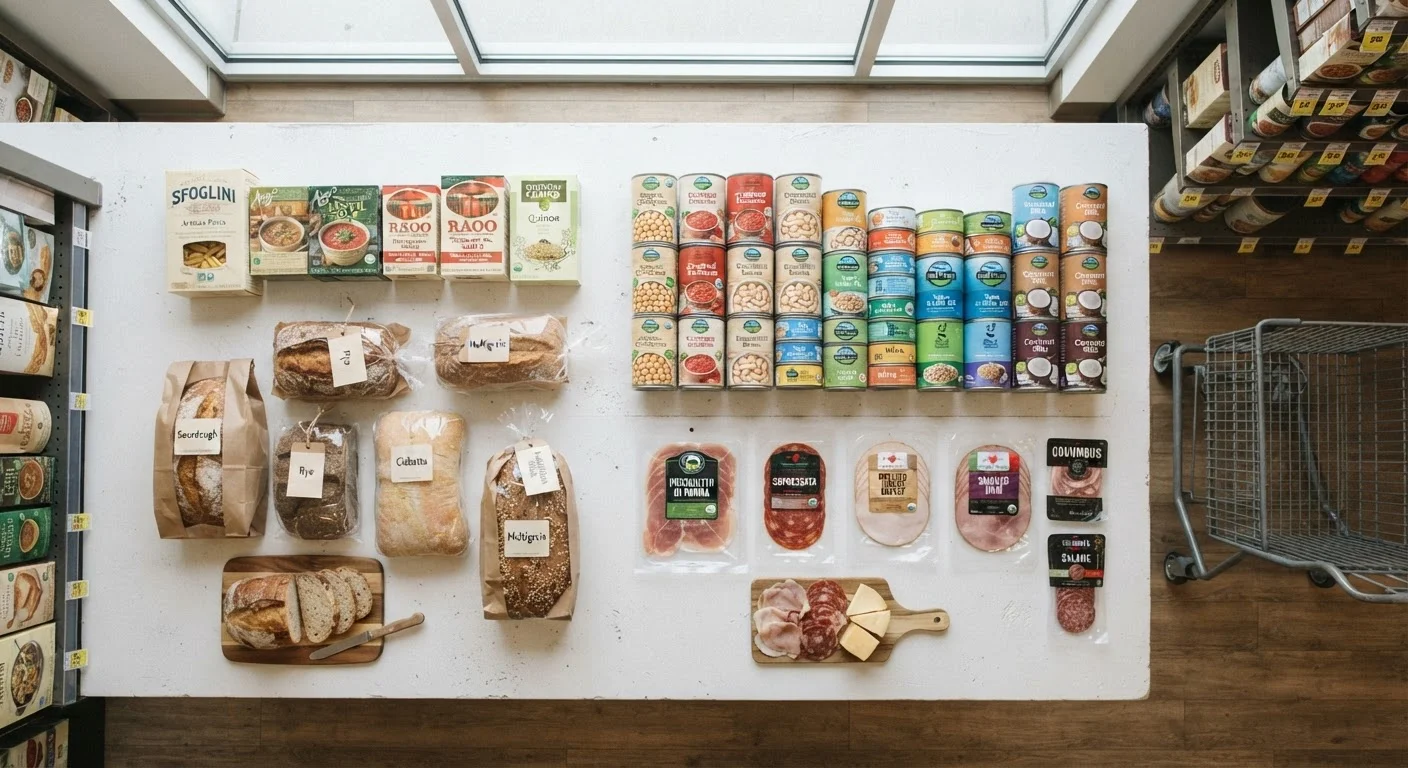
The Centers for Disease Control and Prevention (CDC) has identified a consistent group of food categories that account for the majority of sodium Americans eat. These include:
- Bread and rolls - a top source because they're consumed so frequently, even though individual slices may not seem especially salty
- Pizza - combines high-sodium cheese, processed meats, and sauce
- Sandwiches and burgers - particularly from fast food and deli counters
- Cold cuts and cured meats - sodium is used both as a preservative and flavor enhancer
- Soups - canned varieties can contain 800-900 mg per serving
- Savory snacks - chips, crackers, and pretzels add up quickly
This landscape helps explain why dietary changes focused only on the salt shaker tend to have a limited effect on total intake. The bigger opportunity lies in understanding what's already inside packaged and prepared foods.
3,400 mg
Average daily sodium intake for U.S. adults
According to the CDC, most American adults consume about 3,400 mg of sodium daily - nearly 50% more than the 2,300 mg guideline.
~70%
Sodium from processed and restaurant foods
The CDC estimates roughly 70% of dietary sodium comes from packaged, processed, and restaurant foods, not from salt added during cooking or at the table.
47%
U.S. adults with high blood pressure
The American Heart Association reports that nearly half of American adults have hypertension, a condition for which high sodium intake is a well-established contributing factor.
Why Sodium Matters to Your Health
The body genuinely needs sodium - it plays a role in regulating blood pressure, maintaining fluid balance, and transmitting nerve signals. The concern isn't sodium itself, but consistently high intake over time.
A large and well-established body of research links chronically elevated sodium consumption to high blood pressure (hypertension), which is itself a leading risk factor for heart disease and stroke - two of the leading causes of death in the United States. The relationship between sodium and blood pressure is particularly significant for people who are "sodium-sensitive," a group that may include a higher proportion of older adults and individuals of African American descent, though sensitivity exists across all populations.
It's worth noting that sodium's effect on health doesn't operate in isolation. Dietary patterns as a whole - including potassium intake, which can help counteract some of sodium's blood pressure effects - shape cardiovascular risk more broadly. For context on how overall eating patterns differ in their nutritional impact, see our nutritional comparison of plant-based and traditional American diets.
This article provides general health information and is not a substitute for personalized medical advice. Consult a qualified healthcare provider regarding your individual health needs.
Reading Labels and Making Practical Reductions
Understanding sodium on food labels is one of the most direct tools available to everyday consumers. The Nutrition Facts panel lists sodium in milligrams per serving - but serving sizes on packaged foods are often smaller than what people actually eat, so the real sodium intake can be higher than it first appears.
When comparing products, the % Daily Value (%DV) column is a useful shortcut: 5% DV or less per serving is generally considered low; 20% DV or more is considered high. This applies to sodium just as it does to other nutrients like saturated fat or dietary fiber - a nutrient most Americans also fall short on.
Practical steps supported by nutrition science include:
- Choosing lower-sodium versions of canned goods (beans, tomatoes, broth) or rinsing canned items before use
- Comparing sodium content between similar products - variation can be substantial even within the same food category
- Cooking more meals at home using whole ingredients, which naturally contain far less sodium than processed alternatives
- Becoming familiar with which condiments - soy sauce, hot sauce, salad dressings - are disproportionately high in sodium
Sodium reduction doesn't have to be all-or-nothing. Incremental changes, like swapping one or two high-sodium staples for lower-sodium alternatives, can meaningfully reduce overall intake over time. For a broader look at how labeling distinguishes between types of ingredients, our piece on why added sugar appears separately on food labels offers useful context on how nutrition science informs what we see on packaging.