

Key Takeaways
Dietary Fiber
Dietary fiber is the portion of plant foods that your body cannot fully digest or absorb. Unlike fats, proteins, and carbohydrates, fiber passes largely intact through your stomach and intestines. It plays a key role in digestive health, blood sugar regulation, and heart health, among other functions.
Fiber is classified as a type of carbohydrate, but because human digestive enzymes cannot break down its chemical bonds, it contributes minimal calories and acts more like a functional ingredient than a fuel source.
Why Fiber Deserves More Attention
Nutrition conversations in the United States tend to orbit around protein and sugar, leaving fiber largely out of the spotlight. Yet dietary fiber is one of the few nutrients where the gap between what Americans actually eat and what research suggests they need is consistently and dramatically wide. According to data from the U.S. Dietary Guidelines Advisory Committee, the average American consumes roughly 15 grams of fiber per day - about half the generally recommended amount for adults.
This gap matters because fiber is involved in far more than just regularity. Research has linked adequate fiber intake to lower risks of cardiovascular disease, type 2 diabetes, and colorectal cancer, as well as better gut microbiome diversity and improved blood sugar control. It is not a trendy nutrient or a supplement to chase - it is a foundational part of a balanced diet that most Americans simply are not getting enough of.
~15g
Average daily fiber intake in the U.S.
U.S. Dietary Guidelines Advisory Committee data shows most Americans consume far less than the recommended amount.
25-38g
Recommended daily fiber for adults
The Dietary Guidelines for Americans suggest 25g/day for women and 38g/day for men, varying by age.
95%
Americans falling short of fiber recommendations
The FDA has identified dietary fiber as a nutrient of public health concern, noting widespread under-consumption across the U.S. population.
Soluble vs. Insoluble Fiber: Two Types, Two Roles
Fiber is not a single substance. It falls into two broad categories, each with a different mechanism and set of benefits.
Soluble Fiber
Soluble fiber dissolves in water to form a gel-like substance in the digestive tract. This gel slows the absorption of sugar into the bloodstream, which helps moderate blood glucose levels after meals. Soluble fiber also binds to cholesterol particles and helps carry them out of the body, which is why foods rich in this type - like oats and barley - have been studied in the context of heart health. Good sources include oats, legumes, apples, citrus fruits, and psyllium.
Insoluble Fiber
Insoluble fiber does not dissolve in water. Instead, it adds bulk to stool and speeds the movement of material through the digestive tract. This helps prevent constipation and supports overall gut motility. Whole wheat, bran, nuts, and most vegetables are rich in insoluble fiber.
Most fiber-rich foods contain a mix of both types, so eating a varied diet naturally provides both without needing to track them separately. Understanding the distinction simply helps explain why fiber benefits extend well beyond digestion. For a broader look at how plant-forward eating patterns deliver nutrients like fiber, see our nutritional comparison of plant-based and traditional American diets.
Where to Actually Find Fiber in Your Diet
Fiber exists exclusively in plant foods. Animal products - meat, dairy, eggs, and fish - contain no dietary fiber. This is an important distinction because many American dietary patterns are heavily centered on animal proteins while underrepresenting the plant foods that deliver fiber.
The richest practical sources include:
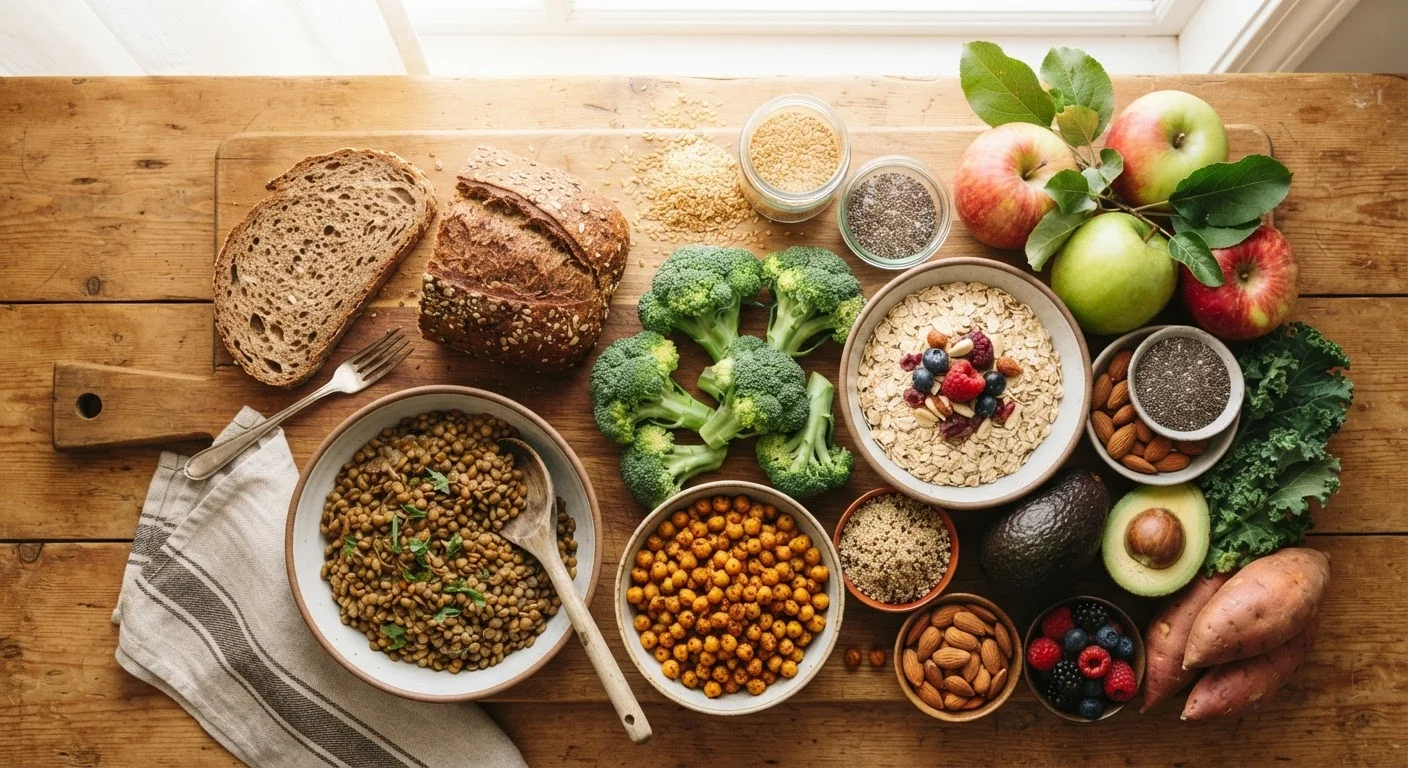
- Legumes: Lentils, black beans, chickpeas, and split peas are among the most concentrated fiber sources available, offering 12-15 grams per cooked cup.
- Whole grains: Oats, barley, quinoa, and whole wheat bread or pasta provide substantially more fiber than their refined counterparts.
- Vegetables: Broccoli, Brussels sprouts, carrots, and artichokes are particularly fiber-dense among common vegetables.
- Fruits: Apples, pears, berries, and avocados deliver meaningful fiber, especially when eaten with the skin intact.
- Nuts and seeds: Chia seeds, flaxseeds, and almonds are compact, fiber-rich additions to meals and snacks.
One practical insight: whole grains carry significantly more fiber than refined grains. A slice of 100% whole wheat bread, for example, contains roughly three times the fiber of white bread made from refined flour. Swapping refined grains for whole grains is one of the most accessible ways to close the fiber gap without overhauling your entire diet. Notably, sodium intake is another nutrient worth tracking alongside fiber - our article on sodium in the American diet explores where hidden sodium tends to come from.
How to Increase Fiber Without Discomfort
One of the most common obstacles people encounter when trying to eat more fiber is digestive discomfort - bloating, gas, and cramping that can make the transition feel counterproductive. This almost always results from increasing fiber too quickly, before the gut microbiome has time to adjust.
A more effective approach is gradual addition: increase fiber intake incrementally over four to six weeks rather than all at once. Equally important is staying well hydrated, since fiber absorbs water and needs it to move efficiently through the digestive tract. Without adequate fluid intake, a high-fiber diet can paradoxically worsen constipation rather than relieve it.
Another helpful strategy is to focus on variety. Because different fiber sources feed different strains of beneficial gut bacteria, eating a wide range of plant foods tends to support a more resilient microbiome than relying on a single high-fiber food. If you are also exploring broader dietary patterns - such as time-restricted eating - it is worth reading our balanced review of what intermittent fasting research actually shows to understand how dietary timing might interact with nutritional goals. Fiber quality and protein quality are often discussed together - our article on protein myths addresses common misconceptions that affect how Americans build their meals.
This article is for general informational and educational purposes only and is not a substitute for professional medical or dietary advice. Consult a qualified healthcare provider or registered dietitian before making significant changes to your diet, especially if you have an existing health condition.