

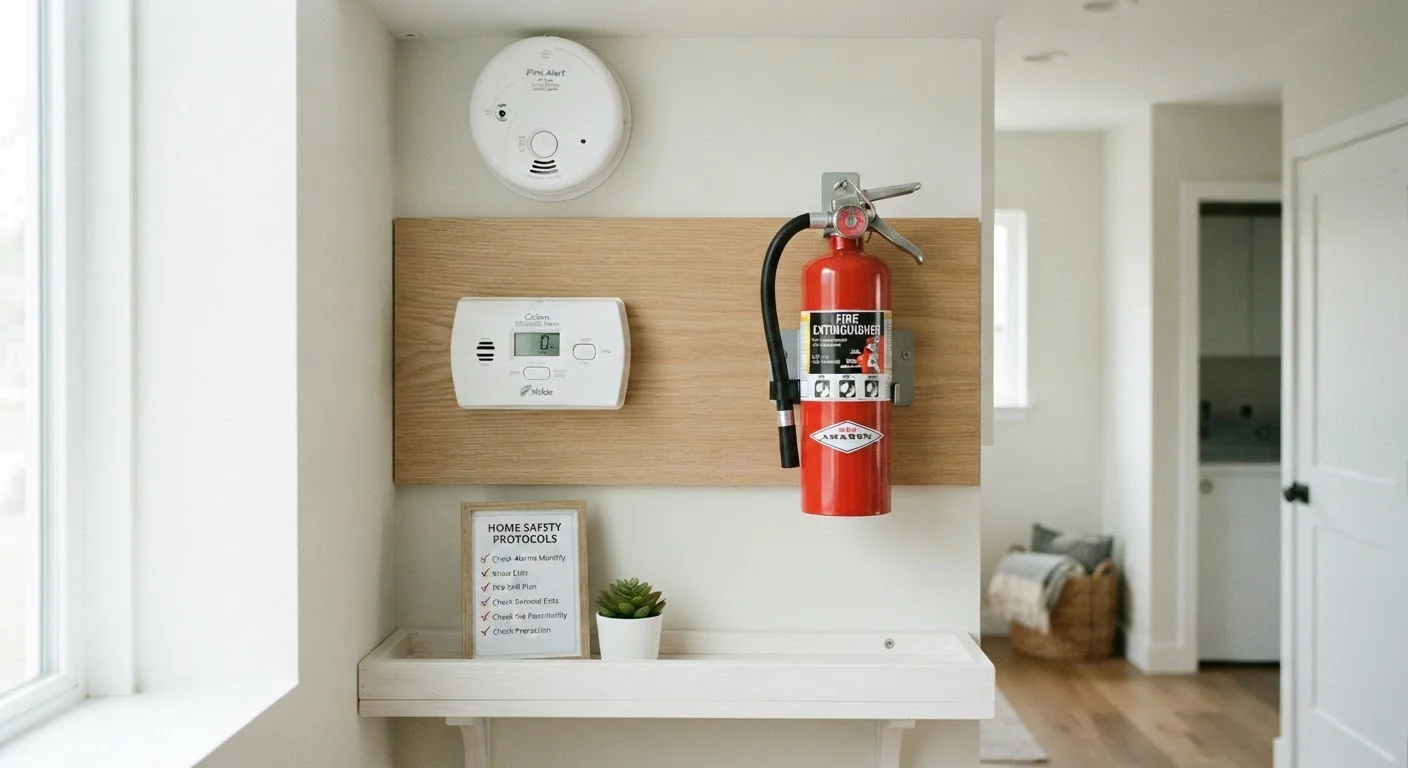
Where to Place Each Device
Correct placement is the foundation of an effective home safety system. Even a well-maintained device can fail to protect your household if it's in the wrong spot.
Smoke Detectors
- Install on every level of the home, including the basement.
- Inside each bedroom and in the hallway outside sleeping areas - the National Fire Protection Association (NFPA) standard 72 requires both.
- Keep clear of kitchens and bathrooms. Mount units at least 10 feet from cooking appliances to reduce nuisance alarms. Avoid steam-prone areas near showers.
- High on the wall or ceiling. Smoke rises, so ceiling-center or high-wall placement (4-12 inches from the ceiling) is most effective. Avoid corners where air circulation is poor.
Carbon Monoxide (CO) Alarms
- Near every sleeping area. CO impairs judgment during sleep, so alarms must be audible from bedrooms.
- On each level of the home, including the basement - particularly important if you have an attached garage, gas appliances, or a fuel-burning furnace.
- Mid-wall height is acceptable for CO alarms, since CO disperses fairly evenly in air rather than rising like smoke. Follow the manufacturer's specific guidance.
- Not in enclosed spaces like closets or behind furniture that blocks airflow.
Fire Extinguishers
- Kitchen: Mount near the exit - not directly beside the stove, where a fire could block access.
- Garage and workshop: One extinguisher per significant risk area.
- Each floor of larger homes benefits from its own unit.
- Mount at a height reachable by all adults in the household, typically with the handle no higher than 5 feet off the floor.
For a broader look at routine home upkeep, see our First-Time Homeowner's Introduction to Routine Maintenance, which covers safety devices alongside HVAC, gutters, and more.
Testing, Maintenance, and Replacement Schedules
Placement only works if devices are functional. A dead-battery detector or an expired extinguisher provides a false sense of security. Use this schedule as your year-round reference.
Smoke Detectors
- Monthly
- Press the test button until the alarm sounds. A weak or absent tone signals a battery or sensor problem.
- Every 6 months
- Replace batteries in units that aren't hardwired. Even hardwired detectors typically have a battery backup - replace it on the same schedule.
- Every 10 years
- Replace the entire unit. Sensors degrade over time. Check the manufacture date printed on the back - not the purchase date.
Carbon Monoxide Alarms
- Monthly
- Test using the test button. Some units also have a peak-level memory display worth checking periodically.
- Every 6 months
- Replace batteries in battery-powered units.
- Every 5-7 years
- Replace the unit. CO sensors have a shorter service life than smoke sensors. Check your model's documentation for the exact interval.
Fire Extinguishers
- Monthly
- Visually inspect: verify the pressure gauge needle is in the green zone, the pin and tamper seal are intact, and the unit shows no visible damage or corrosion.
- Annually
- Have a certified fire-protection professional perform a formal inspection per NFPA 10 guidelines. Keep a tag or log of inspection dates.
- Every 6 years
- Stored-pressure extinguishers require an internal inspection by a professional.
- Every 12 years
- Hydrostatic testing of the cylinder is required. At this stage, replacement is often more cost-effective than testing older units.
Local codes may impose additional requirements. Our article on permits, inspections, and code explains how to verify what applies in your jurisdiction.
This article is for general informational purposes only. Always consult your local fire marshal, current building codes, and device manufacturer instructions to confirm requirements specific to your home and location.