

Key Takeaways
Water Shutoff System
A water shutoff system is the network of valves in your home that allows you to stop the flow of water to specific fixtures, appliances, or the entire house. Every home connected to a municipal water supply or a private well has at least one main shutoff valve, plus individual shutoffs near most plumbing fixtures. Understanding these valves means you can respond quickly to leaks, make repairs, and perform routine maintenance without calling a plumber for simple tasks.
Shutoff valves are typically either gate valves (older, round-handled) or ball valves (newer, lever-handled). Ball valves are generally more reliable for long-term use and easier to operate quickly in an emergency.
The Main Shutoff: Your First Line of Defense
When a pipe bursts or a supply line suddenly fails, the fastest way to limit water damage is to reach your main shutoff valve immediately. This single valve controls all water flowing into your home from the municipal supply or well system.
Main shutoffs are most often located in basements near the front foundation wall, inside utility closets, or in garages - typically within a few feet of where the supply pipe enters the building. In slab-foundation homes or warmer-climate houses without basements, check near the water heater or in an exterior access panel. Take a few minutes now to locate yours and make sure every adult in your household knows where it is and how to operate it.
If your main valve is a gate valve (round wheel handle), turn it clockwise until it stops - this may take several full rotations. If it's a ball valve (flat lever handle), one quarter-turn so the lever is perpendicular to the pipe will stop flow completely. Ball valves are faster and generally more dependable in emergencies.
Label Your Main Shutoff Now
Attach a waterproof label or tag directly to your main shutoff valve indicating what it controls and which direction closes it. In a stressful emergency, clear labeling removes guesswork. Consider also writing the valve's location on your home's emergency contact sheet.
Individual Fixture Shutoffs: Targeted Control
Most modern plumbing includes individual shutoff valves at each fixture - toilets, sinks, dishwashers, washing machines, refrigerators with ice makers, and water heaters. These let you isolate a problem at its source without disrupting water throughout the rest of your home.
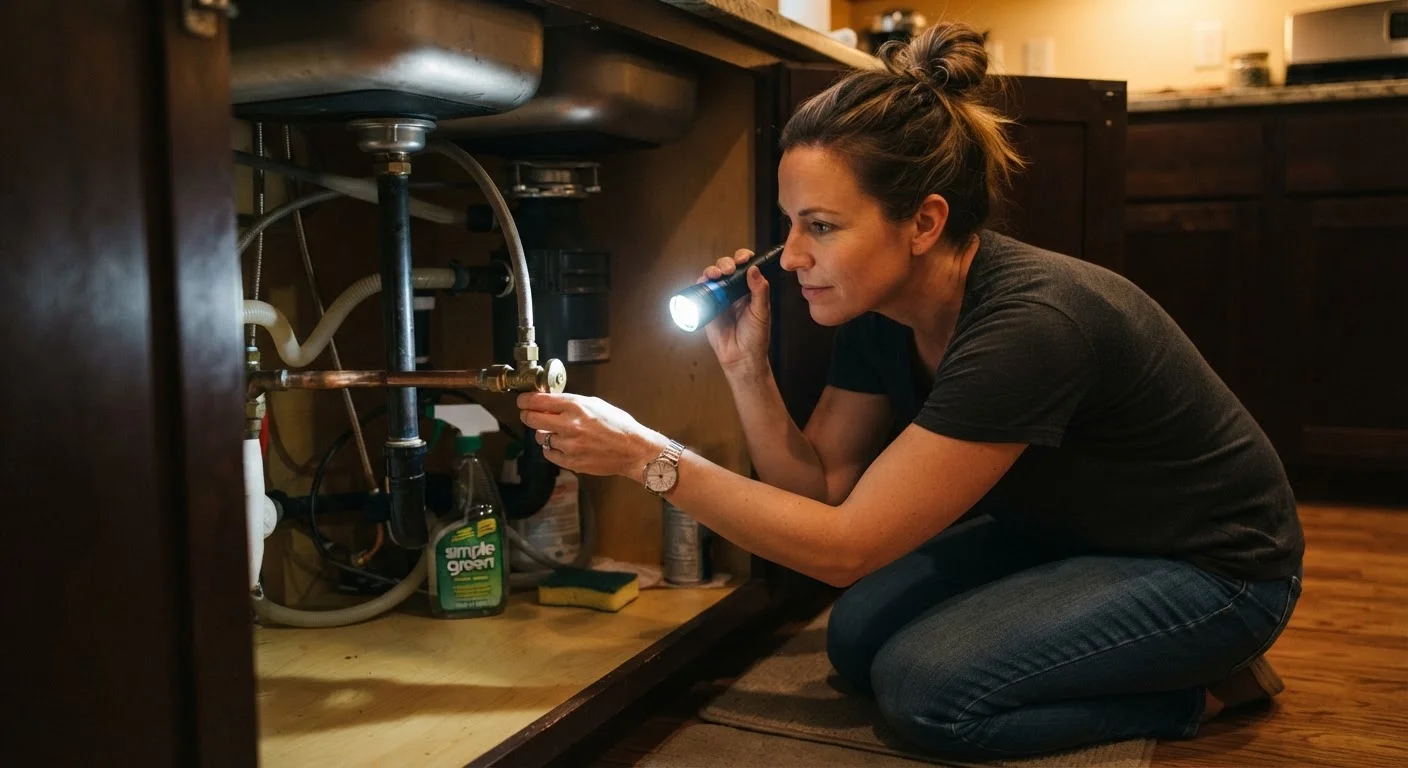
For toilets, the shutoff valve is typically a small oval-handled valve on the wall or floor behind the base of the toilet. For sinks, look inside the cabinet beneath the sink - you'll usually find two valves (hot and cold) on the supply lines. Dishwashers and washing machines often share a shutoff located under the sink nearby or behind the appliance.
Turn these valves clockwise to close. If a valve feels stiff or won't budge, don't force it. A valve that has been stationary for years can fail when stressed. Add exercising your fixture shutoffs to your annual maintenance checklist - a slow turn open and then closed once a year keeps them operational.
~$11,000
Average water damage claim cost for homeowners
According to the Insurance Information Institute, water damage and freezing account for a significant share of homeowner insurance claims, with average losses in this range.
98%
Of water damage incidents involve a known source
Industry data consistently shows the vast majority of residential water damage originates from identifiable plumbing failures - most of which can be halted quickly with a functioning shutoff valve.
The Curb Stop: What Homeowners Should Know
Near the street or sidewalk in front of most homes is a covered access box containing your water meter and a curb stop valve (also called a street-side shutoff). This valve sits between the municipal main and your home's supply line.
While it's important to know this valve exists, operating it is generally best left to your water utility or a licensed plumber. Curb stops often require a specialized tool called a curb key, and improper operation can damage the valve or the meter. If your interior main shutoff fails completely during an emergency, calling your water utility for emergency shutoff assistance is the recommended course of action.
Understanding the full path of water into your home - from street to curb stop to main house valve to individual fixture shutoffs - gives you a clearer picture of your options at every stage of a plumbing problem. For a broader view of home systems and when professional help is warranted, see our guide on maintaining your home from the ground up.
Routine Valve Maintenance and When to Call a Pro
Shutoff valves are passive components - they sit untouched for years until the moment you need them most. That inactivity is precisely what makes them fail. Mineral deposits and corrosion can fuse a gate valve's gate in the open position, making it useless in an emergency.
A simple habit: once a year, locate each shutoff valve in your home and slowly turn it closed, then open it again. This clears minor buildup and confirms the valve still functions. Note any that feel stiff or fail to fully close - those should be evaluated and replaced by a plumber before a real problem arises.
Replacing a shutoff valve is work that typically requires soldering, compression fittings, or push-fit connectors depending on your pipe material. While some experienced DIYers handle this, it involves cutting into supply lines and carries real risk of leaks if done incorrectly. When in doubt, a licensed plumber can replace a valve in a short service call. This is also the kind of work that rarely requires a permit, but regulations vary - check your local requirements or review our overview of when permits are required for home plumbing work.