

Key Takeaways
Start here
Choosing the Right Location
Next
Understanding Your Soil
Then
Planning Your Garden Layout
Finally
Planting and Seasonal Care
Choosing the Right Location
Before you buy a single seed, walk your yard at different times of day and observe where sunlight falls. Vegetables are sun-hungry plants - most need a minimum of six hours of direct sunlight daily, and eight or more is even better. A shaded spot that looks pleasant in the morning may be blocked by a fence or tree by afternoon.
Beyond light, keep these site factors in mind:
- Proximity to water: Choose a spot within easy reach of a hose or spigot. Lugging watering cans is manageable for a small pot but exhausting for a garden bed.
- Drainage: Avoid low-lying areas where water pools after rain. Saturated soil starves roots of oxygen and invites disease.
- Flat ground: A level or gently sloped surface prevents soil and amendments from washing away. Steep slopes usually need terracing before planting.
- Distance from large trees: Tree roots compete aggressively with vegetables for water and nutrients, and heavy canopies cast shade. Give yourself at least 10 feet of clearance from a mature tree's drip line.
For a thorough look at prepping the physical space before your first seeds go in, the Garden Bed Preparation Checklist for Spring Planting walks you through soil testing, edging, and amendments step by step.
Understanding Your Soil
Soil is where your garden either thrives or struggles. Vegetables need loose, well-draining soil that holds enough moisture to stay consistently damp - but never waterlogged. The ideal texture is often described as loamy: a balanced mix of sand, silt, and clay that crumbles easily in your hand.
pH
A scale from 0 to 14 that measures how acidic or alkaline your soil is. Most vegetables grow best when soil pH sits between 6.0 and 7.0.
Loamy soil
A well-balanced soil type that contains a mix of sand, silt, and clay, making it easy to work, fertile, and good at retaining moisture without waterlogging.
Compost
Decomposed organic material - food scraps, leaves, plant trimmings - that enriches soil with nutrients and improves its texture and drainage.
Hardiness zone
A geographic designation based on average annual minimum temperatures, used to predict which plants are likely to survive and thrive in your area.
Direct seeding
Planting seeds directly into outdoor garden soil rather than starting them indoors first. Best for crops with sensitive root systems that don't transplant well.
Succession planting
Staggering plantings of the same crop at two- to three-week intervals so you harvest continuously throughout the season rather than all at once.
Before adding anything, consider a basic soil test. Your local cooperative extension service can analyze a sample for pH and nutrient levels for a modest fee, giving you a clear picture of what your soil already has and what it lacks. Most vegetables prefer a pH between 6.0 and 7.0.
Common ways to improve native soil:
- Compost: Adding two to four inches of finished compost and working it into the top eight to twelve inches of soil improves structure, drainage, and fertility simultaneously.
- Aged manure: A well-rotted animal manure adds nitrogen and organic matter. Never use fresh manure on a food garden - it can carry pathogens.
- Raised bed mix: If you build a raised bed, fill it with a blend of topsoil, compost, and coarse material (like perlite or aged wood chips) for immediate, excellent drainage.
Once you've planted, mulching the surface helps lock in moisture and suppress weeds. The Mulching Your Garden Beds guide covers how to apply mulch correctly through the growing season.
Planning Your Garden Layout
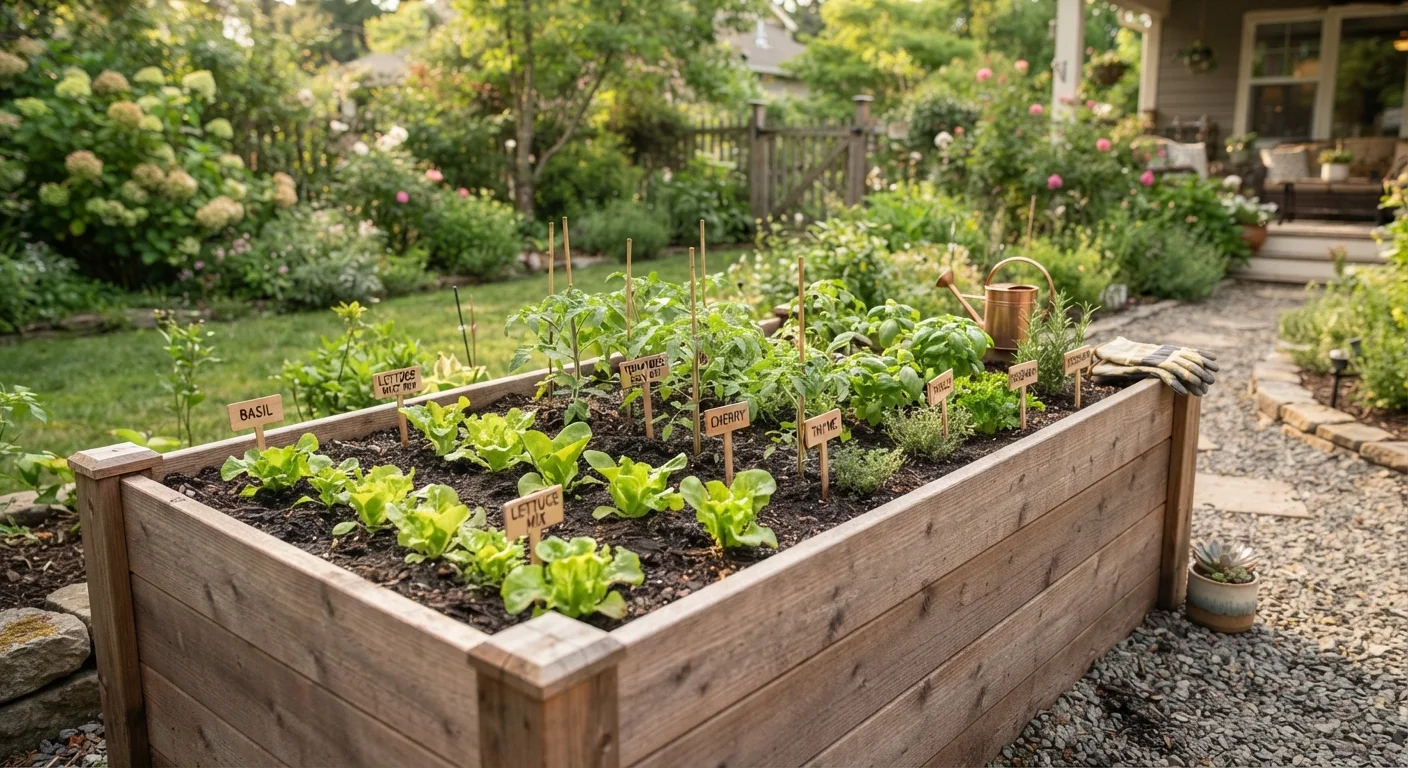
Resist the urge to plant everything at once. A 4×8-foot bed is a practical starting size - manageable, reachable from both sides without stepping on the soil, and capable of producing a real harvest. Sketch a simple plan on paper before you plant; this prevents overcrowding, which is the most common beginner mistake.
A few layout principles that pay off quickly:
- Tall plants to the north: Position taller crops like tomatoes or corn on the north side of the bed so they don't shade shorter neighbors.
- Succession planting: Stagger plantings of quick-maturing crops like lettuce or radishes every two to three weeks so you harvest steadily rather than all at once.
- Square-foot method: Dividing your bed into one-foot squares and planting according to recommended plant spacing keeps things organized and maximizes yield per square foot.
Choose crops suited to your climate zone. The USDA Plant Hardiness Zone Map is a free, publicly available tool that helps you understand your region's average minimum winter temperatures - and therefore which plants are likely to succeed. Pair that with your area's average last frost date to know when to plant warm-season crops outdoors safely.
Planting and Seasonal Care
Seeds or transplants? Many vegetables - lettuce, carrots, beans, radishes - are best direct-seeded into the garden because their roots don't transplant well. Others, like tomatoes, peppers, and eggplant, benefit from starting indoors six to eight weeks before your last frost date or purchasing transplants from a nursery.
Once plants are in the ground, consistent care makes the difference:
- Watering: Aim for approximately one inch of water per week. Water at the base of the plant in the morning to reduce the risk of fungal disease. A simple drip system or soaker hose saves time and keeps foliage dry.
- Fertilizing: If you started with compost-rich soil, you may need little supplemental fertilizer. Watch for yellowing leaves (often a nitrogen signal) and slow growth as cues that plants need feeding.
- Weeding: Pull weeds when small, before they compete seriously or set seed. A light layer of mulch - two to three inches - dramatically reduces how often you'll need to weed.
- Pest and disease scouting: Spend a few minutes each week turning leaves over and looking for eggs, chewed edges, or spots. Catching problems early gives you far more options than discovering them late.
First-time vegetable gardening is a skill built incrementally. Your first season will teach you more about your specific yard, climate, and preferred crops than any guide can anticipate. Keep notes, stay curious, and treat setbacks as data rather than failures. Good home gardening habits connect naturally to the broader work of maintaining your home from the ground up - both reward consistent attention over quick fixes.
Start a Simple Garden Journal
Record what you plant, when you plant it, and what happens - harvests, pest problems, weather surprises. Even a pocket notebook works. After one full season, this record becomes your most valuable gardening resource, tailored entirely to your own yard and climate.