

Key Takeaways
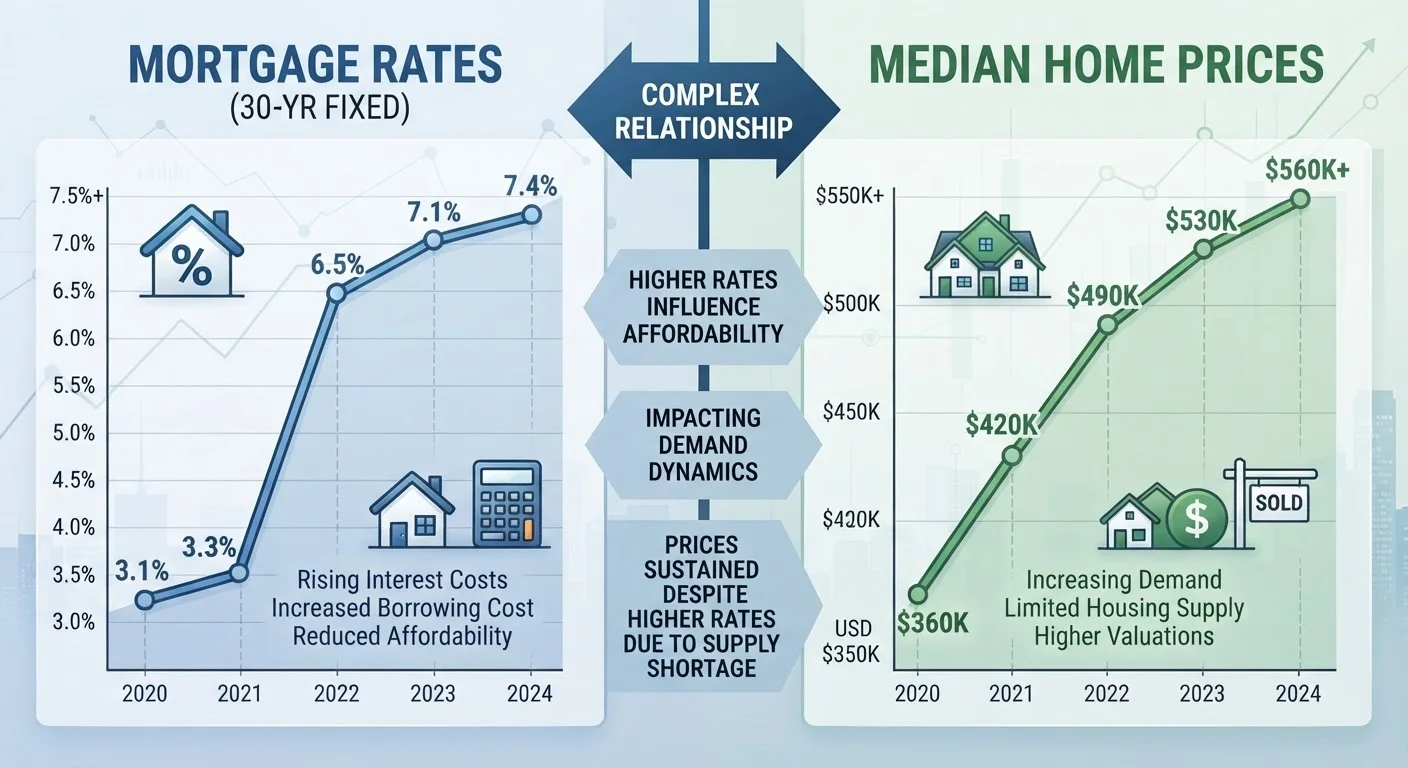
Rate-Price Divergence
Rate-price divergence describes the phenomenon where mortgage interest rates and home prices move in different directions simultaneously - or where one rises without the other falling as expected. Most people assume higher rates automatically push prices down, but housing markets are shaped by many forces at once, including inventory levels, local employment, and demographic demand. When these forces outweigh the dampening effect of higher borrowing costs, prices can hold steady or even rise despite expensive financing.
Economists distinguish between demand-side shocks (rate changes affecting purchasing power) and supply-side constraints (limited inventory restricting price corrections). When supply is inelastic, price declines from reduced demand are muted or absent even as affordability worsens.
The Assumption Most Buyers Make - and Why It's Incomplete
A widespread assumption in real estate goes like this: when mortgage rates rise, home prices fall, and vice versa. The logic seems airtight. Higher borrowing costs reduce what buyers can afford, so sellers must lower their prices to attract offers. Simple supply and demand.
The problem is that housing markets don't operate in a single-variable vacuum. Prices are shaped simultaneously by inventory levels, local employment conditions, migration patterns, construction activity, and the psychology of both buyers and sellers. When those factors push in the opposite direction of rate changes, prices can - and do - defy the expected pattern.
This is part of a broader set of misunderstandings covered in common housing market myths. Understanding why rates and prices diverge is one of the more practically useful pieces of knowledge a buyer or seller can carry into any market.
Supply Constraints: The Most Powerful Counterforce
The single biggest reason home prices can remain elevated despite rising rates is insufficient housing supply. When there are far fewer homes for sale than there are motivated buyers, sellers face little competitive pressure to reduce asking prices - even as financing becomes more expensive.
This dynamic played out visibly in many U.S. markets in the early-to-mid 2020s. Mortgage rates climbed sharply from historic lows, yet median home prices in many metros held firm or continued rising. Why? Because the supply of existing homes listed for sale dropped dramatically at the same time. Existing homeowners locked into low fixed-rate mortgages had little incentive to sell and take on a higher rate on their next purchase - a phenomenon sometimes called the "lock-in effect." Fewer listings meant sustained competition for available homes.
~35%
Drop in existing home listings during rate spike periods
Research from the National Association of Realtors has documented significant inventory contraction in periods when rates rose rapidly, as locked-in sellers chose to stay put.
6+ months
Typical lag between rate changes and price adjustments
Housing economists generally observe that list price adjustments trail significant rate moves by several months due to seller anchoring and slow market information diffusion.
Top 10
U.S. metros where local demand overrides national trends
Analyses by regional Federal Reserve banks have consistently found that high-growth metros diverge substantially from national price indices during rate volatility cycles.
This is why leading market signals - like months of supply, days on market, and listing volume - often reveal more about near-term price direction than rate movements alone.
Local Demand, Jobs, and Migration Change the Equation
National mortgage rate headlines apply uniformly across the country. Local price dynamics do not. A metro area experiencing rapid job growth, corporate relocations, or net population inflows can sustain strong home price levels that appear disconnected from the national rate environment.
Conversely, a market with weak employment or population outflows may see prices soften even when rates are relatively low, simply because buyer demand isn't there to sustain values. This is the core reason national trends and local market data diverge so frequently - the aggregate masks enormous geographic variation.
For buyers evaluating a specific market, understanding regional employment trends and net migration data provides more decision-relevant context than watching the weekly Freddie Mac rate survey in isolation.
Affordability vs. Price: An Important Distinction
Affordability and home price are related but genuinely different concepts. Price is the number on the listing. Affordability reflects what a buyer can actually carry in monthly payments given current rates, income, and down payment. Both matter - but they don't move in lockstep.
When rates rise sharply, affordability deteriorates quickly: the same loan amount costs more per month. But prices - set by the negotiation between buyers and sellers - adjust more slowly and unevenly. Sellers often anchor to recent comparable sales and resist price cuts, especially if they have equity and patience. This stickiness in pricing means affordability can erode significantly before list prices move at all.
Buyers weighing a fixed-rate versus adjustable-rate mortgage should factor in exactly this lag: the rate they lock in affects their monthly cost immediately, while any price correction - if it comes - may take months or years to materialize in their target market.
Focus on Monthly Payment, Not Just List Price
When evaluating whether to buy, calculate what a given home costs per month at current rates - not just what it's listed for. A lower-priced home in a higher-rate environment may cost more per month than a higher-priced home purchased when rates were lower. Running these numbers with a mortgage calculator gives a clearer picture of true affordability for your situation.
Staying calm and well-informed in a volatile rate environment is itself a skill. Tracking housing market news without overreacting to any single headline helps buyers and sellers make decisions grounded in the full picture, not just the most recent data point.
This article is for general informational purposes only and does not constitute financial, investment, or real estate advice. Readers should consult a licensed professional regarding their specific circumstances.