

| U.S. Traveler Emergency Line (from overseas) | +1-202-501-4444 (U.S. Department of State) |
| U.S. Traveler Emergency Line (from U.S./Canada) | 1-888-407-4747 (U.S. Department of State) |
| Pan-European Emergency Number | 112 (European Commission) |
| STEP Enrollment (free registration) | travel.state.gov (U.S. Department of State) |
| Documents to Copy Before Travel | Passport, visa, insurance card, bookings, prescriptions |
| Recommended Contact Sheet Storage | Physical copy in carry-on + digital copy in secure cloud |
Why Every Traveler Needs a Contact Reference
Most travel disruptions-lost documents, medical situations, or civil unrest-happen without warning. When they do, the last thing you want is to be searching for a phone number. Having a ready reference of emergency contacts and key documents isn't pessimism; it's the foundation of responsible trip preparation. As part of any solid trip planning process, compiling this information before departure is one of the highest-value steps you can take.
This guide is designed as a practical lookup resource. Bookmark it, print it, or save it somewhere accessible offline before your next journey.
| U.S. Traveler Emergency Line (from overseas) | +1-202-501-4444 (U.S. Department of State) |
| U.S. Traveler Emergency Line (from U.S./Canada) | 1-888-407-4747 (U.S. Department of State) |
| Pan-European Emergency Number | 112 (European Commission) |
| STEP Enrollment (free registration) | travel.state.gov (U.S. Department of State) |
| Documents to Copy Before Travel | Passport, visa, insurance card, bookings, prescriptions |
| Recommended Contact Sheet Storage | Physical copy in carry-on + digital copy in secure cloud |
U.S. Government and Embassy Resources
The U.S. Department of State operates a 24-hour traveler emergency line at 1-888-407-4747 (from the U.S. and Canada) or +1-202-501-4444 (from overseas). This line can help you locate the nearest U.S. embassy or consulate, report a missing passport, or get guidance during a crisis abroad.
The Smart Traveler Enrollment Program (STEP), available through travel.state.gov, allows U.S. citizens to register trips with the nearest embassy. Enrollment means the embassy can contact you during an emergency and helps your family reach you if communication becomes difficult. There is no cost to enroll.
Each U.S. embassy maintains its own local emergency contact number. Before you depart, look up the specific embassy or consulate for every country on your itinerary at travel.state.gov/content/travel/en/contact-us/Emergencies.html and write those numbers down. Do not rely solely on internet access to retrieve them mid-trip. For a deeper look at navigating crises when they arise, see what to do when something goes wrong abroad.
International Emergency Numbers at a Glance
The single-digit emergency number varies significantly by country. While 911 is standard across the United States and Canada, travelers must know the local equivalent before they need it. The following are widely used, but always verify for your specific destination through official government sources before departing:
- 112 - The pan-European emergency number, also functional in many countries worldwide including most EU member states, India, and parts of Latin America.
- 999 - United Kingdom, Ireland, and several Commonwealth nations.
- 000 - Australia.
- 110 / 119 - Japan (police / fire and ambulance respectively).
- 190 / 192 / 193 - Brazil (police / ambulance / fire respectively).
- 08 / 15 / 18 - France (ambulance / medical emergency / fire).
In most countries, 112 functions as a fallback even when the local number differs, and it can often be dialed without a SIM card or mobile signal. Confirm this for your destination before assuming it applies.
Key Documents to Copy and Carry
Document loss is one of the most common-and disruptive-travel emergencies. Before every trip, make both digital and physical copies of the following:
- Passport (photo page) - Store a photo on a secure cloud account and leave a physical copy with a trusted contact at home.
- Visa stamps and entry permits - Photograph each one immediately after receipt.
- Travel insurance policy number and emergency assistance line - Separate from your main insurance card; this number is often different from the claims line.
- Airline booking confirmations and e-tickets - Download to your device; do not rely on email access.
- Accommodation addresses in local script - Particularly important in destinations using non-Latin alphabets.
- Prescription medication documentation - Carry both the prescription label and a doctor's note for controlled substances when crossing borders.
Understanding documents, visas, and entry requirements helps ensure you're not caught off guard at the border with incomplete paperwork. Pair your document copies with a safety readiness checklist to cover every angle before departure.
Personal Emergency Contact Sheet
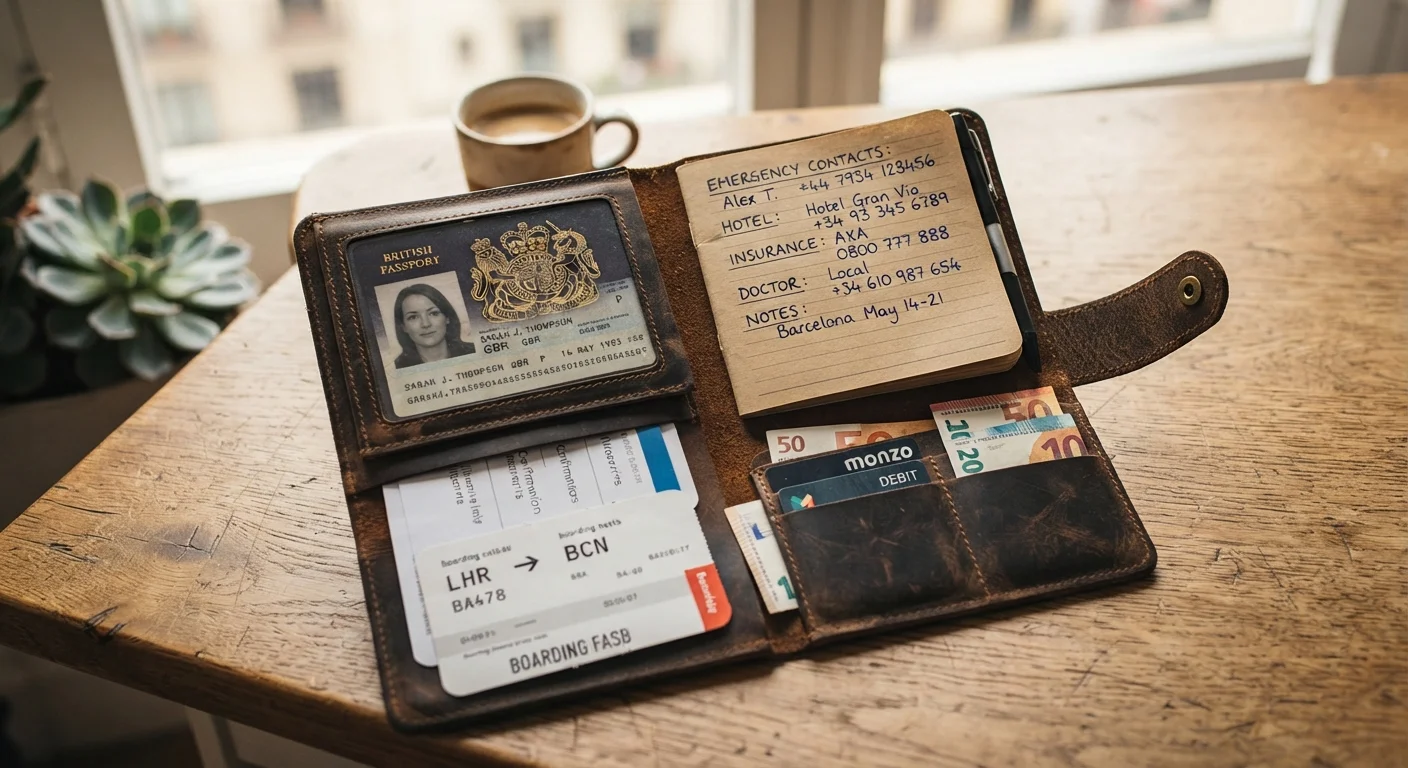
Beyond official resources, every traveler should prepare a personal contact sheet that travels with them-separate from their phone-including:
- A trusted emergency contact at home (name, relationship, two phone numbers)
- Your primary care physician's office number
- Your travel insurance provider's 24-hour emergency line
- Your bank or credit card issuer's international collect number (printed on the back of most cards, but have it saved separately)
- The local police non-emergency line for each destination, if known
If you carry travel insurance or an emergency assistance program, understand the difference between what each covers before you need it. The article travel insurance vs. emergency assistance programs breaks down those distinctions clearly. Store your contact sheet in your carry-on and share a copy with your emergency contact at home.
This article is for general informational purposes only. Emergency numbers, entry requirements, and embassy contacts change over time. Always verify current information through official government sources-such as travel.state.gov for U.S. travelers-before you depart.