

Key Takeaways
Our Verdict
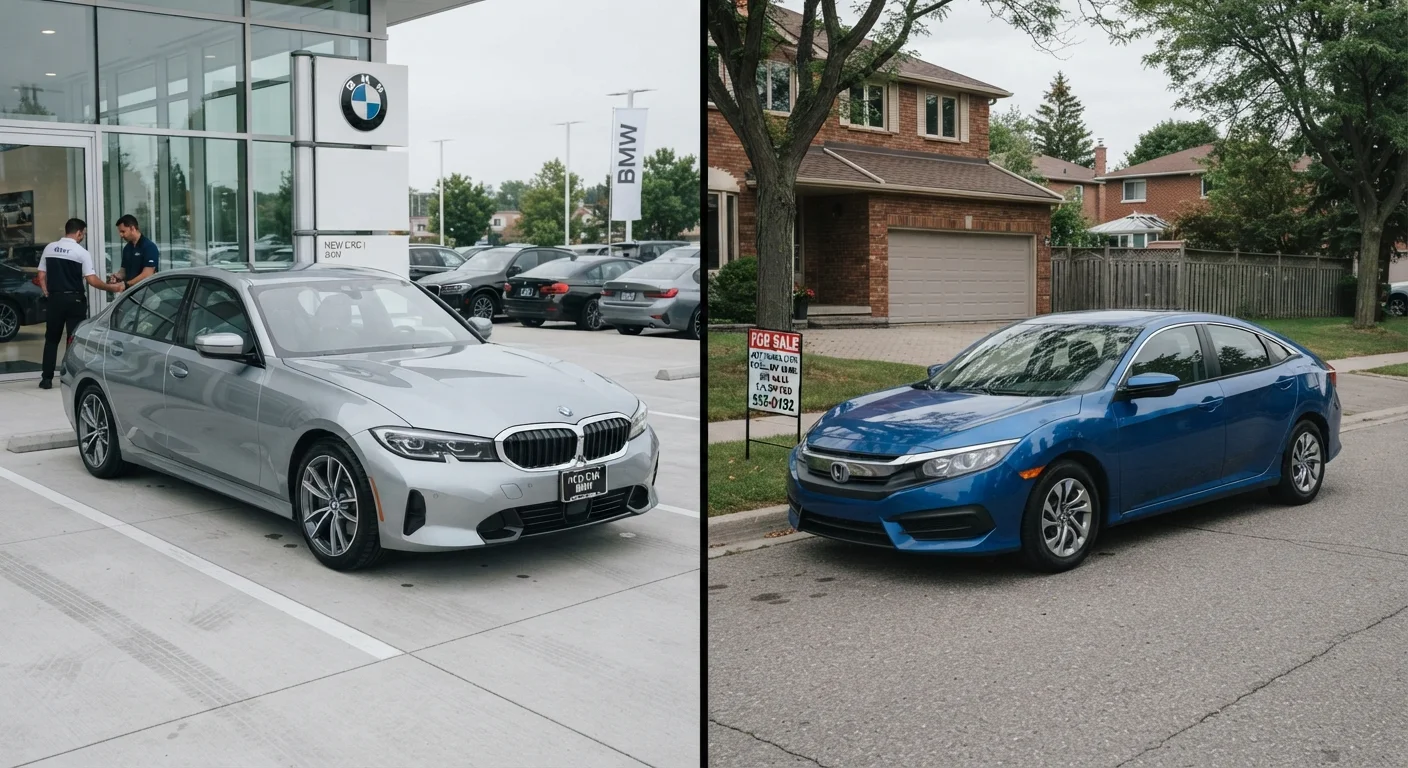
Neither new nor used is universally the smarter choice - it depends on your budget, how long you plan to keep the vehicle, and your tolerance for uncertainty. New cars offer peace of mind through warranties and the latest safety features, while used cars can deliver significantly more vehicle for the same monthly spend. Understanding depreciation and total ownership costs is the most reliable way to judge which route fits your situation.
| Best for | Recommended |
|---|---|
| Buyers who prioritize warranty coverage and the latest safety technology | New Car |
| Budget-conscious shoppers seeking maximum value for their money | Used Car |
| Shoppers who want used-car pricing with added inspection and coverage guarantees | Certified Pre-Owned |
The Depreciation Reality Every Buyer Should Understand
Depreciation - the loss of a vehicle's value over time - is one of the most consequential factors in any car purchase, yet it often goes unexamined. A new car can lose a significant portion of its value within the first few years of ownership, with the steepest drop typically occurring in year one. That works against buyers who drive off the lot in a new vehicle, but it directly benefits anyone shopping for a used one.
When you buy a car that is two or three years old, the original owner has already absorbed that early depreciation hit. You effectively purchase the remaining useful life of the vehicle at a lower price point. For a deeper look at how this mechanism works, see how depreciation should shape your purchase.
The practical implication: a used vehicle in good condition may offer comparable reliability to a new one for meaningfully less money - but that equation depends heavily on which model you're considering and how well it was maintained.
| New Car | Used Car | Certified Pre-Owned | |
|---|---|---|---|
| Upfront Cost | Highest | Lowest to moderate | Moderate |
| Depreciation Impact | Buyer absorbs initial drop | Prior owner absorbed early loss | Prior owner absorbed early loss |
| Warranty Coverage | Full factory warranty | Limited or none | Extended warranty included |
| Inspection Assurance | Factory quality control | Varies; buyer-arranged inspection advised | Structured multi-point inspection |
| Insurance Cost | Typically higher | Often lower | Moderate |
| Financing Rates | Often lower from lenders | Often higher from lenders | May access promotional rates |
| Latest Safety Features | Fully current | Depends on model year | Depends on model year |
| Maintenance Risk | Lower in early years | Higher as mileage increases | Lower; pre-screened condition |
Warranties, Reliability, and the Risk Factor
New cars come with a factory warranty that typically covers the powertrain and bumper-to-bumper components for a defined period. That coverage provides a financial safety net during the years when most mechanical problems, if any, are likely to surface.
Used vehicles present a more varied picture. A car that is several years old may have an expired warranty, leaving repair costs entirely with the new owner. However, many automakers offer certified pre-owned (CPO) programs - structured inspections paired with extended warranties - that restore some of that protection. Standards differ significantly by manufacturer, though, so reading the fine print matters. Our breakdown of what CPO programs actually guarantee explains what to look for.
Reliability also varies by vehicle history. A used car with complete service records and a clean vehicle history report carries far less risk than one with gaps in documentation. Before committing to any pre-owned vehicle, running through a structured checklist is worth the effort - see the pre-purchase checklist for used cars for a practical guide.
Financing, Insurance, and the Full Cost Picture
The sticker price is only the starting point. Lenders frequently offer lower interest rates on new vehicles than on used ones, which can narrow the monthly payment gap more than buyers expect. On the other hand, new cars typically carry higher insurance premiums because the insured value is greater and comprehensive coverage is often required by lenders.
Used vehicles, depending on their age and value, may qualify for lower insurance tiers. But older cars can also require more frequent maintenance, and repair costs for certain components increase as mileage accumulates. Budgeting for routine car maintenance as part of your ownership calculation gives a more honest comparison than comparing purchase prices alone.
Total cost of ownership - purchase price, financing interest, insurance, fuel, maintenance, and anticipated repairs over your intended ownership period - is the most useful number to compute before making a decision. Many buyers find that the gap between new and used narrows considerably when all factors are included.
What Actually Fits Your Situation
How long you plan to keep the vehicle matters enormously. Buyers who hold onto cars for seven to ten years tend to get more value from a new purchase, because the warranty period covers the most financially exposed years and depreciation is spread over a longer horizon. Buyers who typically trade in every three to four years often come out ahead with a used vehicle - they avoid the steepest depreciation without holding the car long enough to face significant age-related repairs.
Safety technology is another consideration. Newer model years often include advanced driver-assistance features - automatic emergency braking, lane-keeping assist, blind-spot monitoring - that may not be present in older used vehicles. For some buyers, particularly those with young families or long commutes, that difference carries real weight.
It's also worth separating the new-vs-used decision from financing structure. If you're weighing whether to lease rather than buy outright, that's a distinct set of trade-offs covered in our comparison of leasing vs. buying. And some common assumptions about car buying - including beliefs about what dealers will or won't negotiate - are worth revisiting before you shop; see car-buying myths that trip up shoppers.
In the end, neither path is objectively superior. The right choice is the one that aligns with your financial position, driving habits, and how much uncertainty you're willing to accept.