

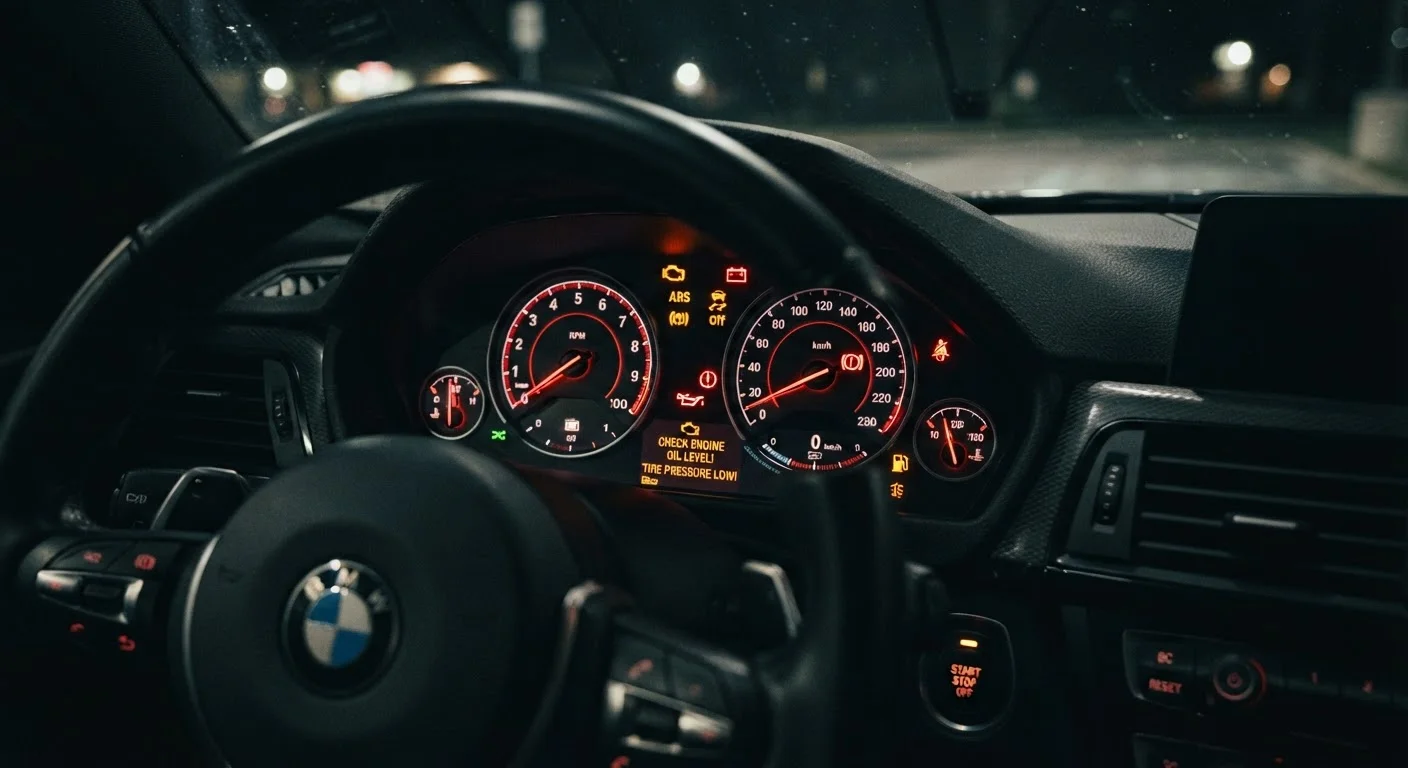
| Color: Red | Stop or act immediately - indicates a serious safety or mechanical risk |
| Color: Amber/Yellow | Caution - service or inspection needed soon, but driving may continue briefly |
| Color: Green/Blue | Informational - a system is active, no action required |
| TPMS mandate | Required on all new U.S. passenger vehicles since September 2007 (NHTSA Federal Motor Vehicle Safety Standard No. 138) |
| OBD-II port required since | 1996 (all cars sold in the U.S.) (U.S. Environmental Protection Agency) |
| Check engine light triggers | Hundreds of possible causes, from a loose gas cap to a failing catalytic converter |
The Color Code: How Urgency Is Communicated
Before you can interpret any individual symbol, it helps to understand the universal color language used across virtually all modern vehicles. Dashboard warning lights follow a traffic-light logic:
- Red means stop or act immediately. A red light signals a condition that could cause injury, serious mechanical damage, or vehicle failure. Pull over safely and do not continue driving until the issue is resolved.
- Amber or yellow means caution. Something needs attention soon - a sensor has detected a condition outside normal parameters - but the vehicle is typically safe to drive a short distance to a service facility.
- Green or blue is informational. These lights confirm that a feature is active (high beams, cruise control, turn signal). No action is required.
When a light appears, note its color first. That alone tells you whether to stop the car or schedule a service appointment. For a broader look at keeping your vehicle in good condition, see the Complete Guide to Car Maintenance Schedules.
| Color: Red | Stop or act immediately - indicates a serious safety or mechanical risk |
| Color: Amber/Yellow | Caution - service or inspection needed soon, but driving may continue briefly |
| Color: Green/Blue | Informational - a system is active, no action required |
| TPMS mandate | Required on all new U.S. passenger vehicles since September 2007 (NHTSA Federal Motor Vehicle Safety Standard No. 138) |
| OBD-II port required since | 1996 (all cars sold in the U.S.) (U.S. Environmental Protection Agency) |
| Check engine light triggers | Hundreds of possible causes, from a loose gas cap to a failing catalytic converter |
The Most Common Warning Lights Explained
Check Engine Light (MIL)
Shaped like a small engine outline, this amber light is one of the most misunderstood indicators on any dashboard. It does not mean your engine is about to fail - it means the onboard diagnostic system has logged a fault code. Causes range from a loose gas cap to a misfiring cylinder to a failing oxygen sensor. If the light is flashing, that typically indicates a more serious misfire that warrants stopping soon. A steady amber light generally allows you to drive to a shop without urgency, but the issue should not be ignored for weeks.
Oil Pressure Warning
This red light - usually an oil can symbol - signals that oil pressure has dropped to an unsafe level. This is a stop-immediately situation. Driving with low oil pressure can cause catastrophic engine damage within minutes. Pull over safely, shut off the engine, and check the oil level. If the oil level is adequate and the light remains on, have the vehicle towed rather than driven.
Coolant Temperature Warning
A red thermometer symbol (sometimes shown with waves beneath it) indicates the engine is overheating. Turn off the air conditioning, pull over safely, and allow the engine to cool before opening the hood. Never open a hot radiator cap. Low coolant is a common cause; see our guide on checking fluid levels for step-by-step reference.
Battery / Charging System
This red battery icon does not necessarily mean the battery itself is dead - it often points to a problem with the charging system, such as a failing alternator or a broken drive belt. A vehicle may continue running on battery reserve for a short period. Head directly to a service facility.
TPMS (Tire Pressure)
An amber light showing a cross-section of a tire with an exclamation point means one or more tires are significantly underinflated. Check all four tires with a gauge and inflate to the pressure listed on the driver's door jamb sticker - not the maximum pressure printed on the tire sidewall. Understanding tire markings is covered in our tire sidewall guide.
ABS Warning
An amber circle containing the letters ABS signals a fault in the anti-lock braking system. Standard braking typically still works, but the ABS - which helps maintain steering control during hard stops - may be disabled. Drive carefully and have the system inspected promptly.
Brake System Warning
A red circle with an exclamation point or the word BRAKE can mean the parking brake is engaged, brake fluid is low, or there is a fault in the hydraulic braking system. If the parking brake is released and the light remains on, treat it as a serious warning and seek service immediately. Safe braking is a core component of road safety.
Your Owner's Manual Is the Definitive Source
Warning light symbols are not fully standardized across all manufacturers. Some brands use proprietary icons or assign different meanings to similar symbols. Always cross-reference any unfamiliar light with your vehicle's owner's manual before drawing conclusions. If you no longer have a printed copy, most automakers offer free downloadable versions on their official websites.
What to Do When a Light Comes On
Follow these practical steps whenever a new warning light appears:
- Note the color and symbol. Use the color code to gauge urgency before reacting.
- Check your owner's manual. Locate the warning lights section for your specific vehicle - symbols vary by manufacturer.
- Do not ignore amber lights indefinitely. A non-urgent light left unaddressed can become a serious - and expensive - problem.
- Use an OBD-II scanner. Inexpensive handheld readers or smartphone adapters can pull diagnostic trouble codes, giving you a starting point before visiting a mechanic.
- Consult a qualified mechanic for diagnosis and repair. Warning lights are the vehicle's way of flagging a fault; clearing the code without fixing the underlying cause only silences the alarm.
Staying ahead of warning signs is a core part of responsible vehicle ownership. Pairing this knowledge with a consistent maintenance routine - outlined in the Complete Guide to Car Maintenance Schedules - reduces the likelihood of unexpected dashboard alerts in the first place.