

Key Takeaways
Check Engine Light
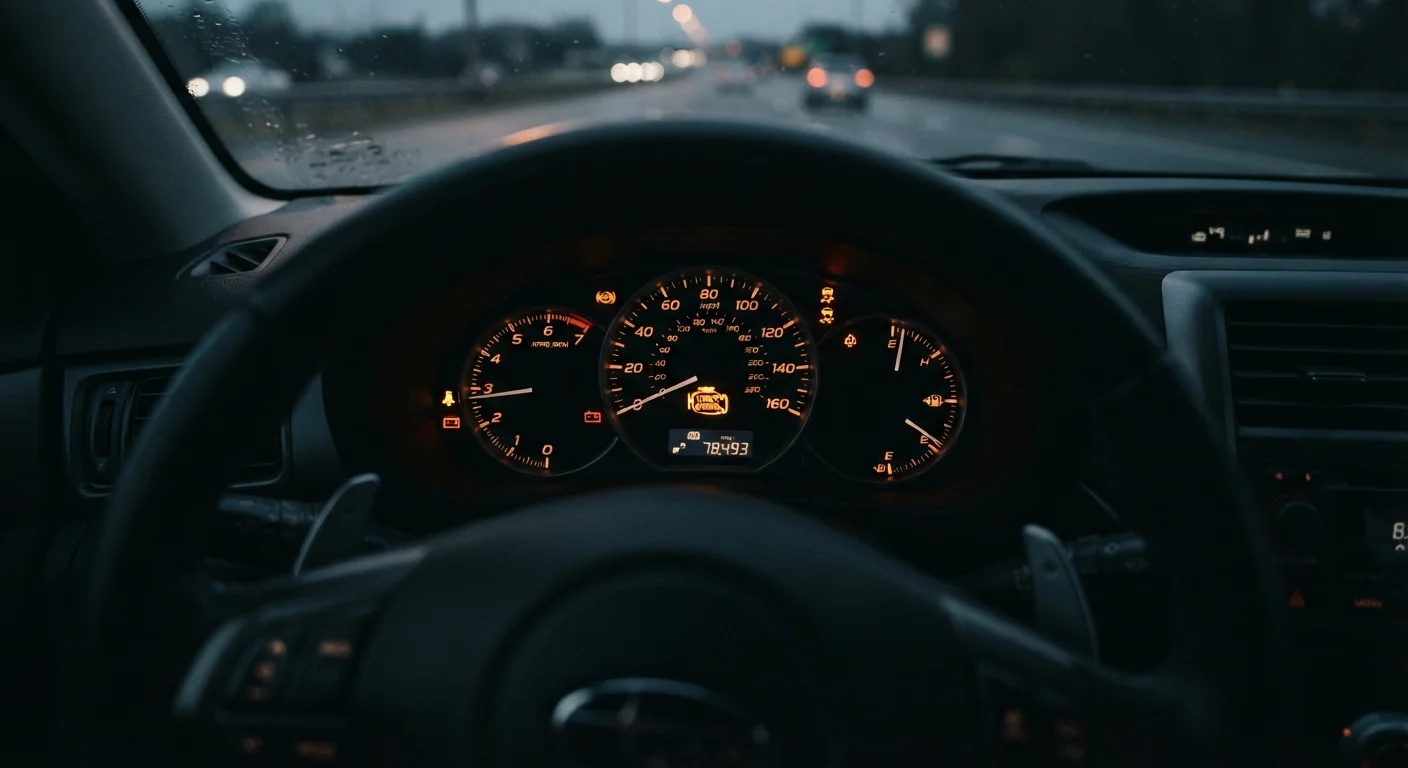
The check engine light - formally called the Malfunction Indicator Lamp (MIL) - is a dashboard warning that your vehicle's onboard diagnostic system (OBD-II) has detected a problem. It can signal anything from a loose gas cap to a failing catalytic converter. When it comes on, the system stores a fault code that a mechanic's scanner can read to pinpoint the issue.
All cars and light trucks sold in the U.S. since 1996 are required to use the standardized OBD-II diagnostic protocol, which enables any compatible scan tool to retrieve stored fault codes.
Solid vs. Flashing: The First Thing to Notice
Before you do anything else, observe how the light behaves. A steady, solid light means the system has logged a fault and wants attention, but the situation is not necessarily an emergency. A flashing or blinking light is a different story - it indicates an active engine misfire serious enough to damage your catalytic converter within minutes of continued driving.
If the light is flashing, safely reduce your speed, avoid high-RPM driving, and get the vehicle inspected as soon as possible. Do not ignore it hoping it will stop on its own. For a solid light with no other symptoms, you have more time - but "more time" does not mean indefinitely.
Also pay attention to other dashboard indicators. If the check engine light appears alongside a temperature warning or oil pressure light, those combinations can signal conditions requiring immediate attention. See our guide to dashboard warning lights for a broader reference.
Start With the Gas Cap - It's Free
Before scheduling a diagnostic appointment, remove your gas cap completely, inspect the rubber seal for cracks or debris, then reinstall it firmly until it clicks. Drive normally for a day or two. If the check engine light was triggered by a loose cap, it will often clear on its own. This takes 30 seconds and costs nothing.
What Triggers the Check Engine Light?
The OBD-II system monitors dozens of sensors across your engine, transmission, and emissions systems. When a reading falls outside its acceptable range, it logs a Diagnostic Trouble Code (DTC) and illuminates the light. Common triggers include:
- Loose or faulty gas cap: A cap that isn't seated properly allows fuel vapors to escape, which the evaporative emissions system detects. This is the most common and least serious cause.
- Oxygen sensor failure: These sensors measure exhaust oxygen levels to help the engine manage the air-fuel mix. A failing sensor can reduce fuel economy without obvious drivability symptoms.
- Catalytic converter degradation: The converter reduces harmful emissions. When it loses efficiency - often due to neglected upstream problems - it triggers its own fault code.
- Mass airflow sensor issues: This sensor measures how much air enters the engine. A dirty or failing sensor causes rough idling, stalling, or poor acceleration.
- Spark plug or ignition coil faults: Worn plugs or a failed coil cause misfires that the system detects immediately.
Keeping up with scheduled maintenance reduces the likelihood of many of these failures. Our complete car maintenance schedule guide breaks down what your vehicle needs and when.
~80M
U.S. vehicles with check engine lights on at any given time
Industry estimates suggest tens of millions of vehicles on American roads are being driven with an active check engine light illuminated.
P0420
One of the most commonly retrieved fault codes
Catalytic converter efficiency codes are consistently among the most frequently read codes at auto-parts retailers and diagnostic shops across the U.S.
~$24B
Annual U.S. cost of vehicle emissions from poorly maintained engines
The EPA has highlighted the environmental and economic impact of vehicles with unresolved emissions-related faults, many of which trigger the check engine light.
Reading the Code: What It Tells You (and What It Doesn't)
Fault codes follow a standardized format. A code like P0420 tells you the system that is affected - in this case, catalytic converter efficiency on Bank 1 - but it does not identify which specific part has failed. A code is a starting point for diagnosis, not a parts-replacement order.
This distinction matters because replacing a component solely based on a code, without further testing, can waste money. For example, a P0420 code can be caused by a degraded catalytic converter, but also by a faulty oxygen sensor or even an exhaust leak affecting sensor readings. A qualified mechanic will use the code alongside live sensor data and physical inspection to find the real cause.
You can read codes yourself with an inexpensive OBD-II scanner plugged into the diagnostic port (usually located under the dashboard on the driver's side). Many auto-parts retailers also offer free code reading. Knowing the code before your shop visit is useful - it gives you context and helps you ask better questions.
Maintaining healthy fluid levels is one of the simplest ways to prevent several check-engine-light causes. Learn which fluids to monitor and how to check them to stay ahead of potential problems.
When the Mechanic Visit Can't Wait
Not every check engine light requires an emergency tow, but certain combinations of symptoms demand prompt professional attention:
- The light is flashing rather than steady
- You notice rough idling, hesitation, or stalling
- There is a noticeable loss of power during acceleration
- You smell burning, sulfur, or fuel inside or outside the cabin
- Another warning light - especially oil pressure or temperature - appears at the same time
In these situations, continuing to drive risks compounding a relatively contained problem into a far more expensive one. Catalytic converter replacement, for instance, can cost significantly more than addressing the misfire that caused it in the first place.
For a solid light with no accompanying symptoms, schedule a diagnostic appointment within a few days. In the meantime, check the obvious: remove and firmly reseat your gas cap, then drive a few miles to see if the light clears. If it does, a loose cap was likely the culprit. If it doesn't, a code scan is your next step.
Routine awareness of your vehicle's condition - before issues escalate into warning lights - is always worth the small time investment. Pre-drive checks that take under five minutes can catch early warning signs before they become dashboard alerts.