

Key Takeaways
Why Drivers Misread Intentions - and Pay for It
Every time you move through traffic, you're making dozens of micro-predictions about what the vehicles around you are going to do. Most of the time those predictions are close enough. But when they're wrong - and you've already acted on them - the consequences can be severe.
The problem isn't prediction itself. Skilled drivers constantly read their environment and plan ahead. The problem is treating a prediction as a certainty. A blinker, a slowing car, a driver glancing your way - these are cues, not contracts. When drivers confuse the two, they stop leaving themselves an out.
Research by the National Highway Traffic Safety Administration (NHTSA) consistently identifies driver recognition failures - including misjudging other drivers' actions - as a major contributor to pre-crash events. This isn't a problem limited to new drivers. Inexperience accelerates the risk, but assumption-based errors follow drivers throughout their lives if the underlying habit isn't corrected.
Assumption Is Not Anticipation
Anticipation in safe driving means reading cues and preparing for multiple possible outcomes. Assumption means deciding what another driver will do and acting on it as if it were fact. That distinction is critical - crashes happen in the gap between what you expected and what actually occurred. Never commit to a maneuver based solely on what you think another driver intends to do.
The Most Common Assumption Mistakes Behind the Wheel
The following errors account for a significant share of assumption-driven collisions. Each one involves a driver filling in missing information with a conclusion they never actually confirmed.
Treating a turn signal as a committed action rather than a stated intention.
Why it happens: Drivers are conditioned to associate signals with movement, so seeing a blinker feels like confirmation that a lane change or turn is imminent or already underway.
Assuming a driver at a stop sign or yield will actually stop or yield.
Why it happens: Drivers with the right of way often mentally 'assign' compliance to the other vehicle, reducing their own vigilance precisely when it matters most.
Merging onto a highway assuming highway traffic will accommodate the entry.
Why it happens: New and even experienced drivers sometimes treat the merge as a cooperative event - expecting highway drivers to shift left or slow to create space.
Misreading a slowing vehicle as one that is definitely stopping.
Why it happens: A decelerating car in front triggers the reasonable expectation of a full stop, but the driver may be searching for a parking space, reacting to a phone, or about to pull a U-turn.
Assuming a pedestrian or cyclist has seen you and will wait.
Why it happens: Drivers often make eye contact with a pedestrian and interpret that as mutual acknowledgment - but eye contact does not equal confirmed communication or shared intent.
Expecting aggressive or erratic drivers to become predictable.
Why it happens: Once a driver has identified a dangerous vehicle nearby, there's a tendency to monitor it closely but also to hope or assume it will settle into a normal pattern.
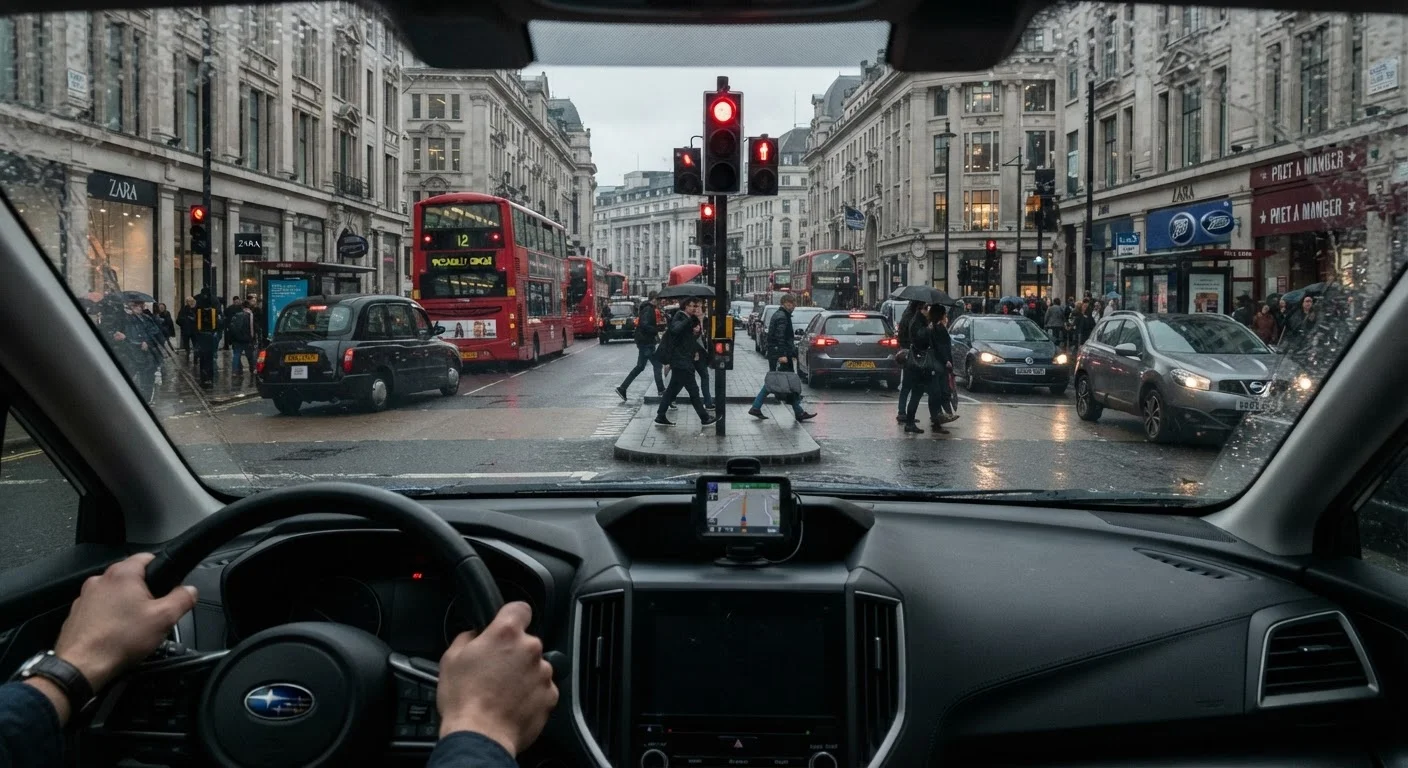
Environment plays a role too. Rural and urban roads present different assumption traps - city driving involves high-density unpredictability, while rural roads breed overconfidence in open stretches where unexpected hazards still appear.
Building the Habit of Verified Awareness
The corrective to assumption isn't paranoia - it's verified awareness. This means maintaining the mental habit of distinguishing between what you observe and what you infer, and giving physical space for the gap between the two.
Practically, this translates to a few durable habits:
- Cover the brake in any situation where another driver's action is uncertain - this cuts reaction time significantly.
- Hold your position until you see movement, not just a signal or a glance.
- Use space as your buffer. Following distance and lane positioning give you time to respond when assumptions fail. Speed management is part of this - driving at the posted limit is not always safe speed for conditions.
- Stay out of blind spots. If you can't see a driver's mirrors, they likely can't see you - and they may act without knowing you're there.
Assumption is fastest when attention is lowest. Distractions, fatigue, and routine routes all erode the mental discipline that keeps prediction from hardening into assumption. Treat familiar roads with the same scrutiny you'd give an unfamiliar one - because the other drivers on them are always variables you haven't fully solved.