

Key Takeaways
Option A
eSIM
The built-in, software-based modern standard.
Best for: Travelers, people who switch carriers often, and anyone with a recent flagship phone who wants carrier convenience.
Option B
Physical SIM Card
The removable, universally compatible traditional chip.
Best for: People with older phones, frequent international swaps using local SIMs, or those whose carrier doesn't yet fully support eSIM.
If you travel internationally and want to add a local plan without swapping cards
eSIM
You can download a local carrier profile digitally while keeping your home number active on the same device.
If you have an older phone or a carrier that doesn't fully support eSIM
Physical SIM Card
Physical SIMs are compatible with virtually all devices and carriers, making them the most universally accessible option.
If you switch carriers frequently and want to avoid in-store visits
eSIM
Carrier activation happens entirely online in minutes, with no hardware to handle or lose.
If you need to hand off your number to a replacement phone quickly
Physical SIM Card
Simply moving the physical card to a new device is faster and works even without internet access.
What Each Format Actually Is
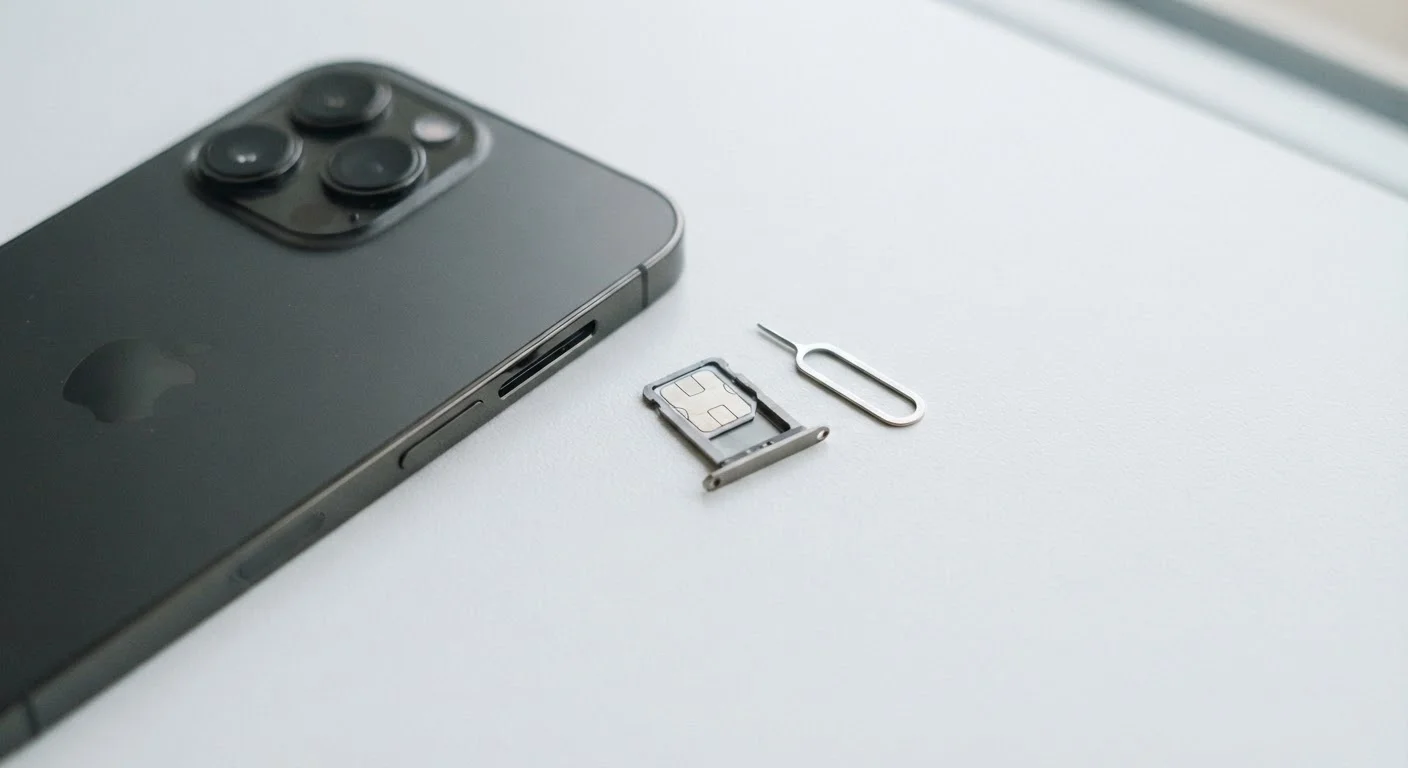
A physical SIM card - short for Subscriber Identity Module - is a small removable chip that stores your carrier credentials. You slot it into a tray on the side of your phone. When you switch carriers, you typically receive a new card and swap it in. SIM cards come in three sizes (standard, micro, and nano), though nano is now nearly universal in smartphones.
An eSIM (embedded SIM) is a chip permanently soldered into your device's motherboard. Instead of swapping hardware, you activate a carrier plan by scanning a QR code or using a carrier's app, which downloads a digital "profile" onto the chip. One device can store multiple profiles - though typically only one or two can be active simultaneously.
For a broader glossary of carrier terminology, see our plain-English guide to mobile carrier jargon.
| Criterion | eSIM | Physical SIM Card |
|---|---|---|
| Hardware | Soldered into device, not removable | Removable chip inserted into tray |
| Carrier switching | Digital, often done from home | Requires new physical card |
| Device compatibility | Most flagships from ~2018 onward | Virtually all phones and carriers |
| International use | Add foreign profiles without swapping | Swap to local SIM at destination |
| Multiple profiles | Yes - store several, activate 1-2 | One active line per slot |
| Physical loss risk | None - no removable component | Card can be lost or removed |
| Transfer to new phone | Requires carrier-assisted digital transfer | Move card directly, no internet needed |
Key Practical Differences
Switching carriers: With a physical SIM, switching usually means ordering a new SIM card, waiting for it to arrive, and inserting it. With eSIM, the process is often fully digital - you can activate a new plan from home, sometimes in under five minutes. That said, the ease varies by carrier; not all have streamlined eSIM activation.
International travel: eSIM has a clear advantage here. Rather than hunting for a local SIM at your destination, you can purchase and download a travel or local carrier profile before you even board. Your home number stays reachable on the same device.
Device compatibility: Physical SIMs work in essentially every phone, tablet, and mobile hotspot on the market. eSIM is standard on most flagship phones released after 2018, but it remains less common in budget and older devices. Carriers in some regions also lag in eSIM support.
Security and loss: Because a physical SIM can be removed, a phone that's lost or stolen could have its SIM placed in another device. An eSIM profile is tied to the device and requires carrier authentication to transfer, which some consider an advantage for security. However, physical SIM swapping fraud - where a bad actor convinces a carrier to transfer your number to a new SIM - is a known risk regardless of format.
Understanding how locking affects your options is equally important - see our article on unlocked vs. carrier-locked phones.
What Stays the Same Regardless of SIM Type
It's worth clarifying what SIM format does not control. Your call quality, data speeds, and network coverage are determined entirely by your carrier, the plan you've chosen, and the radio hardware in your phone - not by whether your SIM is physical or embedded. An eSIM on a low-tier plan won't outperform a physical SIM on a premium unlimited plan.
Similarly, whether you're on a prepaid or postpaid plan has no relationship to SIM type. Both plan structures are available with either format. If you're weighing those billing models, our prepaid vs. postpaid explainer breaks down the differences.
Before committing to any plan, it's smart to verify coverage in your area and review contract terms carefully. Our phone plan shopping checklist covers what to confirm before you sign up.
If you're newer to how phones and plans work together, the complete guide to phones and plans offers a thorough starting point.