

Key Takeaways
Zero cost and no equipment required
Bodyweight training eliminates the financial barrier entirely - no gym membership, no gear, no commute. This makes it one of the most sustainable long-term options for people with unpredictable schedules or tight budgets.
Effective for building foundational strength
Research consistently supports resistance training - including bodyweight resistance - as a driver of muscle strength and endurance. For beginners and intermediate exercisers, bodyweight progressions can produce substantial improvements.
Supports cardiovascular health when structured correctly
Circuit-style bodyweight training, where exercises are performed with minimal rest, can elevate heart rate into cardio-beneficial zones. This dual benefit - strength and conditioning - is hard to match for time efficiency.
Highly adaptable for different fitness levels
Most bodyweight movements can be made easier (elevated surface push-ups, assisted squats) or harder (single-leg variations, plyometrics) with simple adjustments, making them usable across a wide range of ability levels.
Trains functional movement patterns
Push, pull, hinge, squat, and core-bracing patterns all map directly to real-life movements. This functional carry-over can support daily activities and reduce injury risk over time.
Progressive overload is harder to implement
Without external weights, adding resistance requires more creative programming - changing leverage, slowing tempo, or mastering harder variations. For some people, this complexity becomes a barrier to continued progress.
Limited for maximum muscle hypertrophy
Building significant muscle mass generally requires progressively heavier external load. Bodyweight training can build and maintain muscle, but it has a practical ceiling compared to weighted resistance training for those with physique-focused goals.
Certain muscle groups are difficult to target
The posterior chain - hamstrings, glutes in isolation, upper back - is harder to adequately load without equipment. Exercises like Romanian deadlifts or rows require at minimum a bar or resistance band to train effectively.
Self-directed programming can lack structure
Without a trainer or structured plan, many people default to the same exercises repeatedly, which limits adaptation. Consistent progress requires intentional programming that many self-directed bodyweight exercisers don't apply.
May be insufficient for some rehabilitation contexts
Injury recovery and certain physical therapy protocols require carefully calibrated, externally measurable load. Bodyweight alone may not provide the precision needed in clinical fitness rehabilitation settings.
Our Verdict
Bodyweight exercise is one of the most accessible, adaptable, and sustainable forms of physical activity available. It delivers genuine fitness benefits across strength, mobility, and endurance - with essentially no barriers to entry. That said, it has real ceilings for those pursuing advanced muscle building or strength sport goals, and a thoughtful mix of training methods may serve those individuals better.
Bodyweight training is an excellent primary or supplementary option for busy adults, beginners, travelers, or anyone seeking a low-cost, flexible way to stay active and build foundational fitness.
What Bodyweight Exercise Actually Is
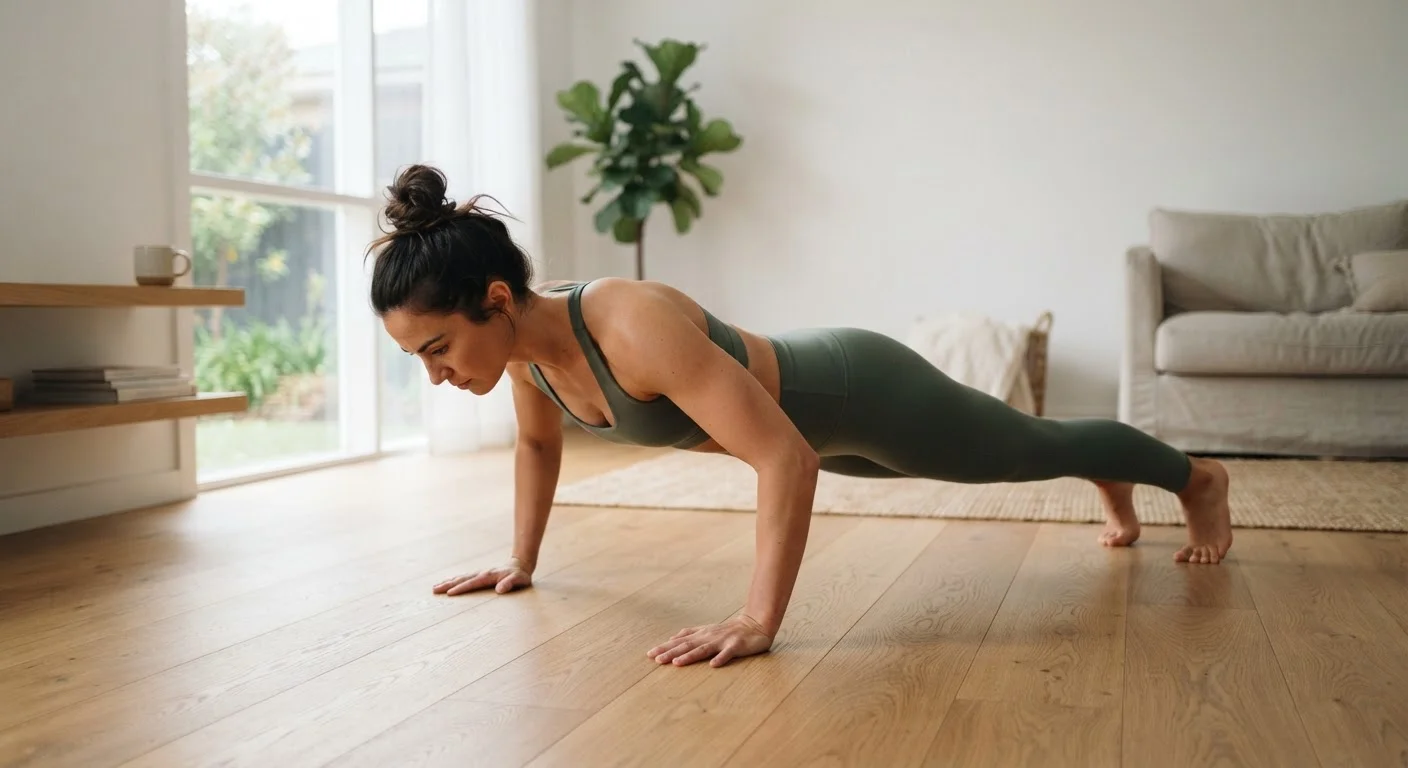
Bodyweight exercise uses your own body as the primary source of resistance - no dumbbells, barbells, or machines required. Push-ups, squats, lunges, planks, pull-ups, and burpees are all classic examples. The category spans everything from basic movement patterns suited to beginners to demanding skills like handstand push-ups and single-leg squats that challenge even experienced athletes.
For many Americans juggling work, family, and finances, this style of training offers something compelling: the ability to work out anywhere, at any time, with nothing more than floor space. But accessibility alone doesn't tell the full story. Understanding what bodyweight training genuinely delivers - and where it falls short - helps you use it wisely. See also our comparison of home workouts and gym memberships for a broader look at your options.
The Real Advantages
Bodyweight training has earned its place in mainstream fitness for good reasons - and most of those reasons hold up under scrutiny.
Zero cost and no equipment required
Bodyweight training eliminates the financial barrier entirely - no gym membership, no gear, no commute. This makes it one of the most sustainable long-term options for people with unpredictable schedules or tight budgets.
Effective for building foundational strength
Research consistently supports resistance training - including bodyweight resistance - as a driver of muscle strength and endurance. For beginners and intermediate exercisers, bodyweight progressions can produce substantial improvements.
Supports cardiovascular health when structured correctly
Circuit-style bodyweight training, where exercises are performed with minimal rest, can elevate heart rate into cardio-beneficial zones. This dual benefit - strength and conditioning - is hard to match for time efficiency.
Highly adaptable for different fitness levels
Most bodyweight movements can be made easier (elevated surface push-ups, assisted squats) or harder (single-leg variations, plyometrics) with simple adjustments, making them usable across a wide range of ability levels.
Trains functional movement patterns
Push, pull, hinge, squat, and core-bracing patterns all map directly to real-life movements. This functional carry-over can support daily activities and reduce injury risk over time.
One underappreciated strength is how naturally bodyweight exercises tend to reinforce functional movement patterns. Squatting, hinging, pushing, and pulling are movements you use in daily life. Training them without external load can improve body awareness (proprioception) and reduce injury risk, particularly for beginners who haven't yet developed the technique to safely use heavy external weights.
For those interested in low-impact movement options, many bodyweight exercises - walking lunges, wall sits, swimming-style mobility work - fit that profile well, protecting joints while still generating meaningful training stimulus.
The Real Limitations
Honest fitness education requires acknowledging what bodyweight training cannot easily do - particularly at more advanced levels.
Progressive overload is harder to implement
Without external weights, adding resistance requires more creative programming - changing leverage, slowing tempo, or mastering harder variations. For some people, this complexity becomes a barrier to continued progress.
Limited for maximum muscle hypertrophy
Building significant muscle mass generally requires progressively heavier external load. Bodyweight training can build and maintain muscle, but it has a practical ceiling compared to weighted resistance training for those with physique-focused goals.
Certain muscle groups are difficult to target
The posterior chain - hamstrings, glutes in isolation, upper back - is harder to adequately load without equipment. Exercises like Romanian deadlifts or rows require at minimum a bar or resistance band to train effectively.
Self-directed programming can lack structure
Without a trainer or structured plan, many people default to the same exercises repeatedly, which limits adaptation. Consistent progress requires intentional programming that many self-directed bodyweight exercisers don't apply.
May be insufficient for some rehabilitation contexts
Injury recovery and certain physical therapy protocols require carefully calibrated, externally measurable load. Bodyweight alone may not provide the precision needed in clinical fitness rehabilitation settings.
The most significant structural challenge is progressive overload: the principle that muscles must face increasing demand over time to continue adapting. With free weights, progression is simple - add a small plate. With bodyweight, you need to change leverage, tempo, range of motion, or movement complexity. This is doable, but it requires planning and, eventually, hits a ceiling for maximum strength and muscle hypertrophy.
People with specific goals - like competitive powerlifting, significant muscle mass gain, or rehabilitation from certain injuries - will almost certainly need external load and possibly professional guidance. For a look at how strength and cardio considerations interact, see whether you need to choose between strength training and cardio.
Making Bodyweight Training Work Over Time
The most common reason bodyweight programs stall isn't the method itself - it's a lack of structure. Doing the same push-up routine for six months will not produce the same results as a progressively designed plan.
Progression Is the Key Variable
The biggest predictor of long-term bodyweight training results isn't the specific exercises you choose - it's whether you're consistently making those exercises harder over time. A well-structured progression from beginner to advanced variations of foundational movements (push, squat, hinge, pull) can sustain meaningful adaptation for months or years. If your routine hasn't changed in several months and you're no longer feeling challenged, it's time to level up - not abandon the method.
Practical strategies for sustained progress include: moving through harder exercise variations (e.g., progressing from knee push-ups to standard push-ups to archer push-ups), manipulating tempo (slowing the lowering phase adds difficulty without changing the exercise), and adding volume thoughtfully over weeks. Combining bodyweight work with walking is one of the simplest ways to build a well-rounded routine.
If you're ready to put the pieces together, building a weekly movement routine from scratch offers a practical framework - whether you have 20 minutes or an hour per day. Exercise needs also shift meaningfully across life stages; how fitness needs change with age is worth reading if you're planning for the long term.
This article is for general informational purposes only and does not constitute medical or fitness advice. Consult a qualified healthcare professional before starting any new exercise program, particularly if you have existing health conditions or injuries.