

Key Takeaways
Option A
Grass Seed
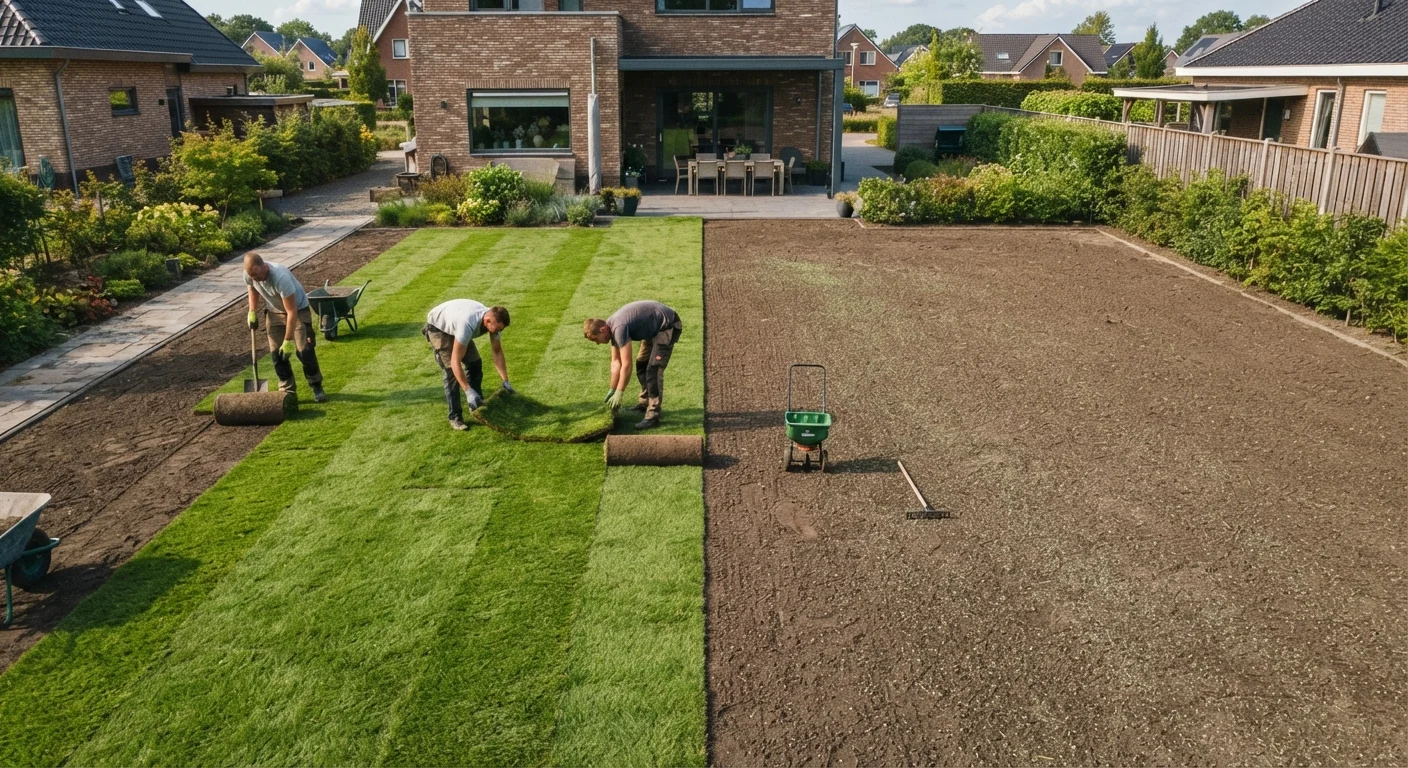
The patient, budget-friendly path to a customized lawn.
Best for: Homeowners with flexible timelines, larger areas to cover, and specific grass type preferences.
Option B
Sod
The fast-track option for an instant, established lawn.
Best for: Homeowners who need quick results, are managing erosion, or tackling high-visibility areas.
If you're working with a tight budget and have a large area
Grass Seed
Seed costs a fraction of what sod does per square foot, making it the practical choice when covering extensive ground without overspending.
If you need a lawn established quickly or are managing erosion on a slope
Sod
Sod's root system takes hold within weeks and immediately stabilizes soil, which seed simply cannot do in the short term.
If you want precise control over grass variety and long-term lawn character
Grass Seed
Seeding opens up a wide selection of species and cultivars, letting you match grass type exactly to your region's climate and your soil's profile.
If you're establishing a small, high-traffic, or high-visibility lawn area
Sod
For front yards, entertaining spaces, or areas needing immediate ground cover, sod delivers reliable, uniform results without the waiting period.
If you're comfortable with hands-on lawn maintenance over an extended period
Grass Seed
Germinating seed rewards attentive homeowners who can provide consistent watering and weed management through the establishment phase.
Cost and Coverage: Where the Numbers Land
The cost gap between grass seed and sod is substantial. Grass seed typically runs anywhere from a few cents to around 20-30 cents per square foot for quality blends, depending on the grass type. Sod, by contrast, often costs between 30 and 80 cents or more per square foot for the material alone - and professional installation can double that figure.
For a 5,000-square-foot lawn, that difference can amount to hundreds or even thousands of dollars. Seed makes the most financial sense for large areas, new construction lots, or homeowners comfortable doing their own labor. Sod's higher upfront cost can be justified when speed, erosion control, or immediate curb appeal are priorities.
It's worth factoring in hidden costs on both sides. Seeding may require multiple attempts in poor germination conditions, adding seed and labor costs over time. Sod orders need precise measurement to avoid waste, and delivery fees for pallets can add up. Either way, getting accurate square footage before budgeting is essential.
| Criterion | Grass Seed | Sod |
|---|---|---|
| Typical material cost | Low (cents per sq. ft.) | High (30-80+ cents per sq. ft.) |
| Time to usable lawn | 2-3+ months | 2-3 weeks |
| Grass variety selection | Very broad | Limited to available sod types |
| Erosion control | Minimal until established | Immediate stabilization |
| Installation labor | Moderate (spreading, raking) | Higher (cutting, laying, rolling) |
| Weed pressure during establishment | High risk | Lower risk |
| Seasonal planting flexibility | Narrow optimal window | Slightly more flexible |
| Best for large areas | Yes | Cost-prohibitive at scale |
Timing, Establishment, and What to Expect
Timeline is often the deciding factor for homeowners. Sod gives you a functional lawn in roughly two to three weeks once roots knit into the soil - though full establishment that tolerates heavy foot traffic takes about six weeks. Grass seed, depending on the species, takes two weeks just to germinate and another six to twelve weeks to develop a dense, durable turf. Patchy germination, weed competition, and weather setbacks can extend that window further.
Timing your installation correctly is just as important as the method itself. Cool-season grasses like tall fescue and Kentucky bluegrass perform best when seeded in early fall across much of the US - soil is still warm, air temperatures are cooler, and fall rains reduce irrigation demands. Warm-season grasses like Bermuda or Zoysia should go in during late spring through early summer. Sod follows similar seasonal logic, though it offers slightly more flexibility because established roots handle mild temperature stress better than germinating seed does.
For a deeper look at how lawn care tasks shift with the seasons, see our seasonal lawn care guide for a zone-by-zone breakdown of what to do and when.
Soil Preparation: The Step That Determines Long-Term Success
No matter which method you choose, soil preparation is the foundation - and skipping it is the most common mistake homeowners make. Both seed and sod require graded, loose, weed-free soil to establish properly. Compacted ground prevents root penetration for sod and reduces germination rates for seed.
Before seeding, work the top three to four inches of soil, remove debris and existing weeds, and consider a soil test to identify pH and nutrient gaps. Amendments like lime (to raise pH) or sulfur (to lower it) should be worked in before planting. For sod, the same soil prep applies - sod laid over hard or uneven ground will struggle to root and may develop bare patches or irregular drainage.
Understanding what your soil actually needs before adding anything is worthwhile. Our guide to compost vs. fertilizer explains how each input affects soil differently and when to use them together.
Watering Demands During Establishment
Both methods require consistent moisture during establishment, but the stakes and rhythms differ. Newly seeded areas need light, frequent watering - often once or twice daily - to keep the top inch of soil moist without washing seeds away or causing runoff. Once seedlings emerge, you can gradually shift toward deeper, less frequent watering to encourage root depth.
Sod needs deep watering immediately after installation - typically one inch or more right away - to prevent the roots from drying out before they anchor into the soil. For the first two weeks, daily watering is generally recommended, tapering as the sod begins to knit. Lifting a corner of a sod piece is a simple way to check whether roots are taking hold.
Over-watering during establishment is a real risk with both methods and can invite disease, shallow rooting, and compaction. Once your lawn is established, watering strategy becomes just as important for long-term health. Our guide to harmful watering habits outlines the most common missteps that weaken grass over time.
A Note on Irrigation System Compatibility
If you're planning to install or upgrade an irrigation system alongside your new lawn, it's worth deciding on that before laying sod or seeding - not after. Trenching through newly rooted sod damages it, and disturbing freshly seeded soil can set germination back significantly. Comparing irrigation approaches beforehand helps you design coverage that matches your method. Our comparison of drip and sprinkler systems outlines what each approach delivers for different yard layouts.