

Key Takeaways
Why Good Intentions Often Lead to Struggling Lawns
Most homeowners water their lawns because they care. They notice wilting, feel the summer heat, or simply follow a schedule that sounds reasonable. The problem is that many widely practiced watering habits are quietly working against the lawn's long-term health. Understanding why these habits fall short is the first step toward a lawn that's genuinely resilient - not just surface-green.
Poor watering practices don't just waste water. They weaken grass root systems, promote fungal disease, and create a lawn that requires constant intervention to stay alive. The good news is that most of these mistakes are easy to correct once you recognize them. See our core principles for healthy lawns for broader context on what consistent lawn health looks like.
Watering every day in small amounts rather than deeply and infrequently.
Why it happens: Daily watering feels attentive and responsible, and short sessions are easier to fit into a routine.
Running sprinklers in the middle of the day when sun and heat are at their peak.
Why it happens: Midday watering is convenient, and many homeowners assume more sunlight means faster absorption.
Watering at night, leaving grass blades wet through the overnight hours.
Why it happens: Evening watering is appealing after a long day, and it avoids the midday heat issue - but introduces a different problem.
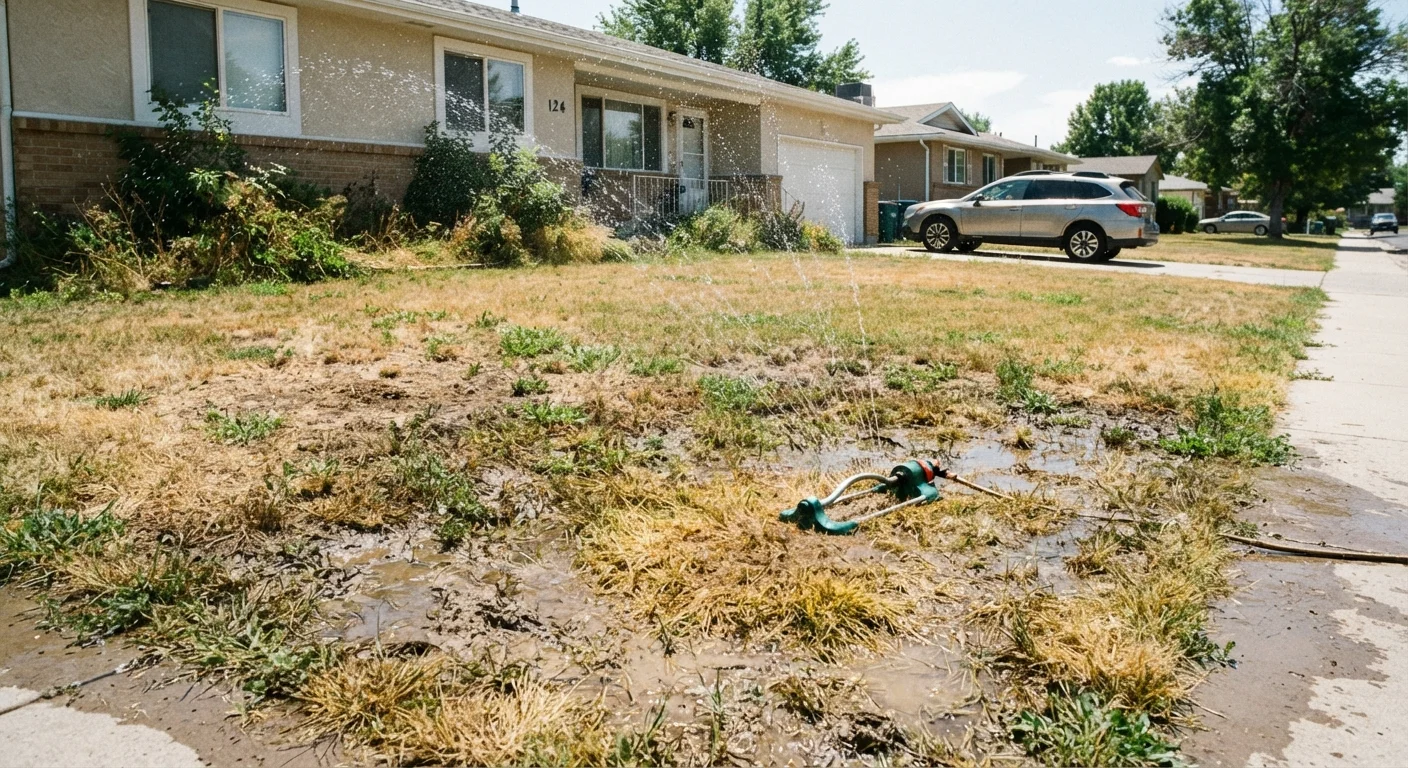
Applying water at a rate faster than the soil can absorb, causing runoff.
Why it happens: Homeowners often assume that more water applied quickly equals better coverage, or their irrigation system isn't calibrated for their soil type.
Ignoring rainfall and sticking to a fixed irrigation schedule regardless of weather.
Why it happens: Set-and-forget irrigation timers are convenient, and it's easy to forget to adjust them after rain.
Watering the same amount year-round without adjusting for seasonal needs.
Why it happens: Many homeowners set a watering routine in summer and never revisit it as temperatures drop in fall or rise in spring.
Reading the Signs and Watering Smarter
One of the most useful skills any lawn owner can develop is recognizing what their grass is actually telling them. Grass that needs water will take on a blue-gray tint, and footprints will remain visible longer than usual because the blades lack the turgor to spring back. These are reliable cues - far more useful than a fixed calendar schedule.
Soil type matters too. Sandy soils drain quickly and may need more frequent watering in smaller amounts; clay soils hold moisture longer and are especially prone to waterlogging. A simple screwdriver test - pushing a standard screwdriver six inches into the soil - can tell you whether moisture has actually penetrated the root zone or just wet the surface.
Don't Rely Solely on Appearance
A green lawn isn't always a healthy one. Grass can appear green while still suffering from compacted roots, waterlogged soil, or early-stage fungal infection. Check soil moisture a few inches below the surface - not just at the surface - before assuming your lawn needs water. Investing a few minutes in a soil check can prevent weeks of recovery from overwatering damage.
If you're noticing yellowing or discoloration despite consistent watering, the cause may not be what you expect. Our guide on reading yellow leaves covers how to distinguish overwatering symptoms from other common causes. And if you're evaluating a more efficient delivery system, comparing drip irrigation and sprinkler systems can help you weigh what suits your setup. Many gardening habits that feel correct are actually myths - common garden myths worth rethinking is worth a read alongside this article.