

Key Takeaways
Our Verdict
Drip irrigation excels in planted garden beds, vegetable gardens, and areas where water conservation is a priority. Sprinkler systems are the practical choice for established lawns and open landscapes that require broad, even coverage. For most American home gardens, a hybrid approach - using each system where it performs best - delivers the strongest results.
| Best for | Recommended |
|---|---|
| Vegetable gardens, flower beds, and drought-sensitive plantings | Drip Irrigation |
| Established lawns and large open turf areas | Sprinkler Systems |
| Water-conscious gardeners in dry or restricted-water climates | Drip Irrigation |
| Homeowners prioritizing fast, simple setup for wide coverage | Sprinkler Systems |
How Each System Works
Understanding the core mechanics of each system helps you match the right tool to your garden's layout before spending a dollar on installation.
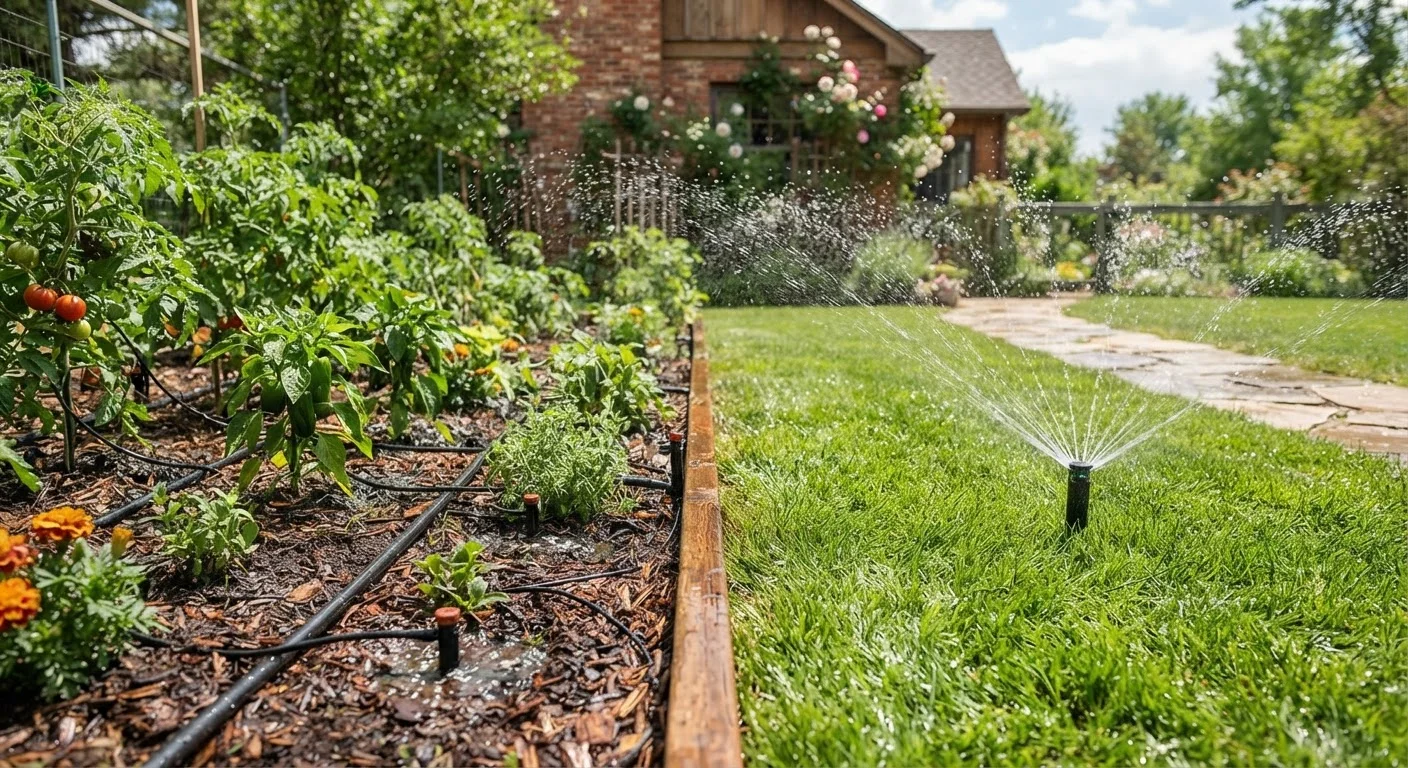
Drip irrigation delivers water slowly and directly to the root zone through a network of tubing, emitters, and micro-sprayers laid on or just below the soil surface. Because water is released at low pressure right where plants need it, very little is lost to evaporation or wind drift. This makes drip systems especially effective in vegetable gardens, raised beds, and densely planted flower borders. If you already use mulch in your beds, a drip system pairs particularly well - the season-by-season mulching approach explains how mulch and drip work together to retain soil moisture.
Sprinkler systems use pressurized water distributed through pop-up heads, rotary sprinklers, or oscillating sprayers positioned at ground level or on risers. They broadcast water over a wide radius, making them efficient for covering large turf areas quickly. Most in-ground systems connect to your home's main water supply and run on a timer, giving you programmable control over watering schedules.
Key Differences at a Glance
The table below breaks down how drip and sprinkler systems compare across the criteria that matter most for typical home garden decisions.
| Drip Irrigation | Sprinkler Systems | |
|---|---|---|
| Best suited for | Garden beds, vegetables, borders | Lawns, open turf areas |
| Water efficiency | High - targets root zone directly | Moderate - some evaporation and runoff |
| Foliage wetting | None - stays at soil level | Yes - wets leaves and stems |
| Installation complexity | Moderate - requires emitter mapping | Low to high - depends on system type |
| Upfront cost | Low to moderate for DIY kits | Moderate to high for in-ground systems |
| Maintenance needs | Emitter flushing, clog checks | Head adjustments, seasonal winterizing |
| Coverage area | Best for defined, smaller zones | Best for large, open areas |
Water Efficiency and Plant Health
Water efficiency is one of the clearest advantages drip systems hold. By targeting the root zone rather than broadcasting over a wide surface, drip irrigation can reduce water use significantly compared to conventional sprinklers - though actual savings depend on your soil type, plant density, and local climate conditions.
Wetting foliage repeatedly - a natural outcome of overhead sprinklers - creates conditions that favor fungal diseases like powdery mildew and leaf spot. Drip systems avoid this entirely. For plants that are sensitive to wet leaves, such as tomatoes, squash, and roses, this distinction matters for plant health, not just water bills.
That said, sprinklers aren't inherently wasteful. Poor timing is often the real problem. Common lawn watering habits - like running sprinklers midday or for short, frequent bursts - cause more water loss than the sprinkler design itself. Watering deeply and infrequently, ideally in the early morning, dramatically improves sprinkler efficiency.
Installation, Maintenance, and Cost
Drip irrigation requires more upfront planning. You'll need to map emitter placement to match plant spacing, calculate flow rates, and account for elevation changes that affect pressure. Emitters can clog over time, especially in areas with hard water, so periodic flushing and inspection are part of routine upkeep. Kits designed for DIY installation are widely available, but larger or more complex gardens may benefit from professional layout.
Sprinkler systems - particularly in-ground systems - involve trenching, connecting to your water supply, and programming a controller. This typically costs more to install professionally than a drip system of comparable coverage, and may require a permit depending on your municipality. Above-ground oscillating sprinklers or hose-end sprinklers carry very low cost and installation effort, making them accessible for renters or gardeners who want flexibility.
Both system types benefit from a rain sensor or smart controller that pauses watering during rainfall - a simple addition that prevents overwatering and reduces water bills. If you're planning a low-maintenance landscape, pairing automation with the right system for each zone is a sound long-term approach.
Matching the Right System to Your Garden
The layout and purpose of your garden space is usually the deciding factor. A vegetable garden or mixed-planting bed with defined rows and spacing is an ideal candidate for drip. A broad, open lawn - especially one with irregular slopes or a large footprint - is where sprinklers justify their coverage area.
Raised bed gardeners should give drip serious consideration. Raised beds drain faster than in-ground soil, which means they dry out more quickly, and targeted root-zone watering compensates for this directly. The trade-offs of raised bed gardening include that faster drying, making reliable irrigation more important than in traditional ground beds.
For gardens that include both lawn and planted beds, combining systems is often the most practical solution. Use drip tubing in your beds and borders, and assign a separate sprinkler zone to cover turf. Most irrigation controllers support multiple zones, allowing each area to be watered on its own schedule and at its own rate. This hybrid approach lets you optimize both water use and plant health across the full property.