

Key Takeaways
Why Low-Maintenance Landscaping Is Worth Thinking Through
For many homeowners, a beautiful yard and a packed schedule feel like competing priorities. The good news is that thoughtful landscaping design can dramatically reduce ongoing work without sacrificing curb appeal. The key is making smarter choices upfront - selecting the right plants, materials, and systems - so the landscape largely takes care of itself over time.
This isn't about neglect. It's about working with your local climate and soil rather than against them. Whether you're starting fresh or looking to simplify an existing yard, the approaches below offer practical, proven ways to cut weekly maintenance without letting things go. For broader upkeep context, our home maintenance hub is a useful companion resource.
Start with a Site Assessment
Before choosing plants or materials, spend time observing your yard's sun patterns, drainage, and existing soil type. A spot that's wet after rain needs different plants than one that bakes dry in summer. Matching your choices to actual site conditions is the single most reliable way to reduce future maintenance - plants in the right environment simply require less intervention.
Landscaping Strategies That Save Real Time
Replace Thirsty Turf with Ground Covers
Traditional lawns are among the most labor-intensive elements in any yard - they need regular mowing, fertilizing, and watering. Ground covers like creeping thyme, clover, or creeping phlox can fill the same visual role with a fraction of the upkeep. Many spread naturally, crowd out weeds, and require little to no supplemental watering once established.
The right choice depends heavily on your climate zone and sun exposure. In shadier yards, pachysandra or sweet woodruff tend to perform well. In sunnier, drier areas, sedum or native low-growing grasses are worth considering. Our article on rethinking your landscaping with native plants explains why regionally adapted species tend to outperform ornamentals long-term.
Ground covers spread naturally, crowd out weeds, and need far less water than traditional lawn grass.
Commit to a Deep Mulch Layer
Mulch is one of the most efficient investments in a low-maintenance landscape. A 2-3 inch layer of organic mulch - such as shredded wood, bark, or straw - suppresses weed germination, slows soil moisture evaporation, and moderates soil temperature. That means less weeding, less watering, and healthier plant roots all at once.
Apply mulch to garden beds annually, ideally in spring and again in fall. Keep it a few inches away from plant stems and tree trunks to prevent rot. For a full breakdown of timing and technique, see our season-by-season mulching guide.
A 2-3 inch mulch layer can eliminate the majority of routine weeding in most garden beds.
Choose Perennials Over Annuals
Annuals flower beautifully but die at the end of each season, requiring replanting every year. Perennials - plants that return on their own - eliminate that repetitive labor. Once established, many perennials also develop deep root systems that make them more drought-tolerant and disease-resistant than their annual counterparts.
Good low-maintenance perennial options for most US climates include coneflowers (echinacea), black-eyed Susans, hostas (in shade), ornamental grasses, and daylilies. They typically need dividing every few years, but that's a minor task compared to full annual replanting.
Perennials return each season on their own, eliminating the yearly replanting cycle entirely.
Design Around Water Zones
One of the most effective but underused landscaping strategies is grouping plants with similar water needs together - a practice sometimes called hydrozoning. When drought-tolerant plants share a bed with thirsty ones, you end up either overwatering the former or underwatering the latter. Separating them lets you water each zone only as much as it actually needs.
Pair this approach with a drip irrigation system for the biggest efficiency gains. Drip delivers water directly to root zones, minimizing evaporation and runoff. Our comparison of drip vs. sprinkler systems can help you decide which setup fits your yard. Also worth reading: common lawn watering mistakes.
Grouping plants by water needs prevents overwatering, underwatering, and wasted effort in a single move.
Embrace Xeriscaping Principles
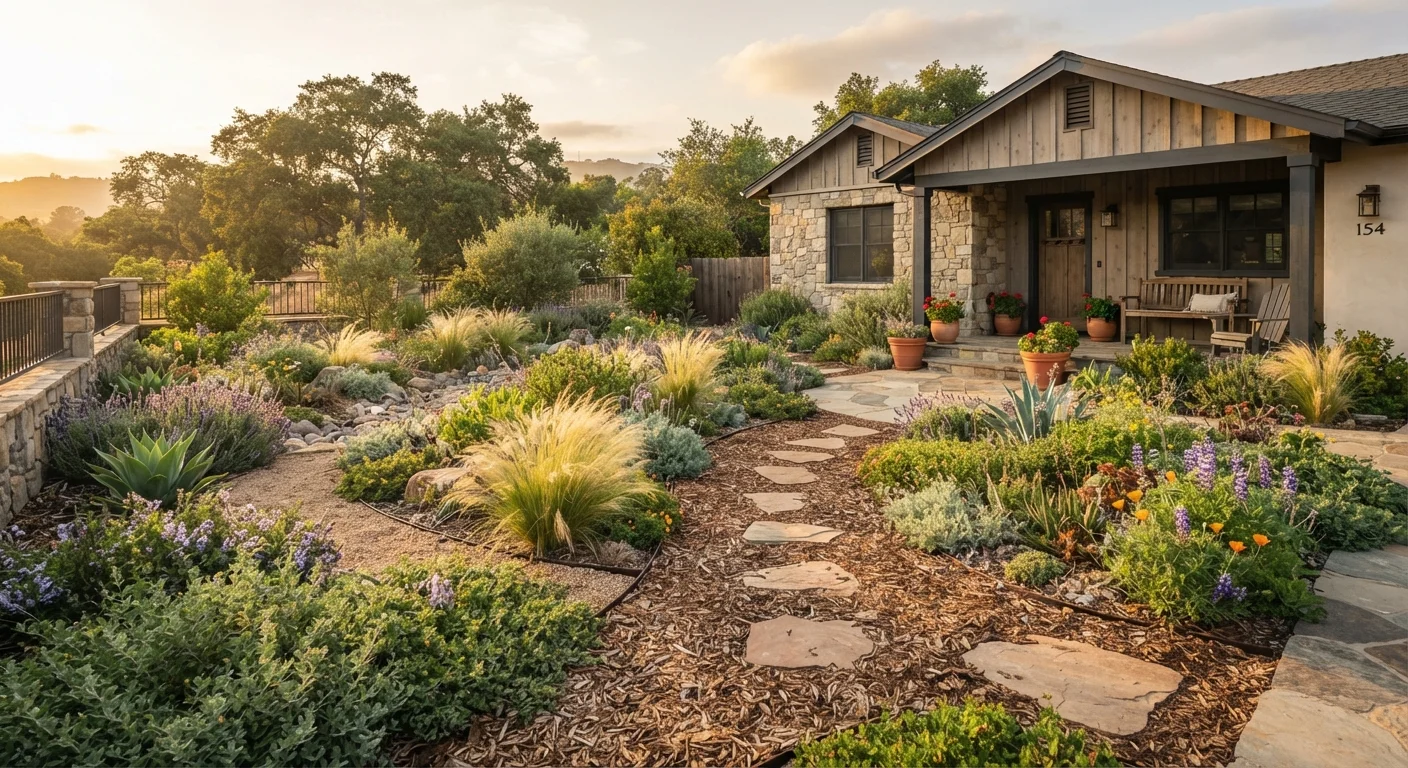
Xeriscaping is a landscaping philosophy built around reducing - or eliminating - the need for supplemental irrigation. It's especially practical in dry or drought-prone climates like the American Southwest, but the principles apply broadly. Core elements include drought-tolerant plantings, efficient water delivery, generous mulching, and minimizing open soil that invites weeds.
A xeriscaped yard doesn't have to look sparse or rocky. With the right plant palette - ornamental grasses, native wildflowers, succulents, and shrubs adapted to your region - it can be visually rich and seasonally dynamic with very little ongoing effort.
Xeriscaping principles reduce or eliminate supplemental watering while keeping the yard visually engaging.
Use Hardscaping to Reduce Plantable Area
Patios, gravel paths, stepping stone walkways, and decorative rock beds all reduce the square footage you need to plant, water, and maintain. Used thoughtfully, hardscaping adds structure and visual interest while simplifying the overall maintenance picture. A gravel path edged with low ground cover, for instance, looks intentional and requires almost no routine care.
The key is to integrate hardscaping so it complements the plantings rather than replacing them entirely. A mix of planted areas and hardscaped zones tends to feel more livable and visually balanced than either extreme alone.
Hardscaping reduces the plantable area you need to maintain while adding lasting structure to your yard.
Select Slow-Growing Shrubs for Structure
Fast-growing shrubs can fill space quickly but demand constant trimming to stay in bounds. Slow-growing alternatives - such as boxwood, holly, or dwarf varieties of spirea and viburnum - take longer to establish but require pruning far less often. Once mature, they provide year-round structure and visual anchoring with minimal intervention.
Before planting any shrub, verify its mature size. Many maintenance headaches stem from planting shrubs that outgrow their intended space, forcing repeated hard pruning. Checking the mature width and height at the time of purchase prevents this problem entirely. Core landscaping principles often come down to these front-loaded decisions.
Slow-growing shrubs need pruning far less often and reward patience with years of low-effort structure.
Putting It All Together
You don't need to overhaul your entire yard at once. Start with one zone - a troublesome slope, a dry strip along the driveway, or a shady patch where grass struggles - and apply one or two of these strategies. As you see results, expand from there. The cumulative effect of these decisions is a yard that demands far less of you each weekend while still looking intentional and cared for.
If you want to go deeper on any single element, our guides on mulching through the seasons and drip vs. sprinkler irrigation offer detailed, practical breakdowns to help you implement with confidence.