

Key Takeaways
Situational Awareness
Situational awareness is the ability to perceive what is happening around you, understand what that information means, and anticipate how conditions might change - before a problem develops. For travelers, it means actively noticing your environment rather than passively moving through it. It is a learnable skill built through deliberate attention, not simply a gut feeling or innate instinct.
The concept was formally defined by cognitive psychologist Mica Endsley in the context of aviation safety, identifying three levels: perception of environmental cues, comprehension of their meaning, and projection of future states.
Why Instinct Alone Falls Short
Travelers often conflate situational awareness with gut feeling - that vague unease that tells you something is off. Gut feelings are real and worth heeding, but they are an unreliable foundation on their own. They are shaped by fatigue, cultural unfamiliarity, and cognitive bias. A crowded market may trigger discomfort simply because it is loud and foreign, while a genuinely risky situation in a comfortable-looking hotel lobby may register nothing at all.
Genuine situational awareness is something more systematic. It means deliberately gathering information from your environment, making sense of that information, and updating your expectations as conditions change. This process does not happen automatically - it requires conscious attention, especially in unfamiliar settings where you lack the baseline knowledge that locals carry by habit.
For travelers, this distinction matters because unfamiliar environments strip away the automatic pattern recognition we rely on at home. You don't know which streets go quiet at night, which vendors are aggressive versus friendly, or which exits a venue actually has. That knowledge gap is exactly what makes deliberate awareness so important - and so achievable with the right preparation. See our guide on assumptions that put travelers in danger for a closer look at how false confidence creates real risk.
The Three Stages of Situational Awareness
Cognitive scientist Mica Endsley's framework, developed primarily for aviation, translates directly to everyday travel. It describes awareness as operating on three levels:
- Perception: Noticing relevant cues - the person standing unusually close, the bag left unattended, the exit location when you enter a crowded venue.
- Comprehension: Understanding what those cues mean in context. An unattended bag in an airport has different implications than one left beside a park bench in a quiet neighborhood.
- Projection: Anticipating how the situation might evolve. If a crowd is forming quickly near your path, what does that likely mean for your next few minutes?
Most travelers operate comfortably at the first level but skip the second and third. Noticing something and correctly interpreting it are different cognitive tasks. Building the habit of asking "what does this mean, and what might happen next?" is what separates reactive travelers from prepared ones.
70%
Of accidents attributed to human error in aviation
Research in aviation safety consistently attributes the majority of incidents to failures in situational awareness rather than mechanical malfunction, according to foundational human factors literature.
3x
Greater risk for distracted pedestrians near traffic
Studies on pedestrian safety published in transportation research journals suggest distracted walkers are significantly more likely to miss approaching hazards than attentive pedestrians.
Distraction Is the Biggest Obstacle
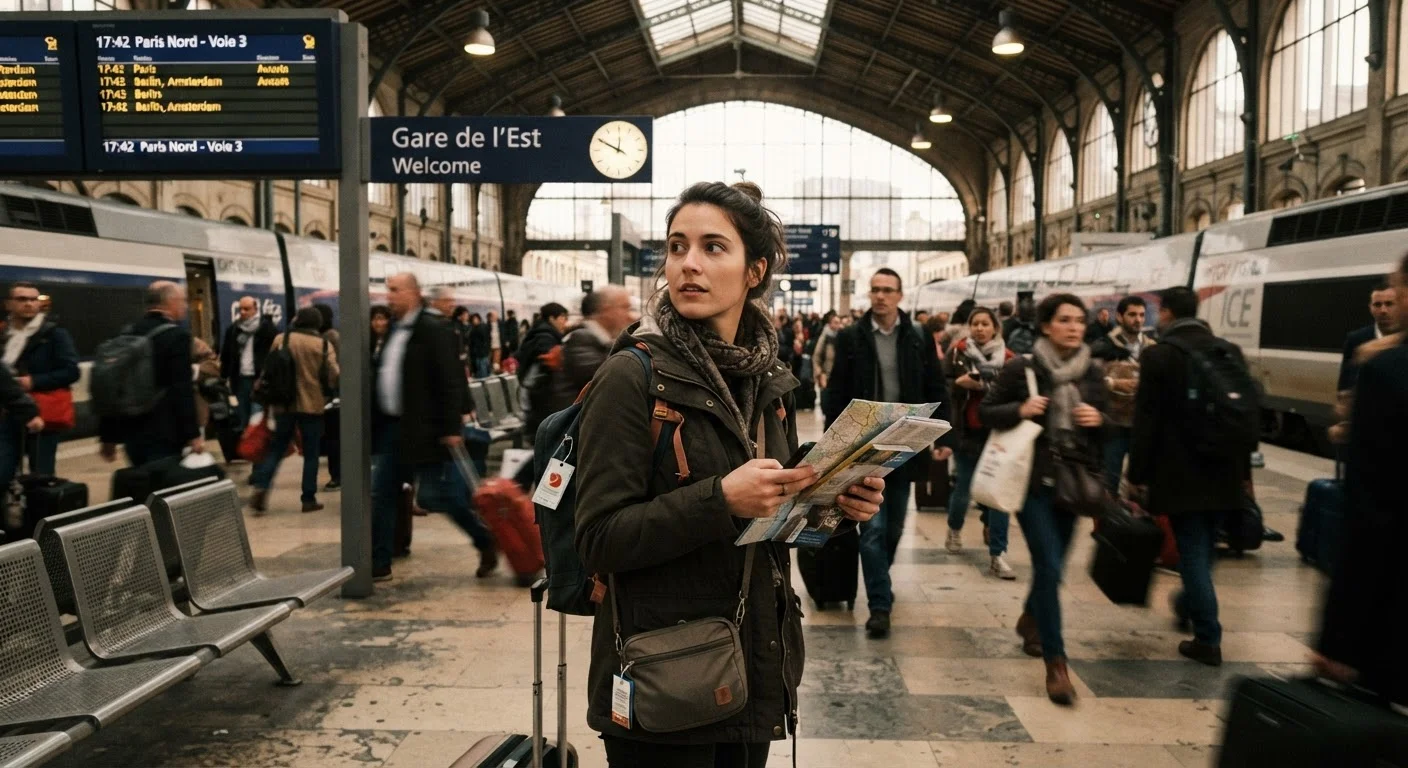
No factor undermines situational awareness more reliably than divided attention. A phone screen narrows your perceptual field dramatically. Headphones remove an entire sensory channel. Walking while navigating a map app reduces awareness to the point that you may miss significant environmental cues entirely.
This is not about avoiding technology - it is about choosing when to use it. Arriving at a new transit hub, entering an unfamiliar neighborhood, or walking alone after dark are all moments that call for undivided attention. Save the phone for a stationary, low-risk moment. The few seconds it takes to look up could be the difference between noticing a developing problem and walking into one.
The same principle applies to traveling in groups. Conversation creates a social bubble that filters out external information. Groups often feel safer, and frequently are - but that comfort can be its own distraction. Periodic, deliberate check-ins with your surroundings help maintain the awareness that group dynamics tend to suppress.
How to Build Awareness Before You Arrive
Situational awareness begins well before you land. Familiarity with a destination creates a mental model - a baseline expectation against which real conditions can be compared. When something deviates from that model, you notice it faster.
Pre-trip research should include: the layout of key areas you will visit, common local scams or targeting tactics, the location and contact of the nearest embassy or consulate, local emergency numbers (which differ significantly by country), and cultural norms around eye contact, negotiation, and personal space. Understanding what normal looks like in a given place is the prerequisite for recognizing what is not normal.
Experienced travelers research specific factors before arrival that go well beyond tourist highlights - transport systems, neighborhood reputations, and emergency infrastructure are all part of informed preparation. For travelers just starting out, a foundational travel safety guide covers the groundwork you need before your first trip.
Practical Habits That Sharpen Awareness in the Field
Once you are traveling, a handful of consistent habits reinforce the awareness you built in preparation:
- Orient yourself on arrival. Identify exits, note the location of staff or security, and form a basic mental map of any new environment - hotel, transit station, venue - before you relax into it.
- Watch what locals do. Local behavior is a real-time guide to what is and isn't normal. If people around you suddenly change direction or pace, that is informative.
- Vary your routines. Predictable patterns make you easier to follow. Changing the timing or route of regular activities is a low-effort precaution, particularly for solo travelers.
- Use your peripheral vision. Practiced awareness means scanning broadly rather than fixating on a single point. This takes deliberate effort but becomes habitual with practice.
These habits apply equally when behind the wheel. The same perceptual skills that keep you safe on foot - scanning broadly, anticipating changes, reducing distraction - are central to road safety for new and developing drivers navigating unfamiliar roads abroad.
For those traveling independently, situational awareness becomes especially critical. Solo travelers benefit from specific safety strategies that account for the absence of a travel companion who might otherwise provide a second perspective.
This article is for general informational purposes only. Always verify safety, entry, and emergency information with official government and local sources before traveling.