

Key Takeaways
Why Solo Travel Safety Is a Distinct Discipline
Solo travel is fundamentally different from group or partnered travel - not just in logistics, but in risk profile. When you travel alone, there is no one to notice if you seem disoriented, no backup if your wallet disappears, and no second opinion when a situation feels off. That absence of a safety net demands a more deliberate approach to every stage of the journey.
This doesn't mean solo travel is inherently dangerous. Millions of Americans travel solo each year without incident. What it does mean is that solo travelers must internalize skills and habits that group travelers can partially offload to their companions. For a grounded comparison of how the risk profile shifts, see our piece on traveling in a group vs. traveling solo.
The goal of this guide is not to make you afraid - it's to make you prepared. Understanding where solo travelers are most vulnerable, and building concrete habits to address those vulnerabilities, is what separates a stressful trip from a confident one.
Pre-Trip Planning That Reduces Real Risk
Most solo travel incidents are traceable to gaps in pre-departure planning. The following steps address the highest-leverage risks before you ever board a flight.
- Research destination safety using official sources. The U.S. Department of State publishes country-specific travel advisories on a four-level scale. These are not merely bureaucratic paperwork - they reflect current intelligence on crime, civil unrest, and regional hazards. Check them immediately before booking and again before departure. Our guide on how to research destination safety yourself walks through this process in detail.
- Enroll in STEP. The Smart Traveler Enrollment Program (STEP), run by the State Department, registers your trip with the nearest U.S. embassy or consulate. Enrollment is free and ensures you can receive emergency alerts and evacuation assistance if needed.
- Create a written communication plan. Give a trusted contact at home your full itinerary - accommodations, transportation details, and expected check-in times. Agree on a protocol if a check-in is missed.
- Understand your insurance coverage. Standard health insurance often does not cover international medical emergencies. Verify what your existing policies cover and assess whether travel medical insurance or evacuation coverage makes sense for your trip.
If you're preparing for your first solo journey, what to expect and how to prepare offers a comprehensive introduction to the planning process.
Book Your First Night in Advance
Arriving at an unfamiliar destination without confirmed accommodation - especially late at night - creates unnecessary vulnerability. Even for travelers who prefer spontaneity, securing and confirming the first night's lodging before departure gives you a stable base to assess your surroundings safely before making further decisions.
Situational Awareness on the Ground
Situational awareness is the practice of consistently understanding what is happening around you and recognizing when something is out of place. It is a skill, not a personality trait, and it can be developed deliberately.
Practical habits that build situational awareness include:
- Reviewing a neighborhood's layout before you arrive, rather than navigating with your face in your phone on an unfamiliar street.
- Identifying the nearest exit, embassy location, or police station when you arrive at a new area.
- Trusting your instincts when an interaction, offer, or location feels wrong - most experienced travelers report that early discomfort signals should be respected, not rationalized away.
- Avoiding conspicuous displays of expensive equipment, jewelry, or cash in areas you haven't yet assessed.
Situational awareness also means understanding what assumptions you're making about your environment. Common assumptions that put travelers in danger are often the root cause of incidents that look, in retrospect, entirely preventable.
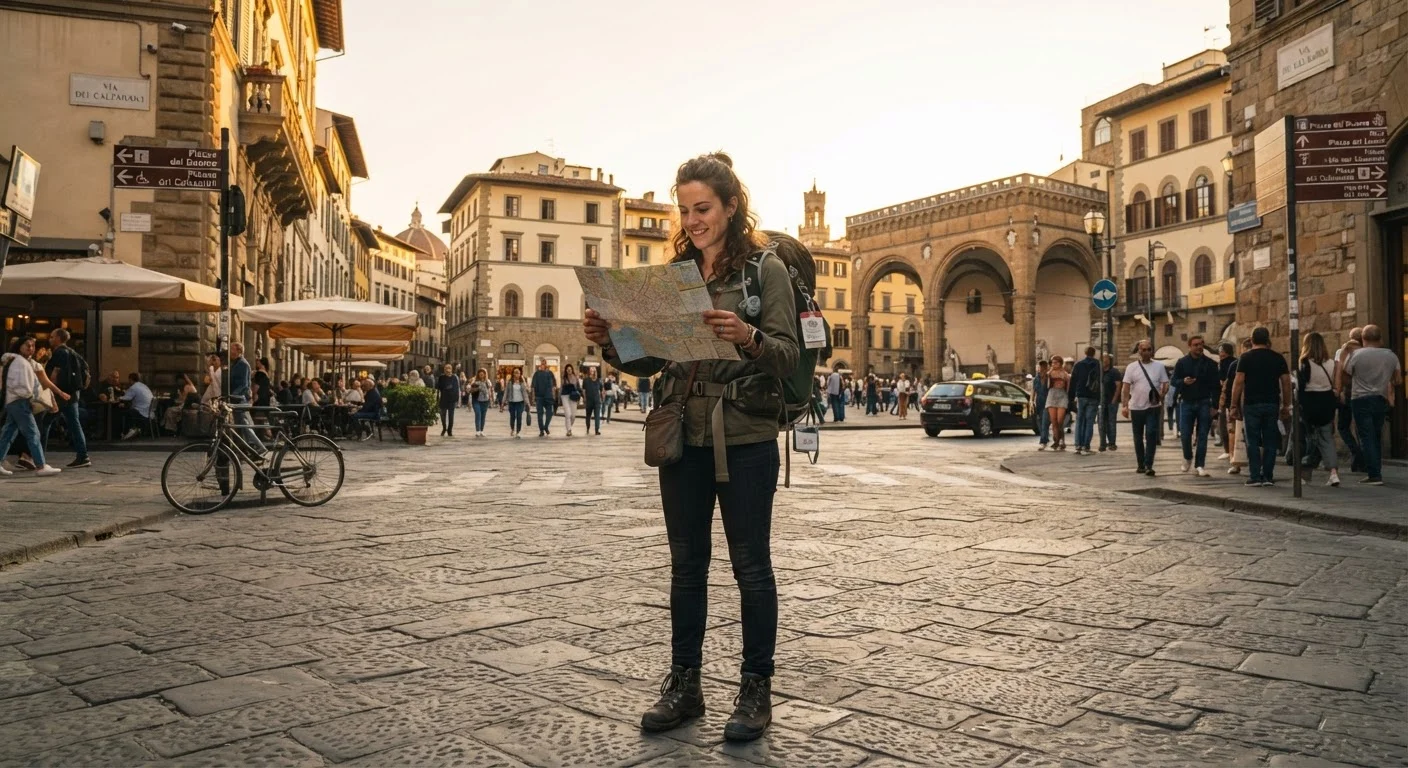
When arriving in a new city, take ten minutes at your arrival point - airport, train station, or bus terminal - to orient yourself before stepping outside. Review your route, note the neighborhood layout, and confirm your accommodation's address before entering an unfamiliar street.
The transition from transit to street level is one of the highest-vulnerability moments for solo travelers. Arriving with a clear mental map dramatically reduces the disoriented look that opportunistic thieves recognize.
Use your accommodation's front desk as an informal safety resource. Ask staff which neighborhoods or routes to avoid at specific times of day - this local, current knowledge is more reliable than any travel forum post.
Hotel and hostel staff update their safety knowledge continuously based on real incidents in the area. Their guidance is often more current and specific than published travel advisories or visitor guides.
Protecting Your Valuables and Digital Identity
Solo travelers carry all of their essential items - passports, cards, cash, devices - without anyone to watch their bag or share the load. This makes both physical and digital security especially important.
On the physical side, strategies that consistently prove effective include carrying a minimal wallet with only what you need that day, using a money belt or hidden pouch for backup cash and your passport copy, and storing the original passport in a secured accommodation safe when permitted by local law. For a thorough breakdown of what works and what doesn't, see keeping valuables safe while traveling.
Digital security is equally important and often overlooked. Public Wi-Fi in hotels, cafes, and airports is frequently unsecured, making it possible for others to intercept transmitted data. Using a VPN (virtual private network) before connecting to any public network, enabling two-factor authentication on critical accounts, and keeping your device's software updated are baseline precautions. For a detailed treatment, see our guide on digital security on the road.
Handling Emergencies When You're on Your Own
Being alone during a crisis - a medical emergency, theft, natural disaster, or civil disruption - requires preparation that goes beyond general travel advice. Without a companion to help coordinate or communicate, you need pre-loaded information and a clear decision hierarchy.
Before departure, document and store the following in at least two places (cloud and physical copy):
- Local emergency services numbers for your destination (these vary by country)
- Contact information for the nearest U.S. embassy or consulate
- Your travel insurance policy number and the insurer's 24-hour assistance line
- A photo of your passport's data page and your travel itinerary
During an incident, the first priority is personal safety over property. Report theft to local authorities and obtain a written police report - most travel insurance claims require this documentation. Contact your bank immediately if payment cards are compromised. If you face a medical emergency, your travel insurer's assistance line, if you have one, can often coordinate hospital admission and translation services.
For a solid foundation on emergency preparedness as a traveler, travel safety from the ground up covers these concepts comprehensively.
Your Passport Is Your Most Critical Document
Losing your passport abroad without a copy or embassy contact information can strand you for days. Always keep a digital scan of your passport's data page stored in a secure cloud account, and leave a physical copy with your emergency contact at home. Know the address and phone number of the nearest U.S. embassy before you need them - not after.
Mindset: The Most Underrated Safety Tool
Technical preparation matters, but mindset - how you carry yourself, how you process risk, and how you respond to uncertainty - is what integrates all the other strategies. Experienced solo travelers consistently describe a posture of calm confidence: aware but not anxious, cautious but not paralyzed.
A few principles that support a safer travel mindset:
- Normalize saying no. Declining unsolicited offers of help, tours, or accompaniment is always acceptable. Politeness does not require compliance.
- Don't let sunk costs dictate decisions. If an accommodation, route, or situation feels unsafe after you've committed to it, it is always appropriate to change course.
- Calibrate risk, don't eliminate it. No trip is risk-free. The goal is to identify which risks are manageable through preparation and which genuinely require itinerary changes.
Staying budget-conscious on solo trips is a reasonable goal, but avoid letting cost-cutting lead you toward accommodation or transportation choices that compromise your security baseline. Your physical safety is not a place to optimize for savings.
Solo travel, approached thoughtfully, is one of the most rewarding forms of exploration available. The skills you develop - adaptability, decisiveness, self-reliance - compound over every subsequent trip, making each journey more confident than the last.