

Key Takeaways
Why New Homeowners Miss the Basics
Buying a home shifts your mindset from renter to caretaker almost overnight - but the knowledge doesn't transfer automatically. Most first-time owners arrive focused on decorating and settling in, while the mechanical and structural systems quietly demand attention. The result is a predictable set of oversights that tend to compound over time.
Understanding why these mistakes happen is just as useful as knowing what they are. Many are invisible - tucked behind walls, under floors, or buried in routines nobody thought to explain. Others seem optional until the moment they aren't. This guide covers the most common upkeep errors and how to correct course before they become expensive problems. For a broader foundation, see our First-Time Homeowner's Introduction to Routine Maintenance.
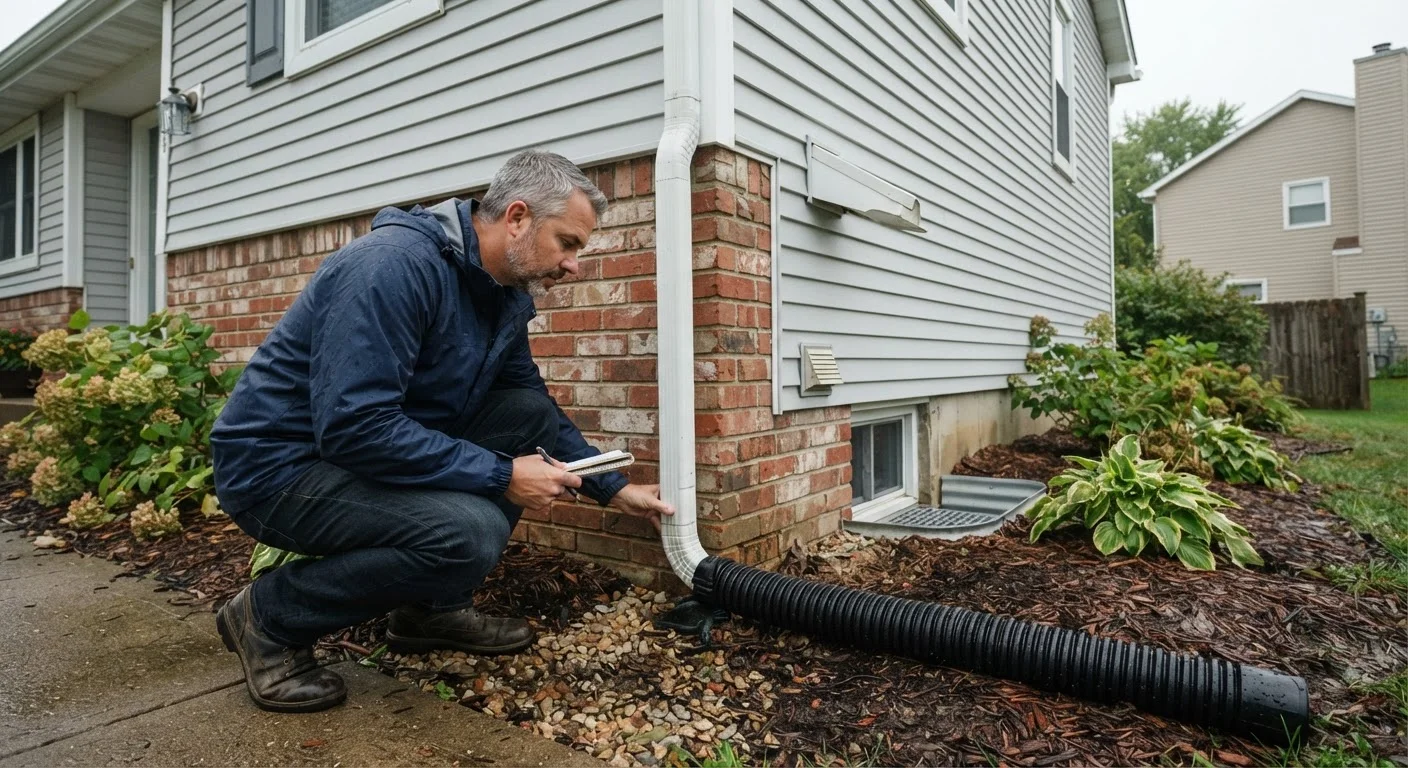
Ignoring the grading and drainage around the foundation.
Why it happens: It's not visible from inside the house, and it looks fine when the soil is dry. Many buyers never think to ask about it during purchase.
Never cleaning the dryer vent duct, only the lint trap.
Why it happens: The lint trap is visible and easy, so it feels like the job is done. The duct running from the dryer to the exterior is out of sight and easy to forget.
Skipping annual water heater flushing, allowing sediment to accumulate.
Why it happens: Water heaters run quietly and reliably for years, making them easy to overlook entirely. Most owners only notice them when something goes wrong.
Overlooking HVAC filter replacement intervals.
Why it happens: Filter changes feel minor and easy to defer. Owners often don't realize how quickly a clogged filter stresses the system and degrades air quality.
Letting gutters go uncleaned, especially after leaf season.
Why it happens: Gutters are above eye level and don't signal problems until water is already backing up or overflowing against the fascia board.
Treating small caulk gaps around windows, tubs, and doors as cosmetic issues.
Why it happens: A thin crack in caulk seems trivial. Owners prioritize more visible repairs and don't connect the gap to moisture intrusion or energy loss.
Building a Maintenance Habit That Sticks
The homeowners who avoid the biggest repair bills aren't necessarily more skilled - they're more consistent. A simple seasonal checklist, reviewed four times a year, catches most problems while they're still minor. Spring is an especially valuable moment to assess what winter has done to your roof, foundation, and drainage. Our Spring Home Walkthrough walks through exactly what to look for after a hard winter.
It also helps to understand your home's specific foundation type. If your home sits over a crawl space rather than a full basement, the moisture and insulation demands differ significantly - our Crawl Space vs. Basement guide breaks down what each requires. And if you've encountered claims like "new homes don't need upkeep" or "bleach eliminates mold," it's worth checking our Home Maintenance Myths - many widely repeated assumptions lead to real damage.
$1,000+
Median cost of a water damage repair claim
Water damage and freezing account for a significant share of homeowner insurance claims, according to industry data from the Insurance Information Institute.
2,900
Dryer fires reported annually in the US
The U.S. Fire Administration has reported roughly 2,900 residential dryer fires per year, with failure to clean the vent duct cited as the leading contributing factor.
Ultimately, consistent upkeep is less about knowing everything and more about knowing what to check and when. Scheduling reminders, keeping a simple home maintenance log, and hiring licensed professionals for permitted or hazardous work - electrical, gas, roofing, structural - will protect your investment far more reliably than any single heroic repair.