

Key Takeaways
Our Verdict
Neither a crawl space nor a basement is inherently easier to maintain - they simply require different strategies. Crawl spaces demand vigilant moisture and pest control in a confined environment, while basements involve waterproofing systems, structural monitoring, and more complex humidity management. Understanding your specific foundation type helps you prioritize spending, schedule inspections correctly, and avoid the costly repairs that come from neglect.
| Best for | Recommended |
|---|---|
| Homeowners with limited maintenance time who want straightforward access | Basement |
| Homes in drier climates where full excavation isn't practical | Crawl Space |
| DIY-minded owners who want to inspect conditions themselves | Basement |
| Those focusing on low-cost passive moisture prevention | Crawl Space with vapor barrier encapsulation |
Understanding What Sets These Two Foundation Types Apart
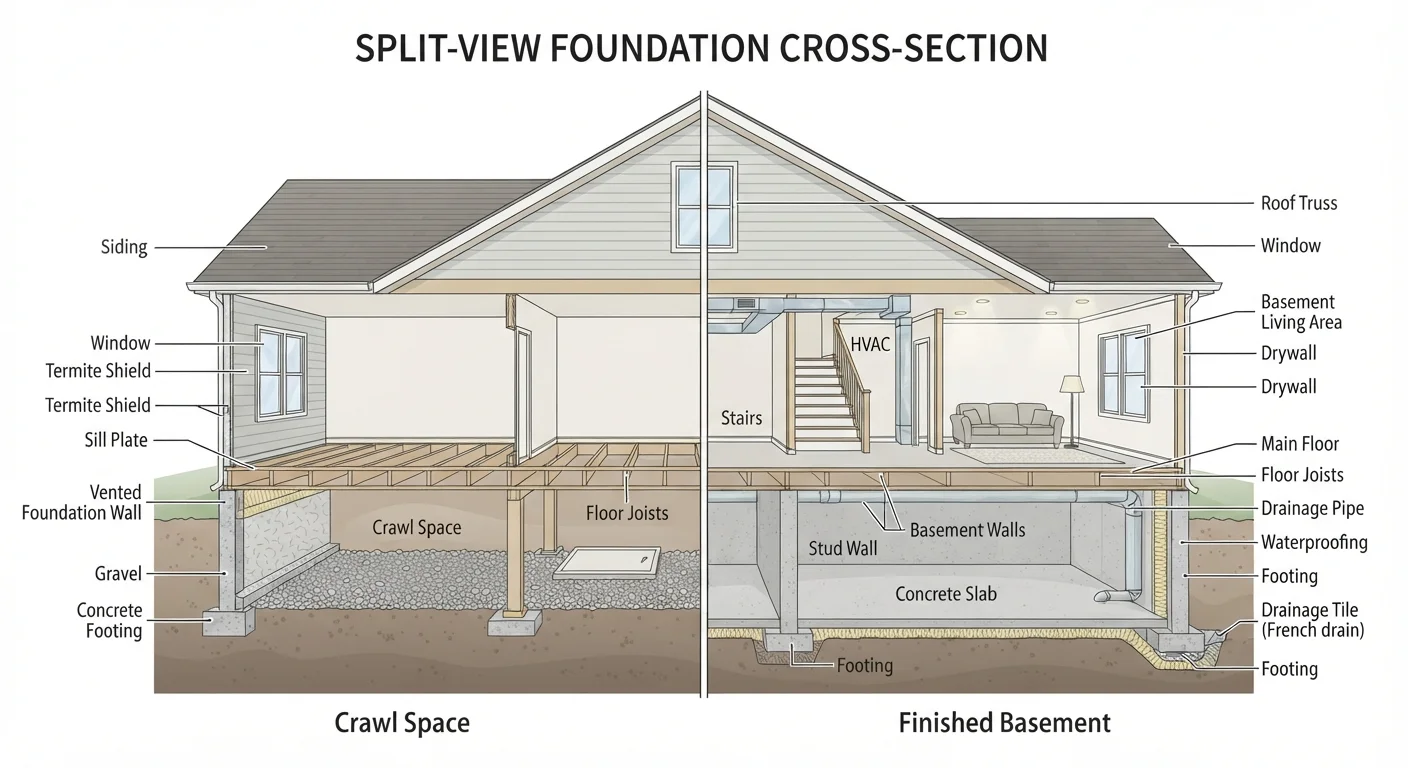
A crawl space is a narrow, unfinished area beneath a home - typically 18 to 36 inches tall - that elevates the structure off the ground without providing livable square footage. A basement is a full-depth below-grade space, usually at least seven feet tall, that may be finished or unfinished. Both serve as the structural base of a home and house critical systems like plumbing, HVAC ducts, and electrical runs, but the environment inside each is quite different.
That difference in environment is what drives the difference in maintenance. Crawl spaces are harder to access and easier to ignore - which is exactly why problems tend to compound there unnoticed. Basements are more visible and usable, but their larger footprint and greater below-grade exposure bring their own set of moisture and structural challenges. If you're newer to homeownership, the Home Maintenance From the Ground Up overview is a useful starting point before diving into foundation-specific tasks.
Crawl Space Maintenance: What to Watch and When
The single biggest threat to a crawl space is moisture. Ground moisture evaporates upward into the space, where it can condense on wood joists and subfloor materials, promoting mold growth, wood rot, and pest activity. Here's what routine crawl space maintenance generally involves:
- Vapor barrier inspection: A plastic sheeting barrier (typically 6-mil polyethylene or heavier) laid across the ground floor slows moisture migration. Check it at least twice a year for tears, gaps, or pooled water.
- Ventilation assessment: Traditional vented crawl spaces rely on airflow to carry moisture out. Inspect vents seasonally to ensure they're unobstructed and functional - though many building professionals now recommend sealed, conditioned crawl spaces instead.
- Wood structure check: Look for soft, discolored, or sagging joists, which may signal rot. Probe suspect areas with a screwdriver - easy penetration indicates decay.
- Pest evidence: Termites and rodents favor crawl spaces. Look for droppings, mud tubes along foundation walls, or gnawed insulation.
- Insulation condition: Insulation batts often fall from between joists over time. Replaced or re-secured insulation helps with both energy efficiency and moisture control.
Access is the main challenge. Crawl spaces require physically entering a confined, often dirty area, so many homeowners find professional annual inspections worthwhile. After a wet winter, the spring home walkthrough checklist can help you know what signs to look for before calling someone in.
Consider Crawl Space Encapsulation
Sealing your crawl space with a heavy-duty vapor barrier that covers the floor and walls - a process called encapsulation - significantly reduces moisture infiltration compared to a standard ground-level plastic sheet. Many building science professionals consider it one of the most cost-effective foundation upgrades for homes in humid climates. Pair it with a dehumidifier sized for the space for best results. Always consult a qualified contractor to assess your specific crawl space conditions before beginning.
Basement Maintenance: Waterproofing, Humidity, and Structure
Basements offer more space to work in, but they face greater hydrostatic pressure - the force of groundwater pushing against foundation walls. Key maintenance tasks include:
- Sump pump testing: Pour water into the sump pit to confirm the float triggers the pump. Test this every six months, especially before heavy rain seasons. Keep a battery backup on hand for power outages.
- Wall crack monitoring: Hairline cracks in poured concrete are common and often cosmetic. Horizontal cracks or cracks wider than 1/4 inch warrant a structural evaluation - these can indicate lateral soil pressure. If you're uncertain which walls bear structural load, reviewing the principles behind load-bearing vs. non-load-bearing walls can provide helpful context.
- Humidity control: Target indoor basement humidity between 30-50%. A dehumidifier is often necessary in summer months. Check the condensate drain or collection bucket regularly.
- Window well drainage: Basement egress windows with clogged wells can funnel water directly into the space. Clear debris seasonally.
- Waterproofing membrane condition: If your basement has interior drainage systems or exterior waterproofing, have them inspected every few years by a qualified contractor.
| Crawl Space | Basement | |
|---|---|---|
| Primary moisture threat | Ground vapor rising upward | Hydrostatic pressure and wall seepage |
| Key moisture control tool | Vapor barrier / encapsulation | Sump pump and waterproofing membrane |
| Inspection accessibility | Difficult - confined space entry required | Easier - walkable in most cases |
| Pest vulnerability | Higher - warm, dark, and damp | Lower - but not zero risk |
| Insulation location | Between floor joists above | Walls and rim joists |
| Structural monitoring focus | Wood joist and subfloor decay | Foundation wall cracks and bowing |
| Radon risk | Present - test every 2 years | Present - test every 2 years |
| Typical DIY-friendliness | Limited - access is challenging | More accessible for most homeowners |
Newer homeowners often underestimate how much upkeep below-grade spaces require. The common upkeep mistakes new homeowners make article covers several foundation-adjacent oversights worth reading alongside this guide.
Shared Priorities: What Both Foundation Types Need
Regardless of which foundation type your home has, certain maintenance principles apply universally:
- Grading and drainage: Soil around your foundation should slope away from the house - at least six inches of drop over the first ten feet. Poor grading channels water toward the foundation, whether it's a crawl space or basement.
- Gutter and downspout management: Clogged gutters overflow toward the foundation. Extend downspouts at least four to six feet from the house.
- Annual professional inspection: Both crawl spaces and basements benefit from a trained eye. Professionals can spot early signs of settlement, moisture intrusion, or pest activity that an untrained observer may miss.
- Radon testing: Both foundation types can accumulate radon, a colorless, odorless radioactive gas. The EPA recommends testing every two years, or after significant renovations.
For a broader picture of what routine maintenance looks like across your entire home, the first-time homeowner's maintenance primer is a practical companion resource.