

Key Takeaways
Soil pH
Soil pH is a measure of how acidic or alkaline your soil is, scored on a scale from 0 to 14. A reading of 7.0 is neutral - numbers below that are acidic, and numbers above are alkaline (also called basic). Most garden plants grow best somewhere between 6.0 and 7.0, where nutrients are most available and soil biology is most active.
The pH scale is logarithmic, meaning a soil at pH 5.0 is ten times more acidic than one at pH 6.0 - small numerical differences represent significant chemical changes in the soil environment.
What pH Actually Means for Your Plants
Think of soil pH as a master dial that governs nearly every underground interaction your plants depend on. It doesn't directly feed plants - but it determines whether the nutrients already in your soil are in a form plant roots can absorb. Nitrogen, phosphorus, potassium, iron, manganese, and calcium all have a sweet spot on the pH scale where they're most chemically available. Outside that range, they essentially become locked away, unavailable no matter how generously you fertilize.
This is why gardeners sometimes pour on fertilizer and still end up with stunted, pale, or struggling plants. The problem isn't a lack of nutrients - it's that the soil's pH has made those nutrients inaccessible. Understanding pH turns a frustrating mystery into a solvable problem. As our guide to compost vs. fertilizer explains, amendments only work when your soil conditions allow them to.
The pH Sweet Spot: What Most Plants Need
The majority of garden vegetables, flowering plants, and lawn grasses perform best in slightly acidic soil - roughly pH 6.0 to 7.0. In this range, macronutrients like nitrogen and phosphorus are highly available, and beneficial soil microbes are at their most active. Those microbes break down organic matter and release nutrients in forms plant roots can use, so supporting them has compound benefits.
There are notable exceptions worth knowing. Blueberries, azaleas, rhododendrons, and gardenias are acid-lovers that thrive at pH 4.5-5.5. Asparagus and lilacs prefer slightly alkaline conditions near 7.0-7.5. Matching your plants to your native soil's natural pH - or choosing plants adapted to local conditions - can save you a lot of correction effort. That's one reason native plants often outperform ornamentals without heavy intervention.
6.0-7.0
Optimal pH range for most vegetables and grasses
This range is widely cited by cooperative extension services across the US as ideal for nutrient availability and microbial activity.
4.5-5.5
Preferred pH for acid-loving plants like blueberries
Plants like blueberries and azaleas require a significantly more acidic environment to absorb iron and other micronutrients effectively.
10x
Acidity difference between each pH unit step
Because the pH scale is logarithmic, a soil reading of 5.0 is ten times more acidic than 6.0 - making precise testing important.
How to Test Your Soil (and What to Do with the Result)
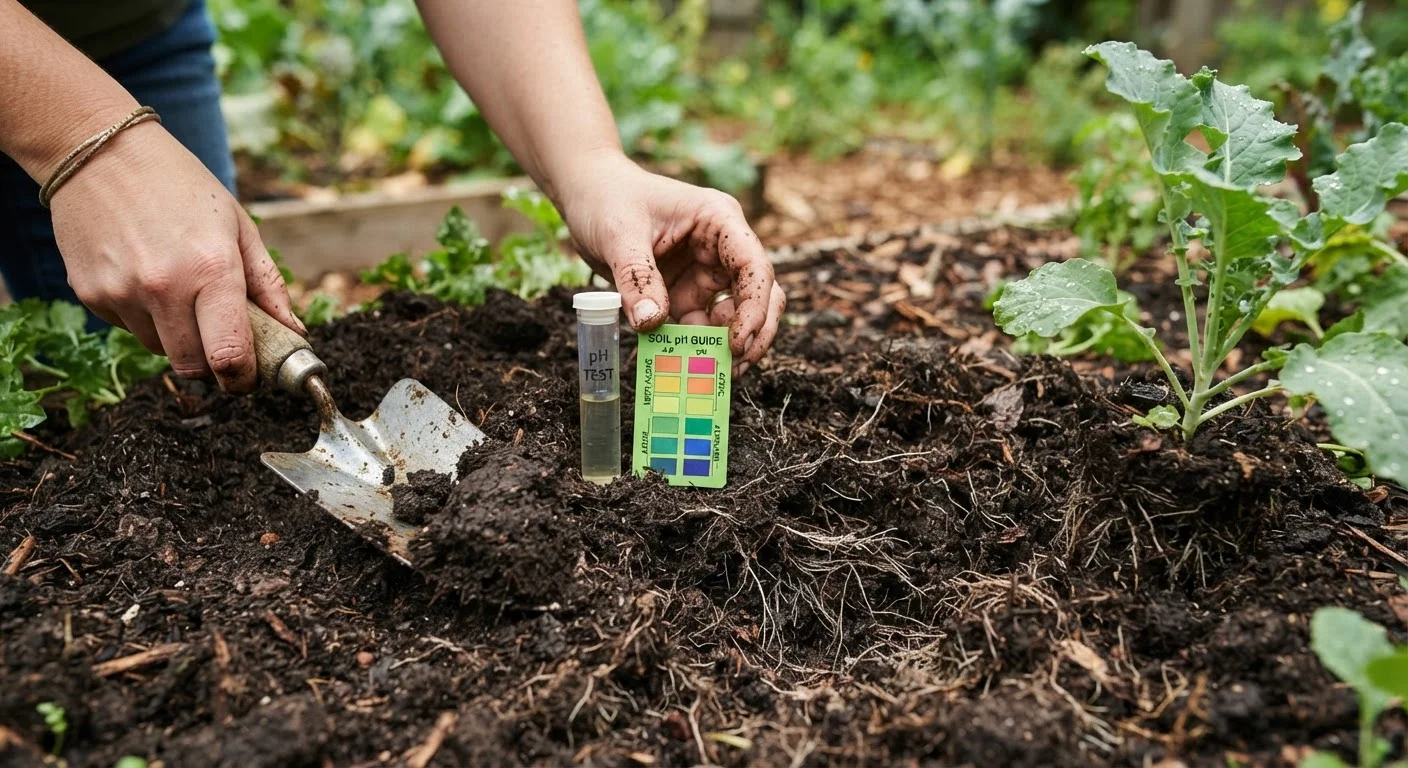
You can't manage what you haven't measured. The most actionable starting point is a soil test. Your local cooperative extension service - a resource tied to most US land-grant universities - offers mail-in testing that returns results with specific amendment recommendations for your region. This is more thorough than a home kit and often inexpensive. Home test kits and probe meters are useful for quick checks but may be less precise.
Once you have your reading, here's how to act on it:
- To raise pH (make soil less acidic): Apply ground agricultural limestone (calcitic or dolomitic lime). Work it into the top several inches of soil. The amount needed depends on your current pH, target pH, and soil type - your soil test results will specify.
- To lower pH (make soil more acidic): Apply elemental sulfur, which soil bacteria slowly convert to sulfuric acid. Acidic organic matter - like composted pine bark or peat moss - can also help gradually shift pH downward.
Patience is essential. Aim for gradual correction over one or more growing seasons rather than large, rapid swings, which can harm the microbial community your soil depends on.
Why Soil Biology Makes pH Matter Even More
Soil isn't inert - it's a living system. Bacteria, fungi, earthworms, and other organisms all play roles in breaking down organic material and cycling nutrients. Many of these organisms are sensitive to pH extremes. Highly acidic or alkaline conditions can suppress beneficial microbial activity, creating a cycle where nutrient availability drops further even as chemistry improves on paper.
This is one reason why organic matter is so valuable as a long-term pH stabilizer and soil conditioner. Adding compost regularly builds a buffering capacity that resists dramatic pH swings and supports a diverse microbial ecosystem. Mulching your beds year-round contributes to this same process - see our season-by-season mulching guide for practical application advice. For lawn care specifically, core lawn management practices like aeration also improve soil structure in ways that complement pH management.
“Soil is the foundation of the entire food web. When we understand and work with soil chemistry - including pH - we stop fighting our gardens and start collaborating with them.”
— Fred Magdoff, Professor Emeritus of Plant and Soil Science, University of Vermont, and co-author of 'Building Soils for Better Crops'