

Key Takeaways
Option A
DIY Maintenance
The hands-on, cost-conscious approach to routine home upkeep.
Best for: Homeowners comfortable with basic tools tackling low-risk, non-regulated tasks like filter swaps, caulking, and minor patching.
Option B
Calling a Professional
The licensed, insured, code-compliant path for complex or hazardous work.
Best for: Any repair involving electrical panels, gas lines, structural elements, roofing, or work that legally requires a permit and inspection.
If the task is cosmetic, low-risk, and requires no permit
DIY Maintenance
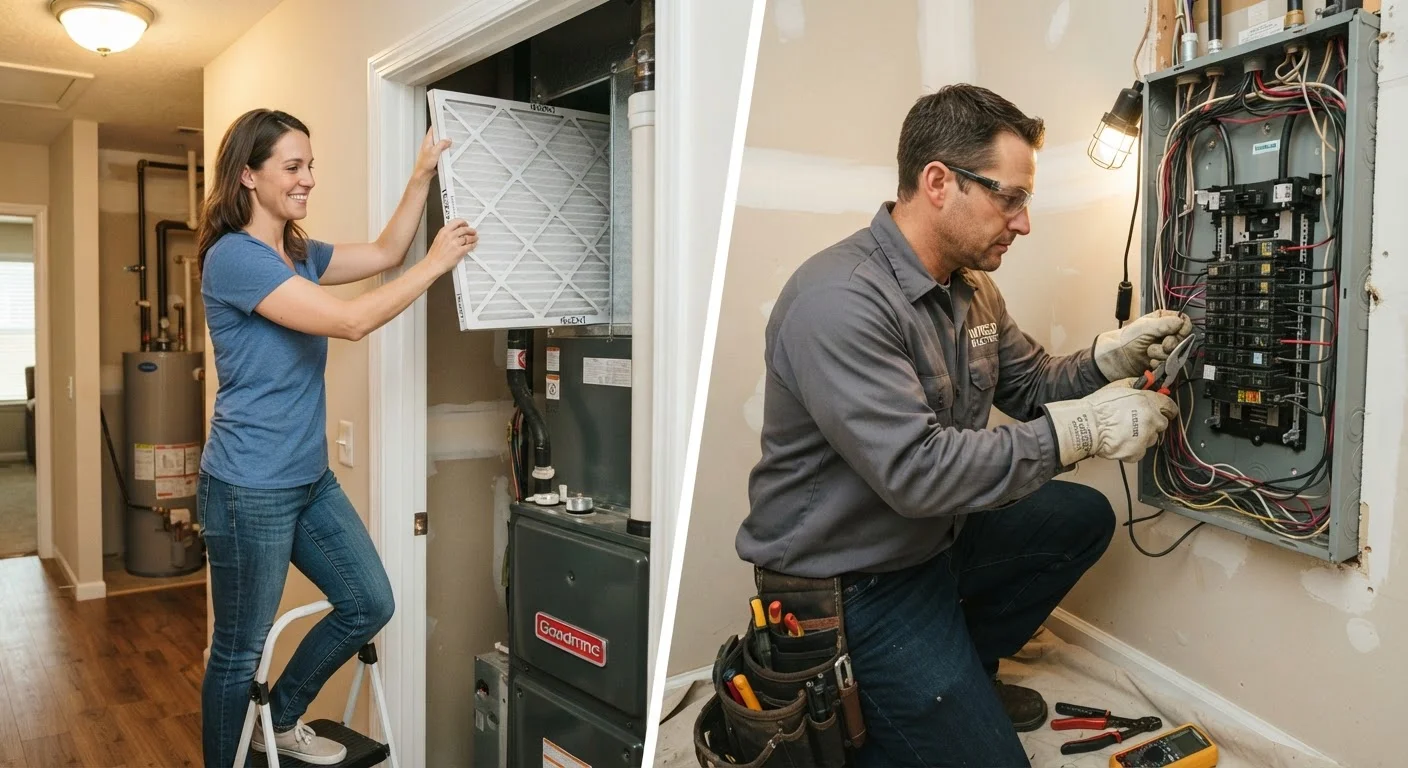
Tasks like patching small drywall holes, replacing HVAC filters, or recaulking a tub are within most homeowners' reach and carry minimal safety risk.
If the work involves your electrical panel, gas lines, or load-bearing walls
Calling a Professional
These systems carry serious injury, fire, and structural collapse risks. Licensed tradespeople carry the insurance, tools, and code knowledge to do this work safely and legally.
If you're a first-time homeowner still learning your home's systems
Calling a Professional
Building a relationship with a trusted contractor while learning your home's quirks is a smarter long-term investment than guessing on unfamiliar systems.
If you have the right tools, skills, and clear instructions for a mid-level task
DIY Maintenance
Tasks like gutter cleaning, minor deck repairs, or toilet flapper replacements reward a prepared homeowner with real savings and valuable hands-on knowledge.
If a project requires a permit or licensed inspection to be legally valid
Calling a Professional
Unpermitted work can void your homeowner's insurance, complicate resale, and expose you to liability. A licensed contractor handles this compliance for you.
Why the Line Between DIY and Pro Work Matters
Every homeowner faces the same recurring question: is this something I can handle myself, or do I need to make a call? The answer shapes both your budget and your safety. Misjudging it in either direction has real consequences - overpaying a contractor for a simple filter swap wastes money, while attempting a gas line repair without a license can put your household in danger.
The good news is that the boundary isn't arbitrary. It's mostly drawn by three clear factors: personal safety risk, legal or code requirements, and the complexity of diagnosing the underlying problem. Understanding where a task falls on those axes is more useful than any blanket rule.
For newer homeowners especially, our introduction to home maintenance can help you get a baseline sense of your home's key systems before you start deciding what to tackle.
| Criterion | DIY Maintenance | Calling a Professional |
|---|---|---|
| Typical cost | Materials only; lower upfront | Labor + materials; higher upfront |
| Safety risk | Low on routine tasks; high if misjudged | Managed by trained, insured trades |
| Permit compliance | Not suitable for permitted work | Handles permits and inspections |
| Skill requirement | Basic to intermediate for most tasks | Licensed and code-trained |
| Insurance coverage | Homeowner bears all risk | Contractor carries liability insurance |
| Best task types | Cosmetic, routine, low-stakes repairs | Electrical, gas, structural, roofing |
| Error consequences | Usually limited and correctable | Rare; covered by warranty or liability |
Tasks That Belong in the DIY Column
Routine maintenance tasks with low failure risk and no regulatory requirements are the sweet spot for DIY. These include:
- HVAC filter replacement - a straightforward swap that most manufacturers expect homeowners to do themselves
- Caulking around tubs, sinks, and windows - cosmetic and weatherproofing work with a low skill floor
- Gutter cleaning and basic inspection - manageable with a stable ladder and the right approach (see our guide on cleaning and inspecting gutters safely)
- Minor drywall patching - small holes and surface cracks are genuinely homeowner-friendly; our drywall repair walkthrough covers the full range
- Toilet flapper or fill valve replacement - low-pressure, easily shut-off repairs that require no soldering or mains connection
- Weather stripping - peel-and-stick or screw-in replacement that anyone with basic tools can complete
What these share: they're visible, reversible, and well-documented. If something goes wrong, the consequences are limited and correctable.
Tasks That Require a Licensed Professional
Some work is off-limits for DIY - not because of complexity alone, but because the risks are severe and the legal requirements are real. These include:
- Electrical panel work, new circuit installation, or rewiring - in most US jurisdictions, this requires a licensed electrician and a permit. Our companion piece on DIY electrical work explains where the line is drawn in detail.
- Gas line repairs or appliance connections - improper connections create explosion and carbon monoxide risks. Always use a licensed plumber or gas fitter.
- Structural modifications - removing or altering walls, especially load-bearing walls, demands an engineer's assessment and a permitted contractor.
- Roof replacement or major repair - working at height with improper technique causes thousands of injuries annually; roofing also requires permits in many municipalities.
- Main plumbing line connections - work connecting to the municipal supply or main drain typically requires a licensed plumber and inspection.
Permits Protect You, Not Just the Inspector
It's tempting to skip the permit process to save time and money, but unpermitted work can void your homeowner's insurance policy if a related claim arises. It can also create serious complications when you sell your home, as buyers' inspectors and lenders may flag the work. When in doubt, contact your local building department - many offer free pre-project consultations to help you understand what's required.
When you do hire out, go in informed. Our guide to hiring a contractor without getting burned covers how to verify licenses, read contracts, and protect yourself before signing anything.
The Honest Self-Assessment Every Homeowner Should Do
Before starting any repair, run through these practical questions:
- Do I have the right tools? Improvising with the wrong tool is one of the most common causes of DIY injuries and poor outcomes.
- Does this task require a permit? Check with your local building department - requirements vary significantly by state and municipality.
- Can I accurately diagnose the problem, not just the symptom? A professional isn't just skilled at fixing things - they're skilled at finding the actual cause.
- What's the worst-case outcome if I get this wrong? A leaky caulk bead is trivial. A misread electrical connection is not.
- Am I comfortable with the physical risk? Ladder work, confined spaces, and heavy materials all carry real injury potential.
This same logic applies beyond your home. If you're weighing similar decisions about your vehicle, our piece on DIY car maintenance vs. a shop walks through how to apply these principles on the road.
This article provides general home maintenance information for educational purposes. Always verify local permit and licensing requirements with your municipal building department, and consult a licensed professional before undertaking any work involving electrical, gas, structural, or plumbing systems.