

Travel & Vacations

Your Pre-Trip Financial Checklist for Smarter, Stress-Free Travel

Share
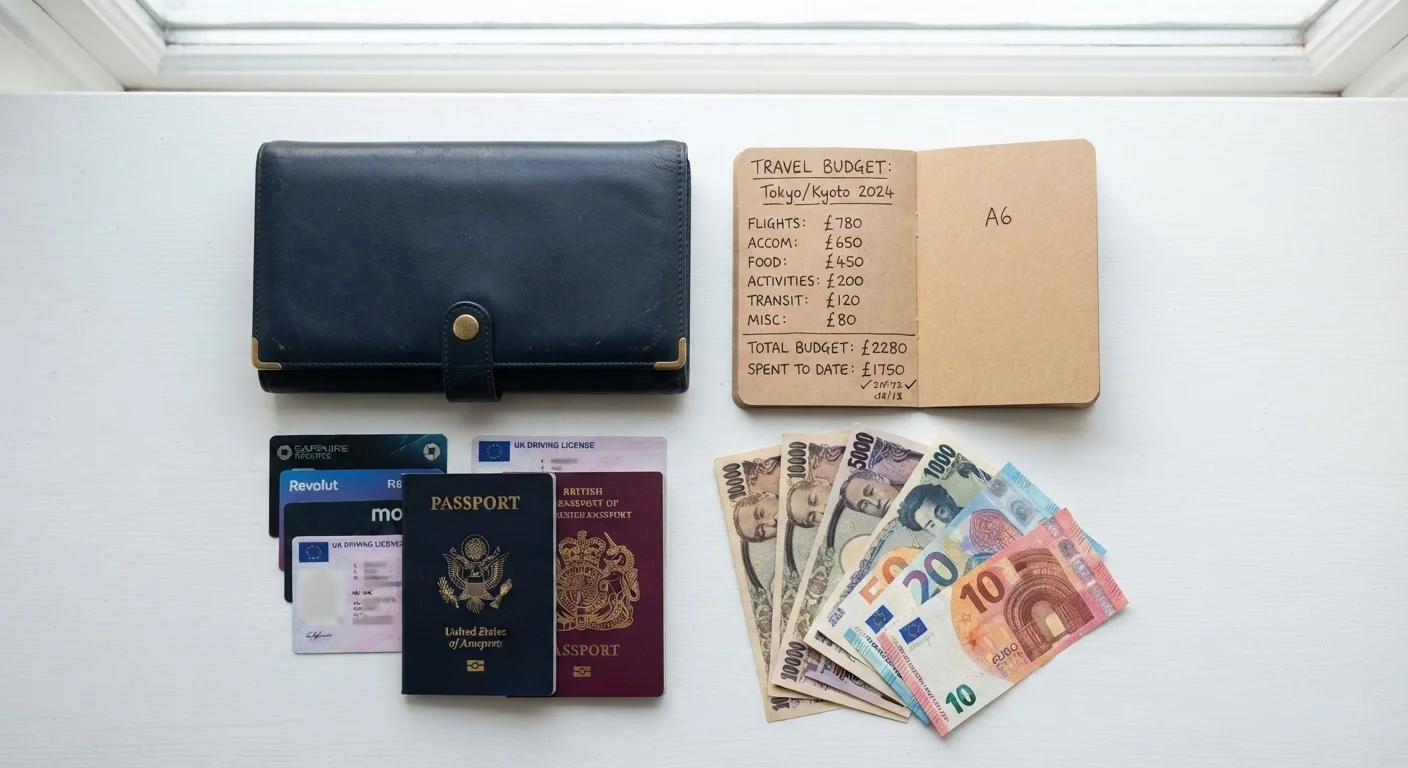
Travel wallet, passport, credit cards, foreign currency, and budget notebook arranged on a white surface

Key Takeaways

Notifying your bank before departure prevents your cards from being frozen mid-trip.
Carrying two payment methods — ideally from different networks — reduces your risk of being stranded without funds.
Setting a daily spending limit before you travel helps prevent budget overruns.
Foreign transaction fees and dynamic currency conversion can quietly drain your travel budget.
A written record of emergency contacts and account numbers is essential if your wallet is lost or stolen.
Travel insurance with financial loss coverage adds a meaningful safety net at relatively low cost.
30–60 min

Summary

18 items · 30–60 minutes

Why Financial Prep Is Just as Important as Packing

Most travelers spend hours researching hotels and flights but dedicate far less thought to the financial side of a trip — until something goes wrong. A blocked card at a foreign ATM, unexpected fees that blow a carefully planned budget, or a lost wallet with no backup plan can turn any vacation into a stressful ordeal.

Solid financial preparation is a core part of trip planning, not an afterthought. If you've already worked through building a realistic travel budget, this checklist is the natural next step — translating that budget into an on-the-ground financial plan that protects you from the most common money pitfalls. Run through these items at least a week before departure so you have time to act on anything that needs attention.

Tools You'll Need

Before working through the checklist, gather the following:

Required

Your bank's mobile app

Used to notify your bank of travel plans, check limits, and monitor transactions while on the road.

Required

A written or printed card emergency contact list

Provides backup access to bank hotline numbers if your phone is lost, stolen, or dead.

Required

A secure password manager or encrypted notes app

Stores digital copies of card details and important account information safely while traveling.

Optional

A simple expense tracking app or spreadsheet

Helps you log daily spending against your budget in real time during the trip.

Optional

Travel insurance policy documents

Confirms your coverage scope and provides claim contact details if a financial emergency occurs.

Your Pre-Trip Financial Checklist

Work through each group below methodically. Items marked must are non-negotiable — skipping them creates real risk. Should items are strongly recommended, and nice to have items add useful layers of protection or convenience.

Bank and Card Preparation

Notify your bank and credit card issuers of your travel dates and destinations so they don't flag your transactions as suspicious and freeze your account. Must
Confirm your debit and credit cards will work at your destination — check whether the card network (Visa, Mastercard, etc.) is widely accepted there. Must
Identify and note any foreign transaction fees on each card you plan to use, typically ranging from 1% to 3% per purchase. Must
Bring at least two payment methods from different networks or issuers so you have a backup if one card is declined or compromised. Must
Check your card's daily ATM withdrawal limit and request a temporary increase if needed for your destination's cash culture. Should

Cash and Currency

Research how cash-dependent your destination is — some cities and rural areas accept cards infrequently, while others are largely cashless. Must
Exchange a small amount of local currency before departure for immediate expenses like transportation and tips upon arrival. Should
Locate in-network or low-fee ATMs at your destination in advance to avoid paying excessive withdrawal fees to out-of-network machines. Should
Avoid airport currency exchange kiosks for large conversions, as their rates and fees are typically far less favorable than ATMs or your home bank. Nice to have

Budget and Spending Plan

Set a clear daily spending limit for each category — food, transport, activities, and incidentals — based on your finalized trip budget. Must
Build a buffer of at least 10–15% above your estimated daily spend to absorb unexpected costs without stress. Should
Choose a simple method for tracking daily expenses on the road, whether a notes app, a spreadsheet, or a dedicated travel budget app. Should
Review prepaid or locked-in costs (accommodation, tours, transport) and confirm what, if anything, is still owed at destination. Must

Emergency Preparedness and Insurance

Write down — on paper, not only in your phone — the international customer service numbers for each bank and card issuer you're bringing. Must
Store a photo of the front and back of each card you're carrying in a secure, encrypted location separate from your physical wallet. Must
Confirm whether you have travel insurance that includes trip interruption or cancellation, and understand what documentation a claim would require. Should
Check whether your existing credit card or health insurance includes any travel protections before purchasing additional coverage. Should
Leave a small emergency cash reserve — in US dollars or local currency — stored separately from your main wallet. Nice to have

Don't Rely on a Single Card or Account

One of the most disruptive travel financial emergencies is having your only card frozen, declined, or lost with no backup. Always travel with at least two cards from different issuers or networks, stored in separate locations. Even if you rarely use the second card at home, it can be the difference between a minor inconvenience and a genuine crisis abroad.

Keeping Your Money Safe on the Road

Financial prep doesn't end when you leave home. Once you're traveling, a few habits go a long way. Keep your cards in separate locations — never all in one wallet — so a single theft doesn't wipe you out. For practical strategies on this, see what actually works for keeping valuables safe.

Check your account balances every couple of days rather than waiting until you return. This lets you catch unauthorized charges quickly and stay honest with your spending plan. If you're traveling internationally, be cautious when merchants offer to charge your card in US dollars instead of the local currency — this practice, known as dynamic currency conversion, typically results in a worse exchange rate than your card would apply automatically. Decline it when offered and let your card's network handle the conversion.

For travelers managing health conditions that may affect financial decisions mid-trip, our guide on planning travel around health needs covers related preparation. And if you want a broader pre-departure review, the full safety readiness checklist pairs well with this one.

This article is for general informational purposes only and does not constitute financial or legal advice. Verify fees, policies, and coverage details directly with your financial institutions and insurance providers before traveling.

Travel & Vacations Editorial Team is the collective byline for our editorial team and contributor network. Articles published under this byline or an editorial pen name are researched, written, and reviewed according to our editorial standards for clarity, consistency, and independence before publication.

View all articles by Travel & Vacations Editorial Team →
Disclaimer: The content on this site is provided for informational purposes only and should not be considered a substitute for professional advice. While we strive to provide accurate and up-to-date information, we make no guarantees regarding its completeness or accuracy. Always consult a qualified professional for advice specific to your circumstances before making any decisions.